
Kaudulla National Park Safari Guide: Everything You Need to Know
Disclaimer: This post may contain affiliate links, which means that if you click on any of those links and make a purchase, I’ll get a small commission, at no cost to you, to help support this website.
Last Updated on June 18, 2026
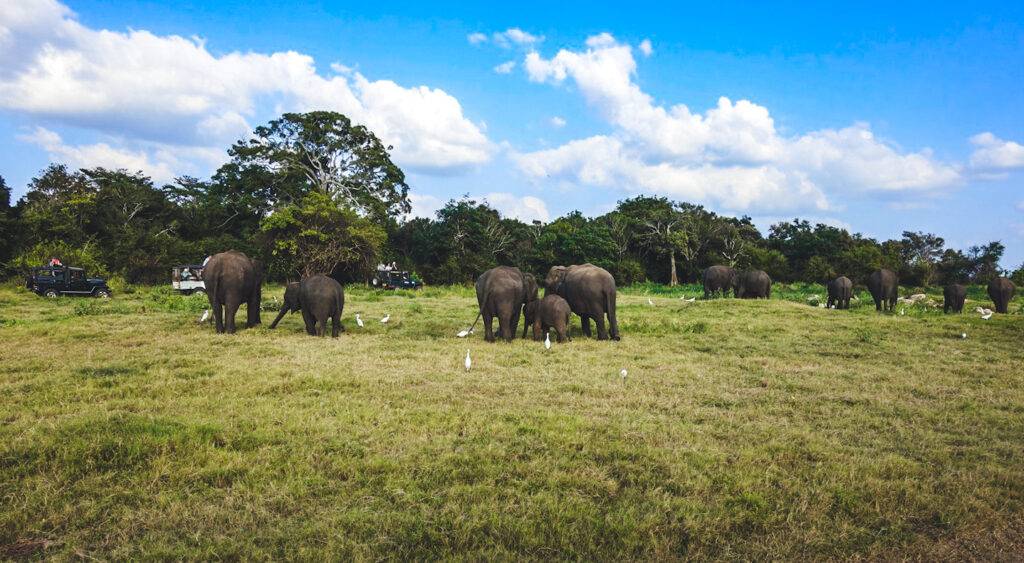
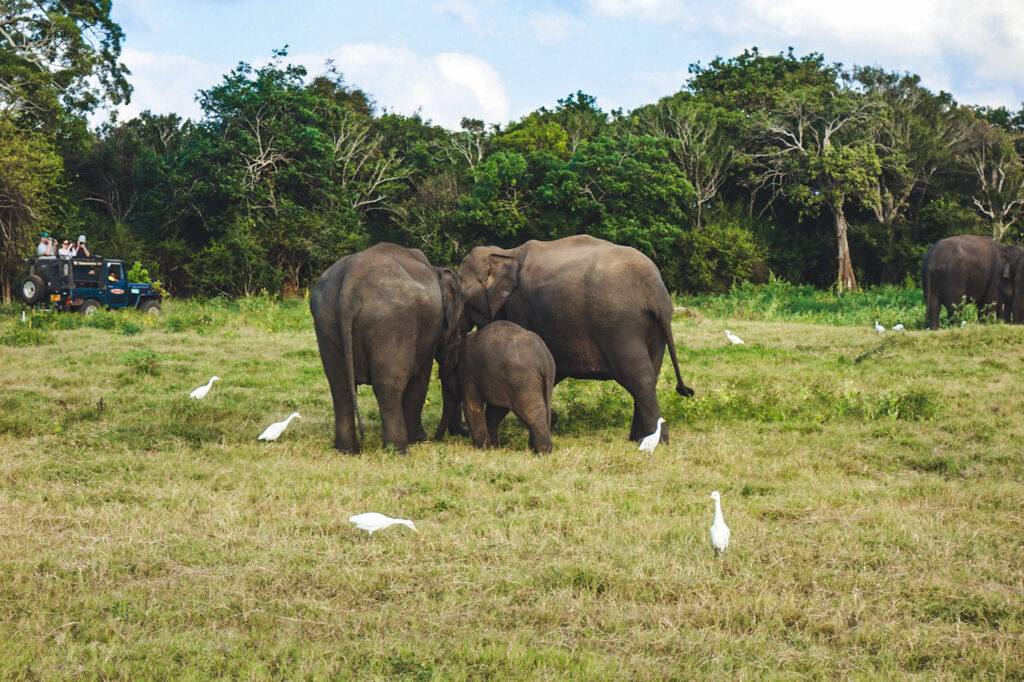
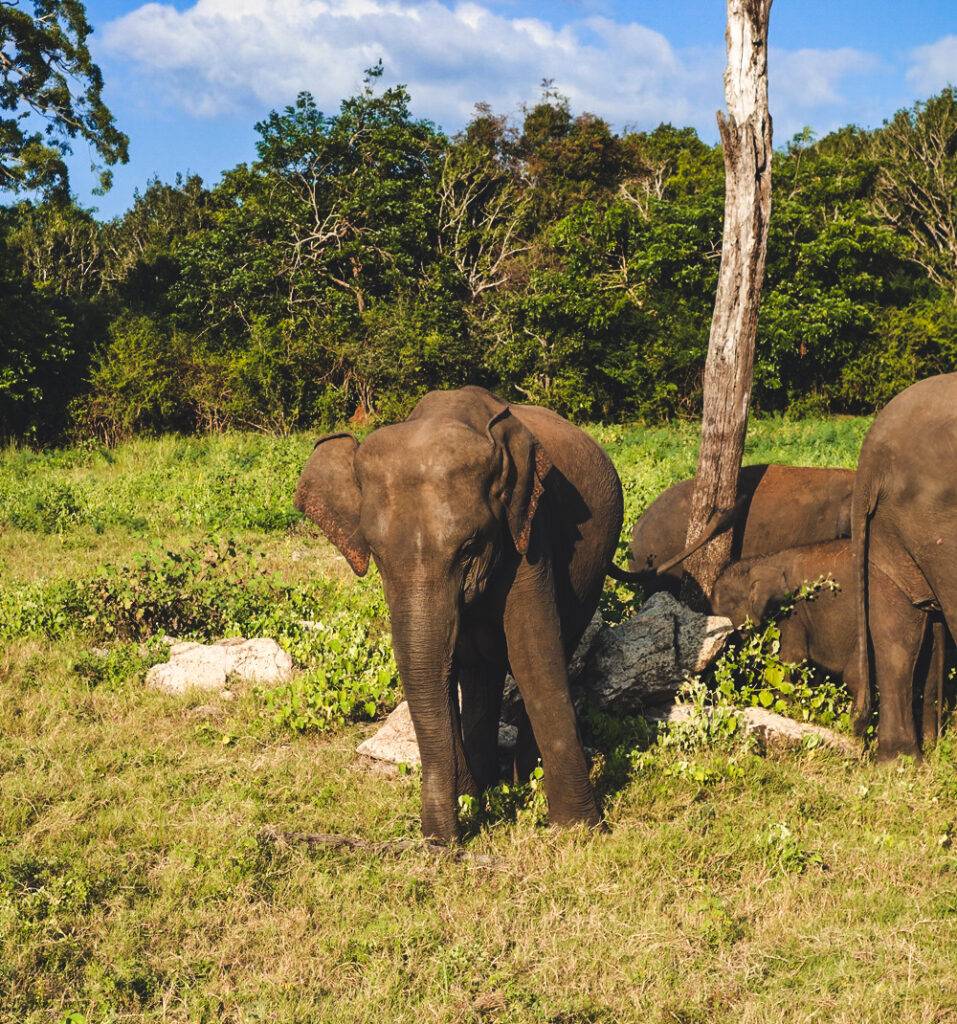
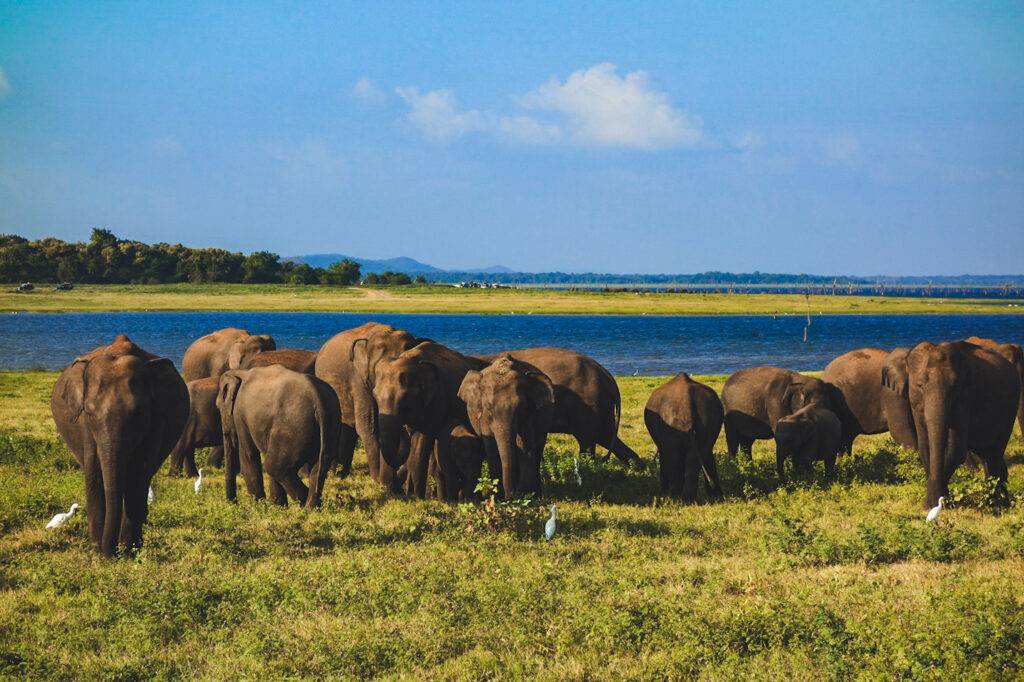
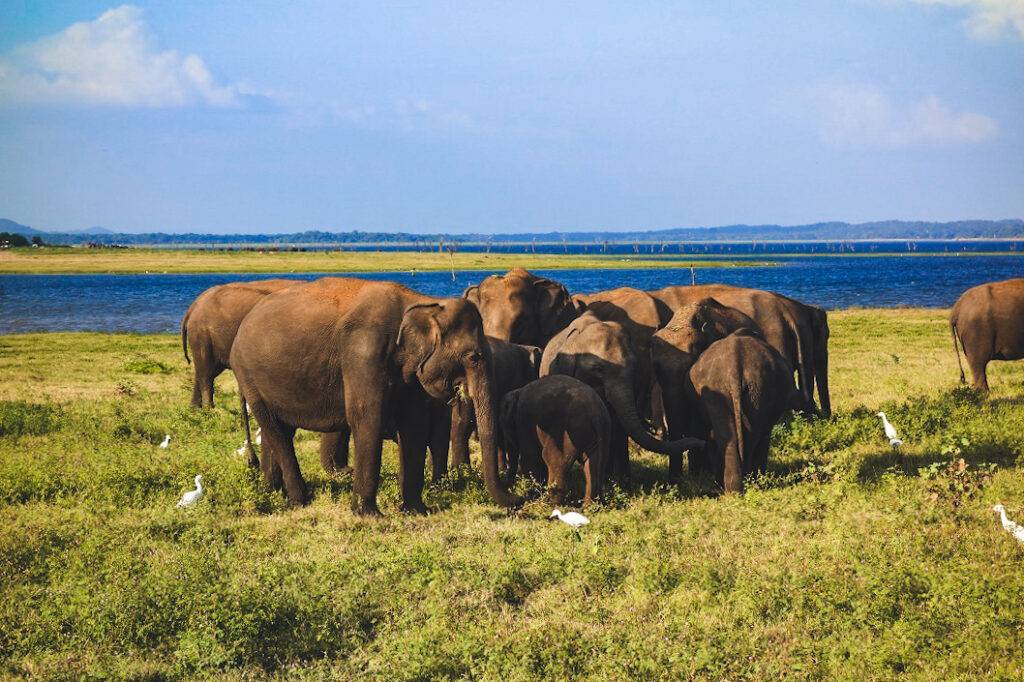
There’s a moment when your jeep rounds a bend at the edge of the Kaudulla Reservoir and suddenly, out of nowhere, hundreds of elephants appear. Grazing, bathing, rumbling at each other, babies stumbling around on oversized feet. It’s the kind of scene that makes you forget you were ever worried about the bumpy ride or the heat. Kaudulla National Park is, simply put, one of the best places in Asia to watch wild Asian elephants doing exactly what elephants do.
And unlike some of Sri Lanka‘s more famous parks, it doesn’t feel like a theme park. The landscape is vast, the crowds manageable, and the elephants couldn’t care less about you.
Kaudulla National Park at a Glance
| Best for | Seeing wild elephants in large herds; birdwatching |
| Best time to go | July to October (peak elephant season); Sep-Oct for biggest gatherings at Kaudulla specifically |
| Entry fee | ~$33/adult foreign visitor |
| Getting there | ~45 min from Habarana; ~1 hour from Sigiriya or Dambulla |
| Don’t miss | “The Gathering” near the reservoir; sunset over the tank |
| Skip | Elephant orphanages and rides anywhere in Sri Lanka |
What Is Kaudulla National Park?
Kaudulla National Park covers around 6,900 hectares in Sri Lanka’s North Central Province, right in the heart of the Cultural Triangle. It was designated as a national park in 2002, with the specific goal of protecting wildlife corridors used by elephants migrating between parks. At its center is the Kaudulla Tank, an ancient reservoir built during the reign of King Mahasena (277-304 CE) as part of a sophisticated irrigation network. That same tank is now the beating heart of the park’s ecosystem, and in the dry season, the reason hundreds of elephants show up.
The park connects with Minneriya National Park and Wasgamuwa National Park, forming a large habitat corridor. Elephants move freely between all three depending on water and food availability, which is exactly why you can never fully predict where they’ll be on any given day. But when they’re at Kaudulla, they’re really at Kaudulla. Around 300 elephants are associated with the wider area, and during the dry months they gather near the reservoir in a phenomenon locals call “The Gathering.” You might see dozens, you might see hundreds.
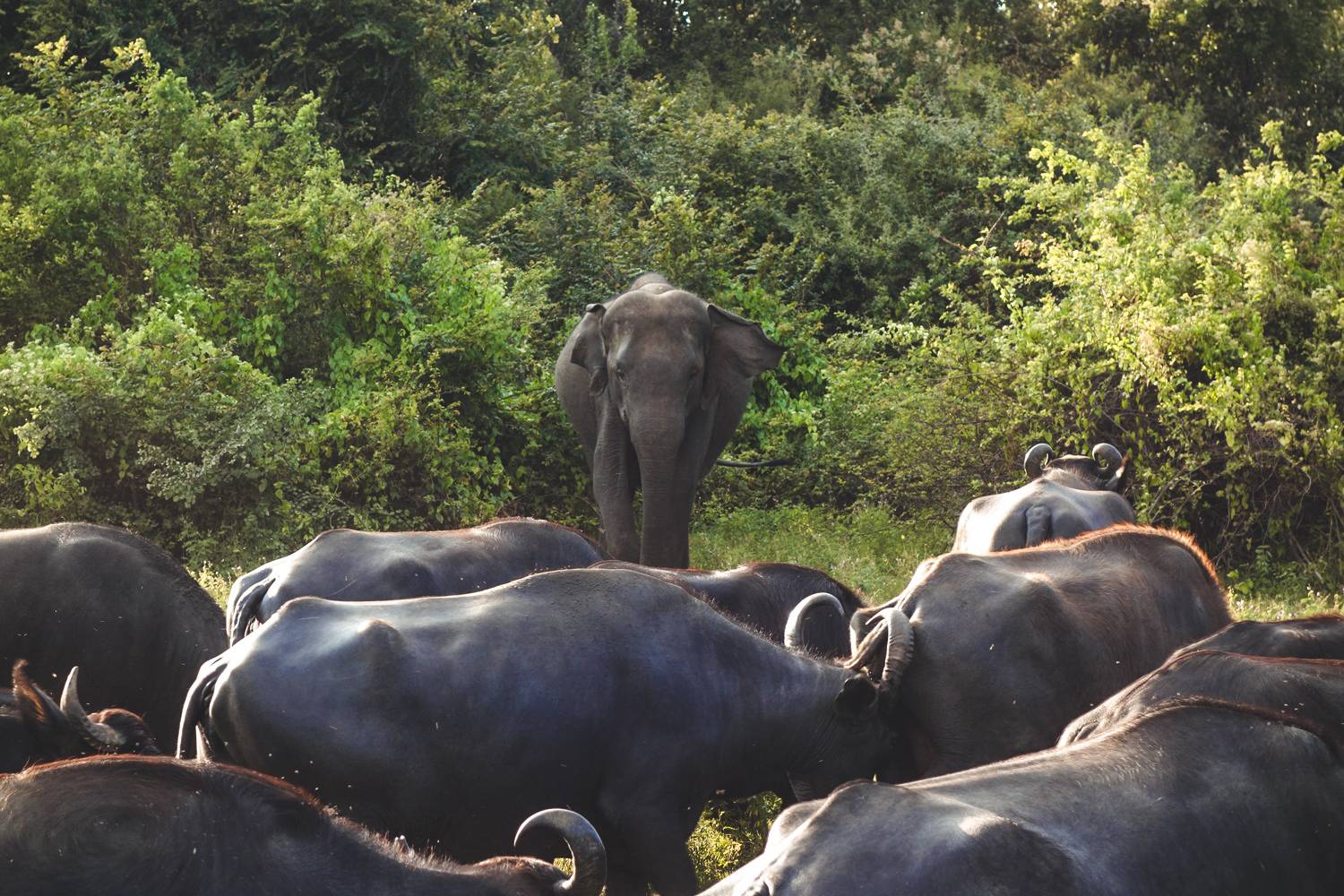
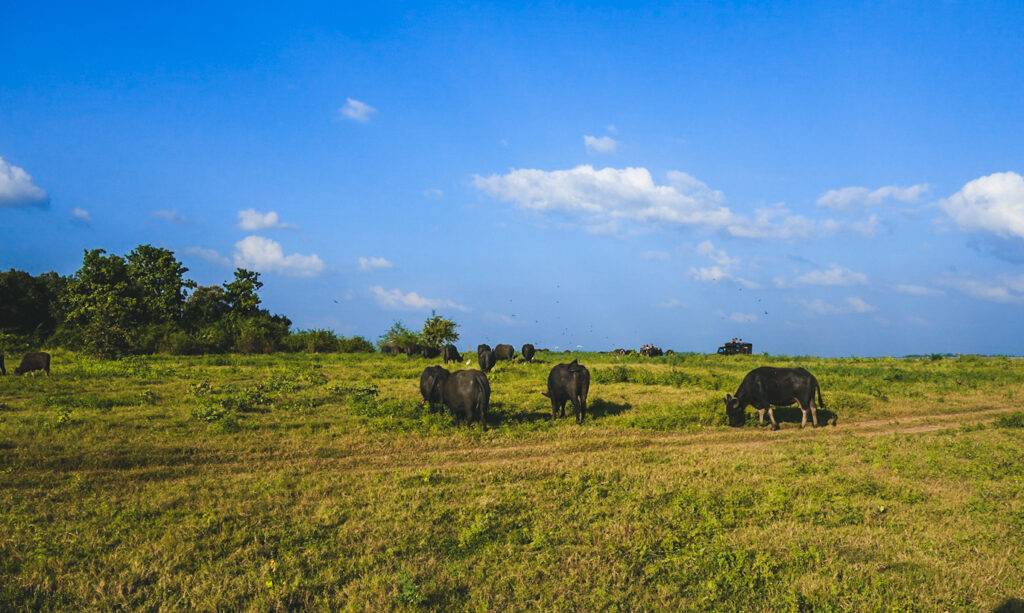
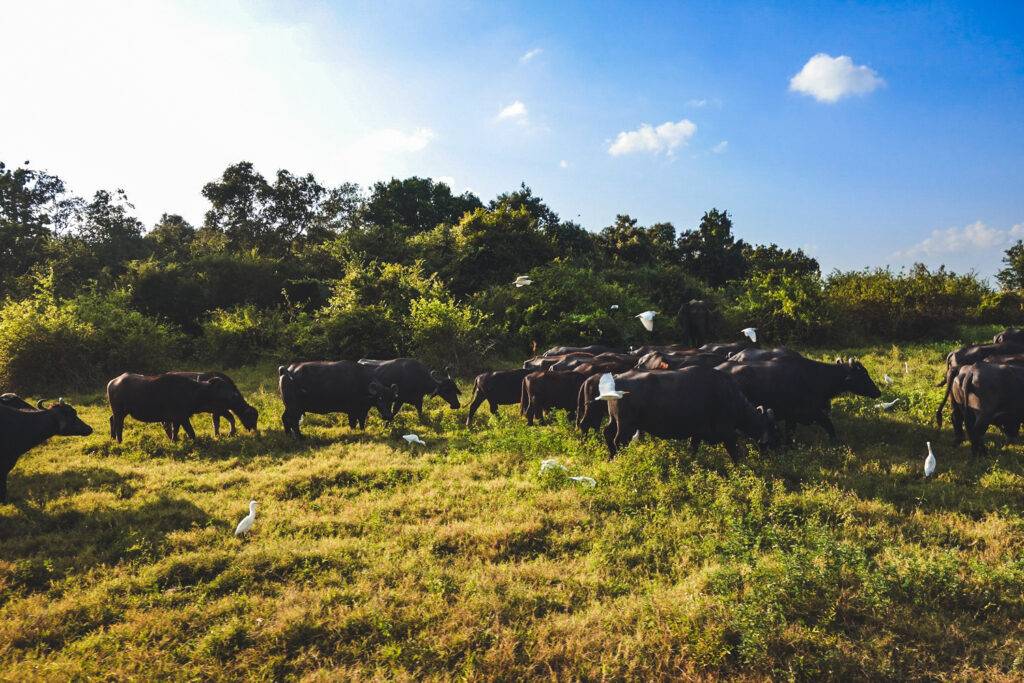
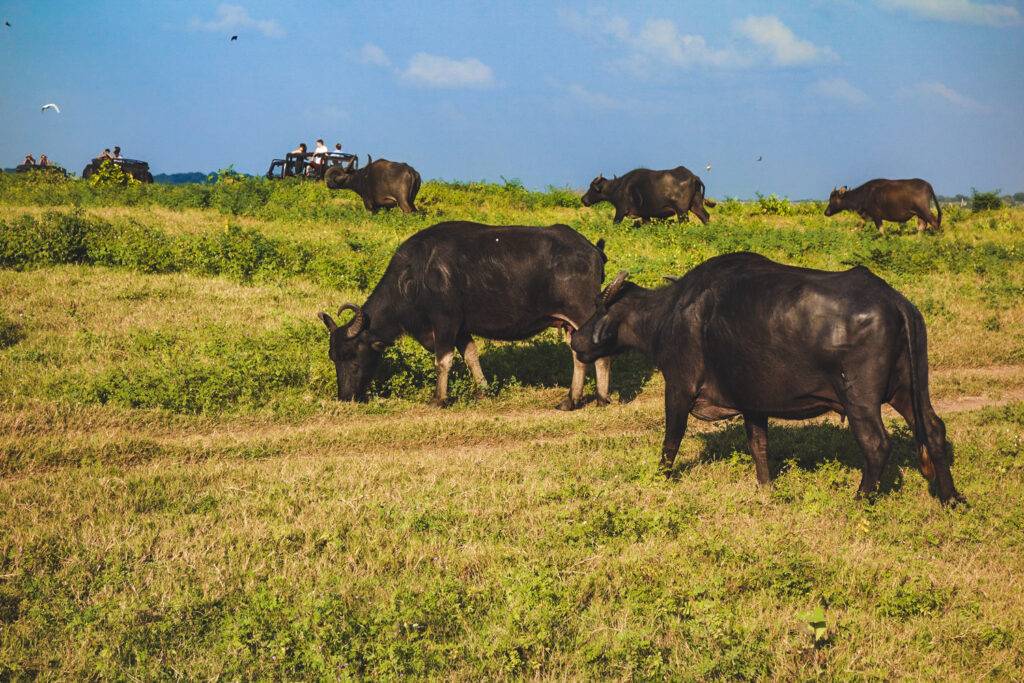
Beyond elephants, the park is home to around 24 mammal species (wild boar, sambar deer, axis deer, jackals, and more rarely, sloth bears and leopards), over 150 bird species, water monitors, mugger crocodiles, and the kind of sweeping grassland-meets-wetland scenery that makes you understand why people fly halfway around the world for this.
Why Kaudulla Instead of Minneriya (or Hurulu)?
Habarana is the gateway to three national parks: Kaudulla, Minneriya, and Hurulu Eco Park. Choosing between them is less complicated than it sounds if you know the seasonal logic.
Minneriya has a larger reservoir, which makes it the better bet from July to early September when elephants are drawn to its water. As the dry season deepens and water levels in Minneriya drop, the herds shift toward Kaudulla, making September through October prime time for Kaudulla specifically. Good safari drivers know where the elephants are on any given day and will often be able to tell you which park to pick. If you’re booking in advance, build in some flexibility if you can.
As for Hurulu Eco Park: a lot of budget tours push it as a cheaper option. My advice is to skip it. Reviews consistently flag it as overcrowded with jeeps that get too close to the animals, and it offers far less diverse wildlife than either Kaudulla or Minneriya. Save your money and do it properly.
The Best Time to Visit Kaudulla National Park
The peak season for elephant sightings runs from July to October, during the dry season when water levels drop and herds converge on the reservoir. This is when “The Gathering” happens, and it’s as spectacular as it sounds. The landscape is dry and open, visibility is good, and you’re likely to have multiple herds in view at once.
From November to February, the park gets wetter and greener. Elephants are still present but tend to spread out into the forest rather than congregating at the reservoir, making sightings less predictable. That said, the park doesn’t close, and you can still have a great experience, just don’t bank on seeing 200 elephants in one go.
March to June is quieter in terms of elephant numbers, but also much less crowded with tourists. Good for birdwatching, good for landscapes, less reliable for the headline act.
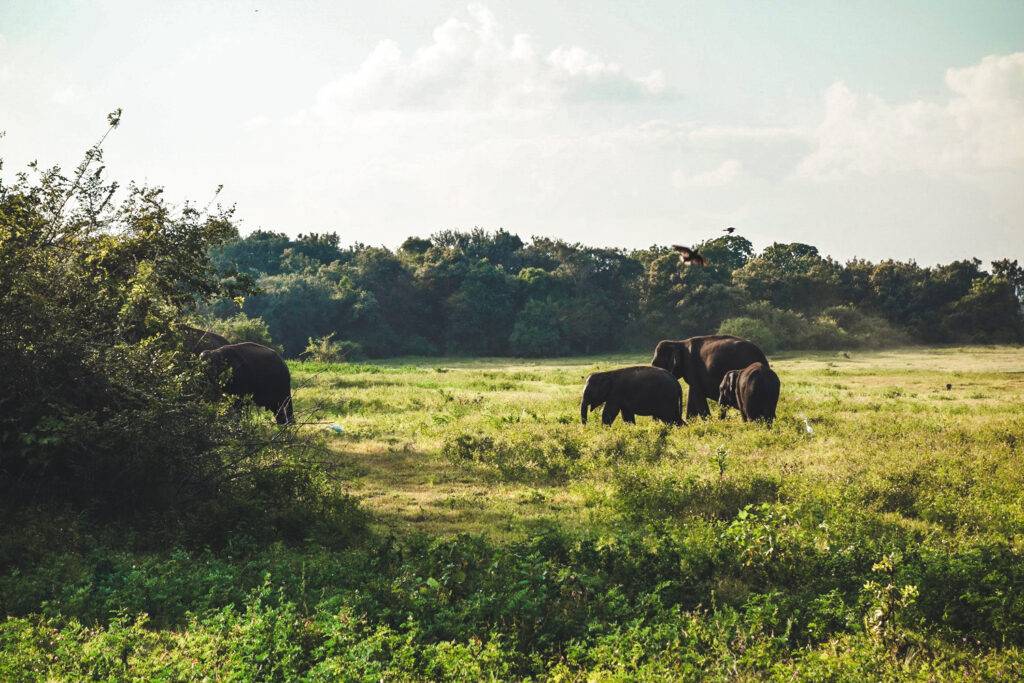
I was there in February and saw dozens of them.
Morning vs. Afternoon Safari
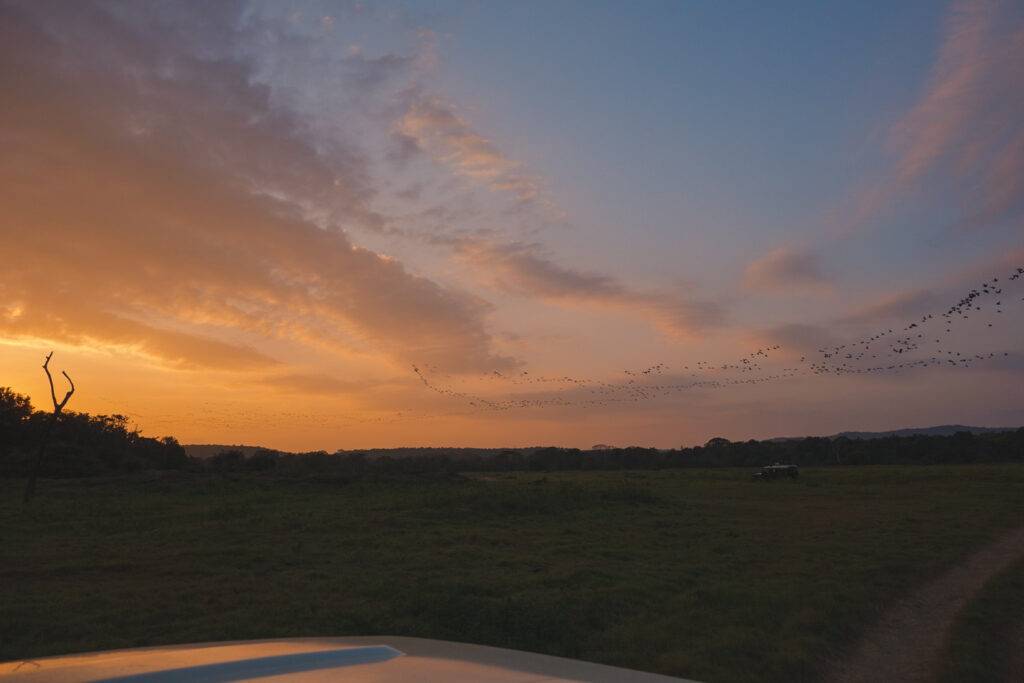
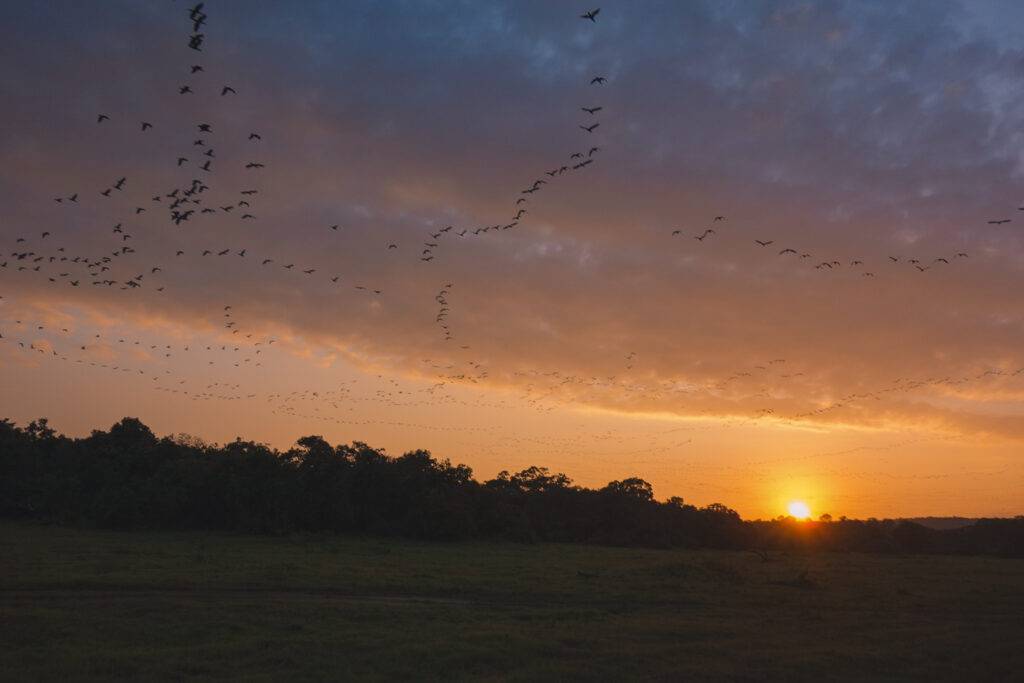
Afternoon safaris (typically starting around 2:30 PM and running until around 6 PM) are the most popular for elephant sightings. This is when the herds move toward the reservoir to drink and bathe, and the golden-hour light at the end isn’t bad for photos either. Morning safaris (6-10 AM) are better for birdwatching and you have a higher chance of spotting jackals and other predators, but elephants tend to be less active and less concentrated. Most visitors do afternoons, and for elephant-focused trips, that’s the right call.
What to Expect on the Safari
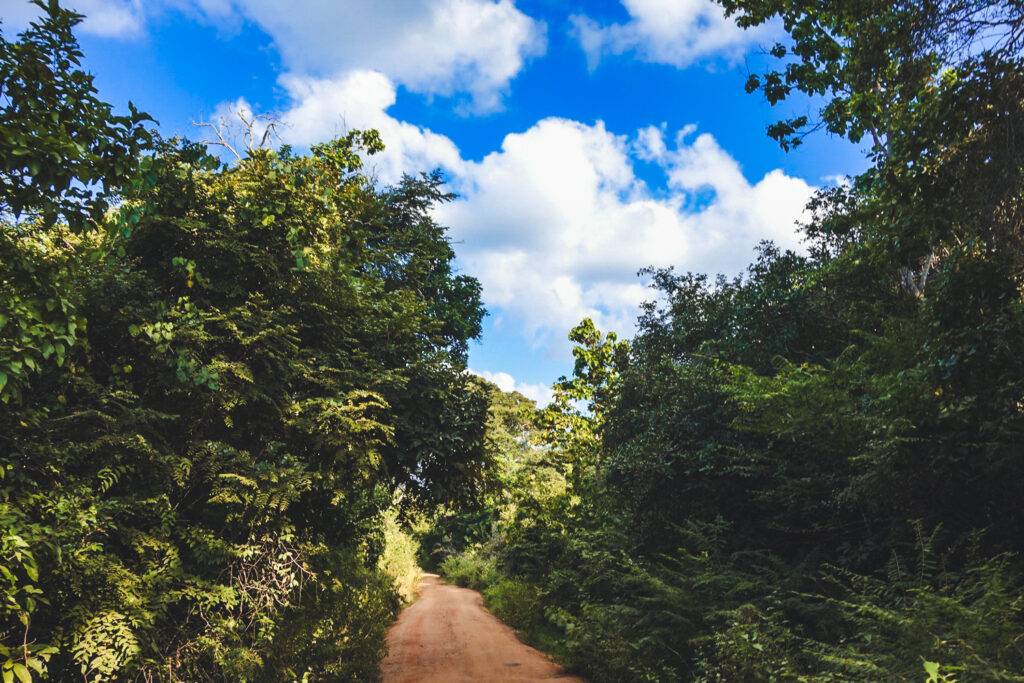
You enter the park in an open-top 4×4 jeep. Private vehicles aren’t allowed inside without special approval, so this isn’t optional. From the entrance gate near the village of Palugolla (on the Habarana-Trincomalee road, the A6), it’s roughly a 30-45 minute drive along bumpy dirt tracks through forest before you reach the open grasslands around the reservoir. This is where the magic happens.
When you reach the herds, the jeep parks and the engine cuts. You sit, you watch, you listen to the grass being torn up by elephants the size of small trucks. When I was there, I counted around 30 jeeps parked in the area at the same time, but somehow the space is so vast and there are so many elephants that it still feels peaceful. The animals don’t seem remotely bothered by the vehicles. They walk past at arm’s length, they splash around in the shallows, the babies have elaborate meltdowns.
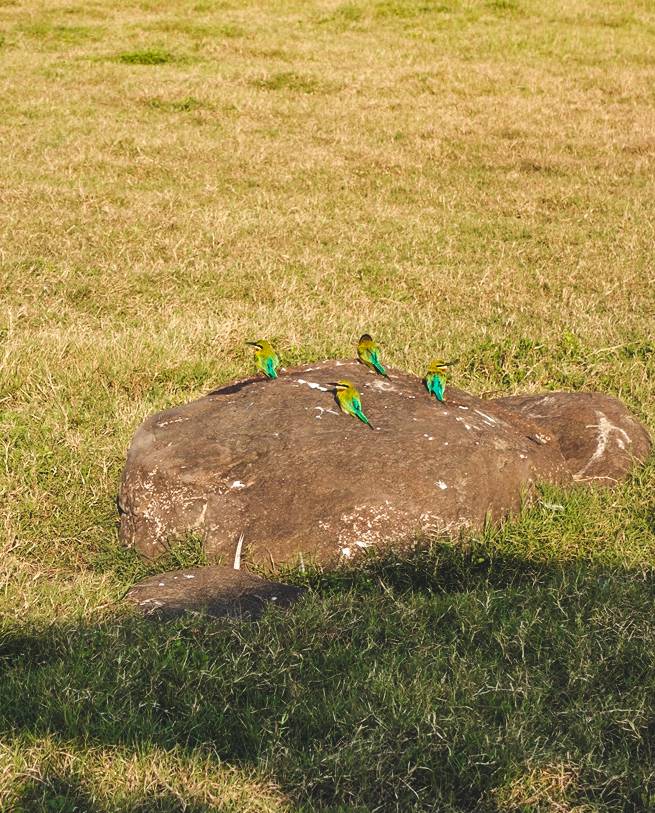
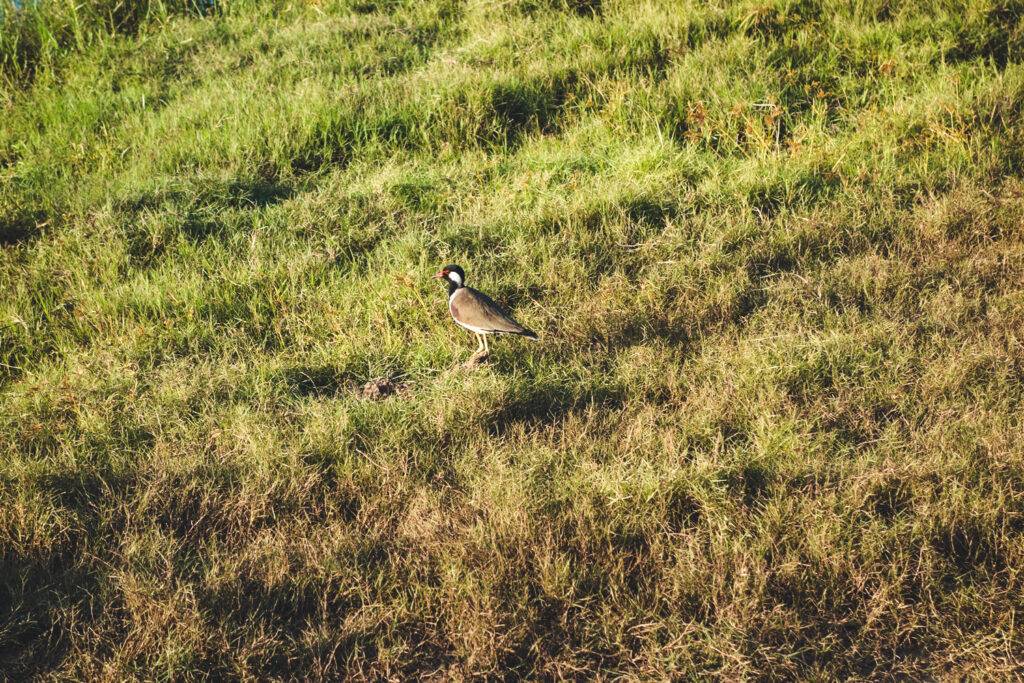
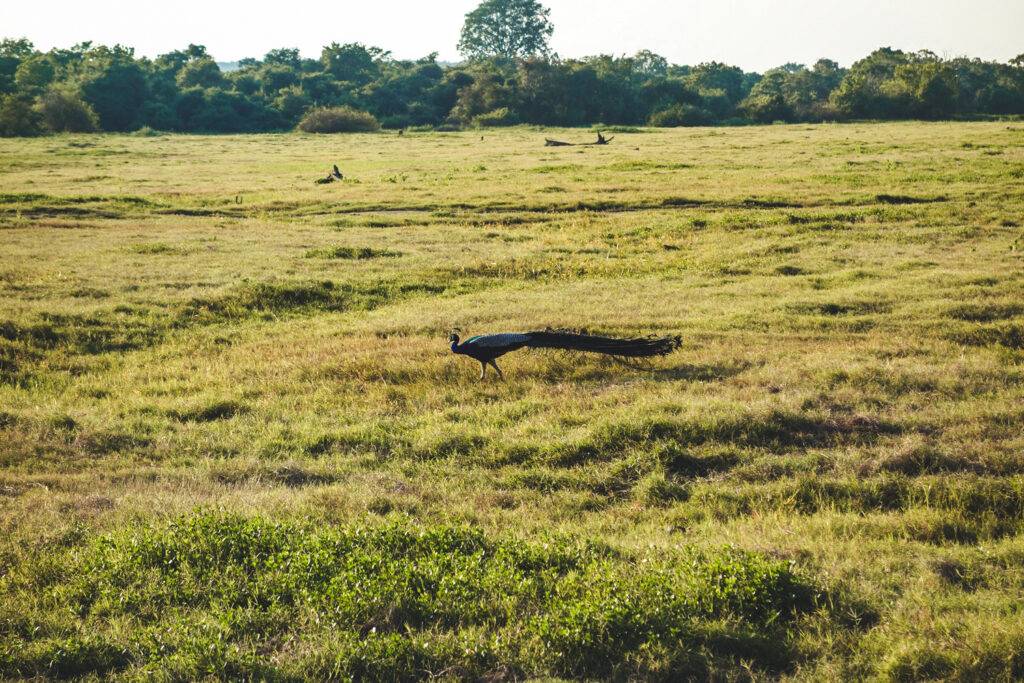
It’s not just elephants, either. Keep your eyes open for peacocks, egrets, painted storks, Sri Lankan jackals (small, fox-like, surprisingly charming), water monitors near the reservoir edges, and if you’re very lucky, a glimpse of a sloth bear or a crocodile. The jeep drivers are usually excellent at spotting wildlife you’d walk straight past, even if language is sometimes a barrier when it comes to identifying species by name.
A typical safari runs about three to four hours. Count on half a day including travel to and from the park.
Why Kaudulla Is an Ethical Choice
Seeing elephants at Kaudulla is, in my opinion, the only responsible way to see elephants in Sri Lanka. The animals roam freely across an unfenced corridor between three parks, going wherever they want, whenever they want. No chains, no rides, no bathing sessions for tourists. Just elephants living elephant lives.
I visited an elephant orphanage near Kandy, and it was genuinely heartbreaking. Every elephant was chained with about 10 meters of movement. Some were kept in the river all day for tourist bathing sessions. Elephant rides were on offer, with sticks used for control. These places position themselves as rescuers, and some genuinely started out that way, but the reality of what tourism demand has turned them into is difficult to watch.
The Sri Lankan government has progressively expanded protected areas partly because of exactly this problem: as land is taken over by agriculture, elephants lose habitat, which pushes them into conflict with farming communities. National parks create space for elephants to exist without destroying anyone’s crops, and without being put to work for human entertainment. Kaudulla is a direct product of that effort.
If you want to support elephant conservation directly, skip the orphanages and consider making a donation instead.
How to Get to Kaudulla National Park
Kaudulla is easy to reach from anywhere in the Cultural Triangle. The most common base is Habarana, about 45 minutes from the park entrance. Sigiriya and Dambulla are both around an hour away. From Polonnaruwa, count on about an hour as well. Coming from Colombo, budget for around 4.5-5 hours by car or private taxi.
If you’re on public transport, the train from Colombo Fort to Habarana takes around 5 hours, then you’ll need a tuk-tuk or taxi for the last stretch to the park. Most safari operators and hotels in Habarana and Sigiriya offer pickup as part of the package, which is the simplest option.
How to Book a Safari
You have two main options: book in advance online, or arrange on the ground through your accommodation in Habarana or Sigiriya. Both work, though advance booking during the July-October peak season is smart to avoid missing out.
If booking independently, make sure you know exactly what’s included before agreeing to anything. The entrance fee is a separate cost on top of the jeep hire, and some tours quote only one without the other. Check whether park admission, round-trip transport, a driver-guide, and whether it’s a private or shared jeep are all covered. Surprises at the entrance gate are not fun.
Tipping your driver is standard practice and appreciated, usually around $5-10 for a half-day safari.
Entry Fees and Cost
As of 2025, the park entrance fee for foreign visitors is approximately $33 per adult and $17 for children aged 6-12, with under-6s free. This is on top of the jeep hire cost, which varies depending on whether you book a private or shared vehicle and whether transportation from your accommodation is included. When I visited, the all-in cost was around $40 per person, but prices have moved since then. Grouping up with other travelers helps bring the per-person cost down.
Park permits can also be booked in advance through the official Department of Wildlife Conservation e-service portal, which is worth doing during peak months.
Where to Stay
Habarana is the most practical base for visiting Kaudulla. It’s well-connected, there are plenty of accommodation options at every price point, and it puts you within easy reach of Sigiriya, Dambulla, and Polonnaruwa for the rest of your Cultural Triangle itinerary.
I stayed at Sigiriya City Hostel, which is more of a homestay than a hostel. The owner is wonderful and the rice and curry was some of the best I had in Sri Lanka. It’s not in the center of town, but buses stop right in front and can drop you in Habarana without any fuss.
For more options across different budgets, Sigiriya and Dambulla also work well as bases. The main difference is a slightly longer drive to the park entrance.
What to Pack for Your Safari
- Light, neutral-colored clothing (bright colors can startle wildlife)
- Hat, sunglasses, and sunscreen for open-top jeep exposure
- Camera with a zoom lens; your phone can do surprisingly well too, but bring something with reach
- Binoculars, especially if you’re into birds
- Insect repellent for dusk safaris
- A light rain jacket or poncho during the November-February wet season
- Water and snacks (no shops inside the park)
Set your camera to silent mode before entering, and keep it out and ready at all times. Wildlife sightings can be sudden and brief.
Nearby Attractions
Kaudulla’s location in the Cultural Triangle means you’re surrounded by some of Sri Lanka’s most impressive historical sites. A classic combination is a morning climb at Sigiriya Rock Fortress followed by an afternoon safari at Kaudulla, which is genuinely one of the better days you can have in Sri Lanka. Pidurangala Rock is a less crowded, cheaper alternative to Sigiriya for sunrise or sunset views, and pairs just as well with a Kaudulla safari.
Dambulla Cave Temple is about an hour away and well worth a half-morning. The ancient city of Polonnaruwa, with its sprawling ruins and brilliant bike-rental setup, is about 1.5 hours east. The Minneriya National Park is only 30 minutes away and, as mentioned above, may actually be the better elephant bet depending on the time of year.
Practical Tips
- Stay in the jeep at all times. Always. Elephants look calm until they’re not, and the mothers especially will not appreciate you stepping out near their calves.
- Keep noise to a minimum, particularly when the engine cuts near a herd.
- Don’t pressure your driver to get closer to the animals for a better photo. A good driver will position the jeep well without compromising anyone’s safety.
- Weekdays are quieter than weekends if you want fewer jeeps around.
- Ask your driver or hotel which park has better sightings on the day you’re going. Local knowledge beats any article, including this one.
- Book in advance during July-October peak season.
Related posts:
 Visiting the Dambulla Cave Temple: Complete Travel Guide
  The Best Things to Do in Galle, Sri Lanka (Complete Travel Guide)
  Best Things to Do in Nuwara Eliya: Sri Lanka’s Little England Travel Guide
  Things to Do in Ella, Sri Lanka: The Complete Travel Guide
  How to Visit Sigiriya Rock Fortress, Sri Lanka: The Complete Guide
  Things to Do in Kandy, Sri Lanka: The Complete Travel Guide
  Best places to visit in Sri Lanka
  Top 10 temples in Sri Lanka for your bucket list
  Best things to do in Jaffna – Complete travel guide
