
Best Things to Do in Nuwara Eliya: Sri Lanka’s Little England Travel Guide
Disclaimer: This post may contain affiliate links, which means that if you click on any of those links and make a purchase, I’ll get a small commission, at no cost to you, to help support this website.
Last Updated on June 11, 2026
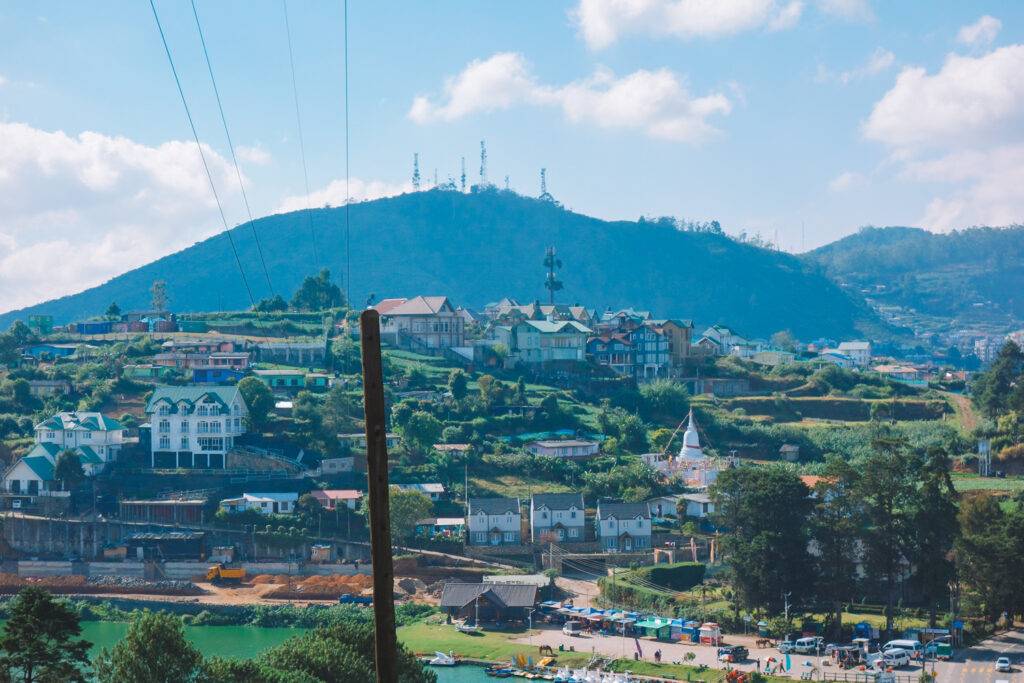
Nuwara Eliya. Say it with me: nuhr-elly-ah. Most people butcher it the first time, and that’s fine. What matters is that you actually go, because this misty, colonial-tinged hill town in the heart of Sri Lanka‘s tea country is genuinely one of the most surprising places I visited on the island. I expected pretty plantations. I did not expect to feel like I’d been teleported to a slightly soggy corner of England at 1,900 meters above sea level.
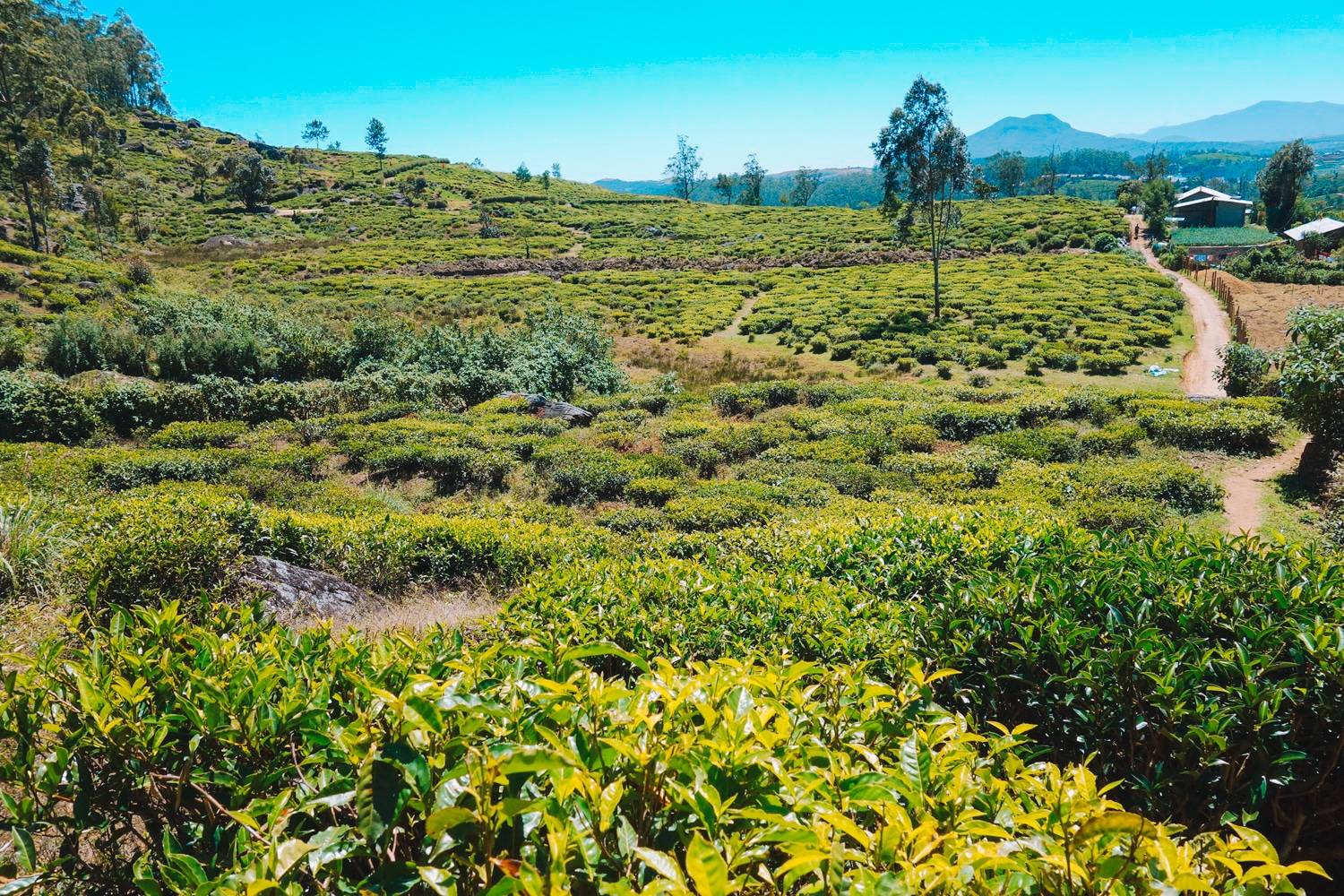
Nicknamed “Little England,” Nuwara Eliya was developed by British colonists as a hill resort where they could escape the tropical heat, play cricket and polo, and pretend they were back home. The red-brick post office, the racecourse, the grand hotels with their roaring fireplaces: it all still very much stands. And then you step outside and the rolling green hills are blanketed in tea, and you remember exactly where you are.
Whether you have one day or three, here is everything you need to know about the best things to do in Nuwara Eliya, plus where to stay, what to eat, and how to get there.
Nuwara Eliya at a Glance
| Best for | Tea lovers, hikers, nature enthusiasts, anyone who needs a break from Sri Lanka’s heat |
| When to go | January to March (dry, cool, clear views). April is festive for Sinhalese New Year. Avoid heavy monsoon months (May to September for southwest rains) |
| How long | 2 to 3 days to do it justice; 1 day if you’re passing through |
| Getting there | Train to Nanu Oya + tuk-tuk, or bus/car from Kandy (3 hrs) or Colombo (5 hrs) |
| Budget | $$ (very affordable; entrance fees are minimal) |
| Don’t miss | Horton Plains at sunrise, a tea factory tour, kiri kahata by the roadside |
| Skip if | You hate cold weather or are short on time in Sri Lanka |
How to Get to Nuwara Eliya
Nuwara Eliya does not have its own train station. The nearest one is Nanu Oya, about 8 kilometers from the town center. From there, hop in a tuk-tuk or shared taxi into town. Easy.
The train from Kandy is the most scenic way to arrive and is an experience in its own right. The route winds through misty mountains, past tea plantations and waterfalls, with the landscape getting progressively more dramatic as you gain altitude. Book first-class tickets in advance if you want a guaranteed seat (tickets open 30 days ahead at the Sri Lanka Railways website). Second and third class are cheaper but seats aren’t assigned, which is fine if you don’t mind sitting on the floor near the open doors with the wind in your hair. Just be sensible about leaning out.
By bus, you can reach Nuwara Eliya from Kandy, Colombo, and other major cities. It’s slower but very cheap and a great way to travel like a local. By private car or driver, you get maximum flexibility and can stop at Ramboda Falls and Bluefield Tea Estate on the way up from Kandy, which I’d strongly recommend.
Travel times to keep in mind: Kandy is about 3 hours by road, Ella is about 2 hours, and Colombo is around 5 hours.
Weather in Nuwara Eliya
Pack a jacket. I cannot stress this enough. Nuwara Eliya sits at nearly 1,900 meters above sea level, which means temperatures hover between 10°C and 20°C (50°F to 68°F) year-round. During the December to February winter, nights can get close to freezing. The rest of Sri Lanka will be hot and humid; up here you will need layers.
Rain is also part of the package. The southwest monsoon brings the heaviest rainfall from May through September. Even outside monsoon season, afternoon drizzle is common, which is partly why everything is so impossibly green. Come prepared with a waterproof layer and good walking shoes no matter when you visit.
The best window for clear skies and the most reliable views at Horton Plains is January through March. April is particularly festive thanks to Sinhalese and Tamil New Year celebrations, with pony races, go-kart events, and ceremonies filling the town, but accommodation books up fast so plan ahead.
Best Things to Do in Nuwara Eliya
1. Hike Horton Plains National Park to World’s End
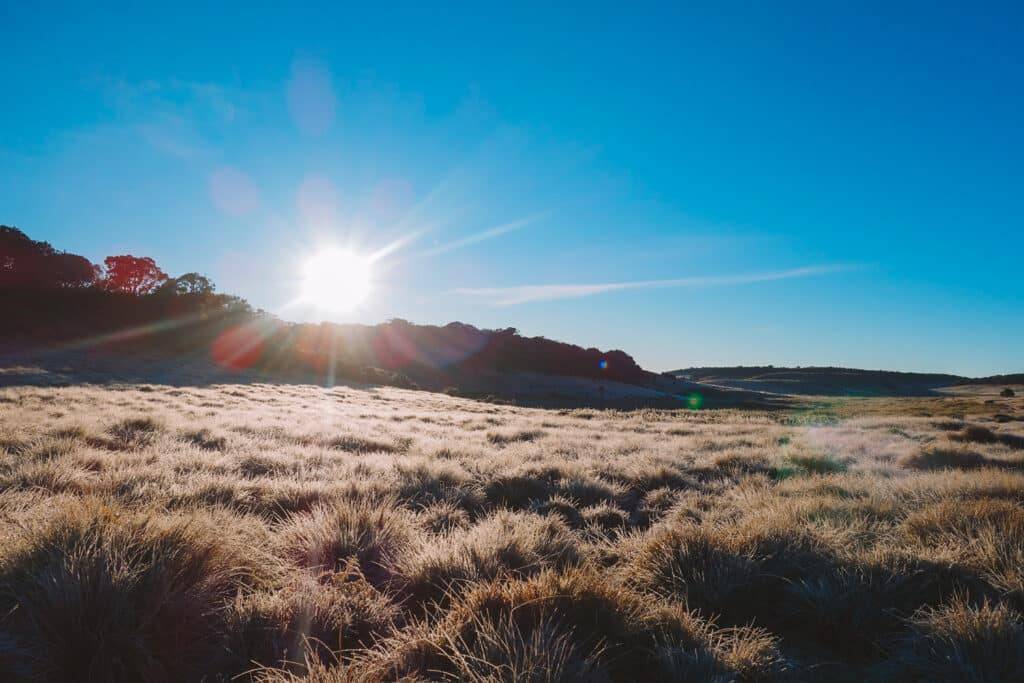
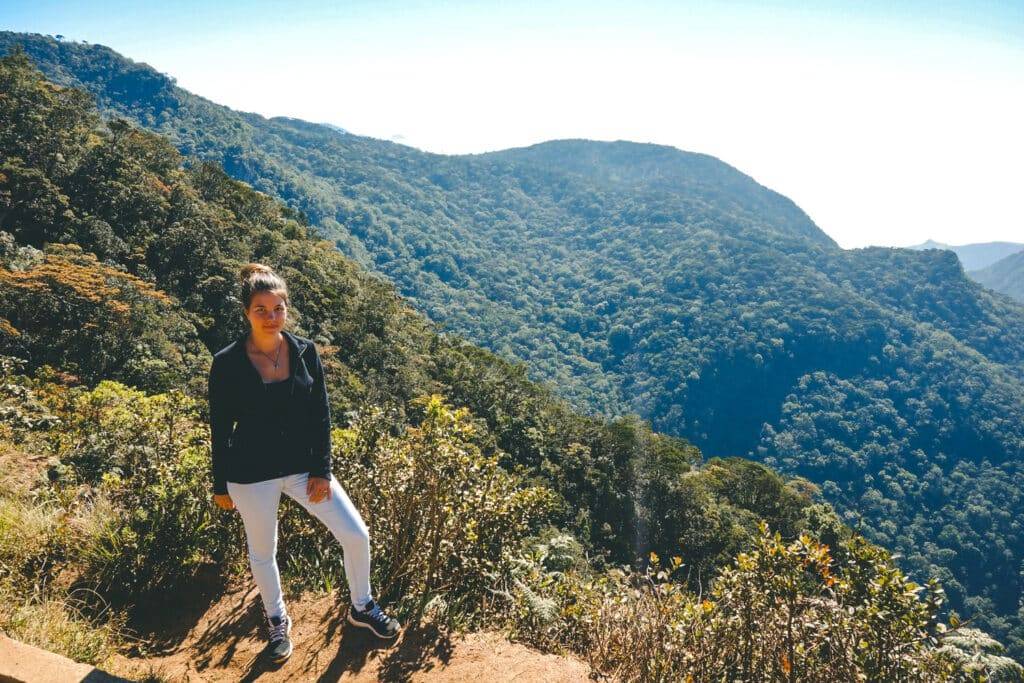
If you do one thing in the Nuwara Eliya area, make it Horton Plains. This UNESCO World Heritage Site plateau sits about an hour’s drive from town and offers a gorgeous, relatively easy 9.5-kilometer loop through cloud forest, open grasslands, and past waterfalls. The big payoff is World’s End: a sheer cliff with an 880-meter drop and, on clear days, views stretching all the way to the southern coastline.
The absolute non-negotiable rule: arrive before 7 AM. By mid-morning, mist rolls in and covers everything. Show up at dawn and you’ll have the views to yourself. Show up at 10 AM and you’ll see a wall of white. Along the trail, keep an eye out for sambar deer, Sri Lanka’s endemic birds, and if you’re very lucky, a leopard. There is also a second viewpoint called Baker’s Falls en route, which is worth the short detour.
Entrance fees are higher for foreign visitors (around $15 USD) but absolutely worth it. Bring snacks and water. If you don’t have a car, hire a private driver for the day or book a tour.
2. Visit a Tea Factory
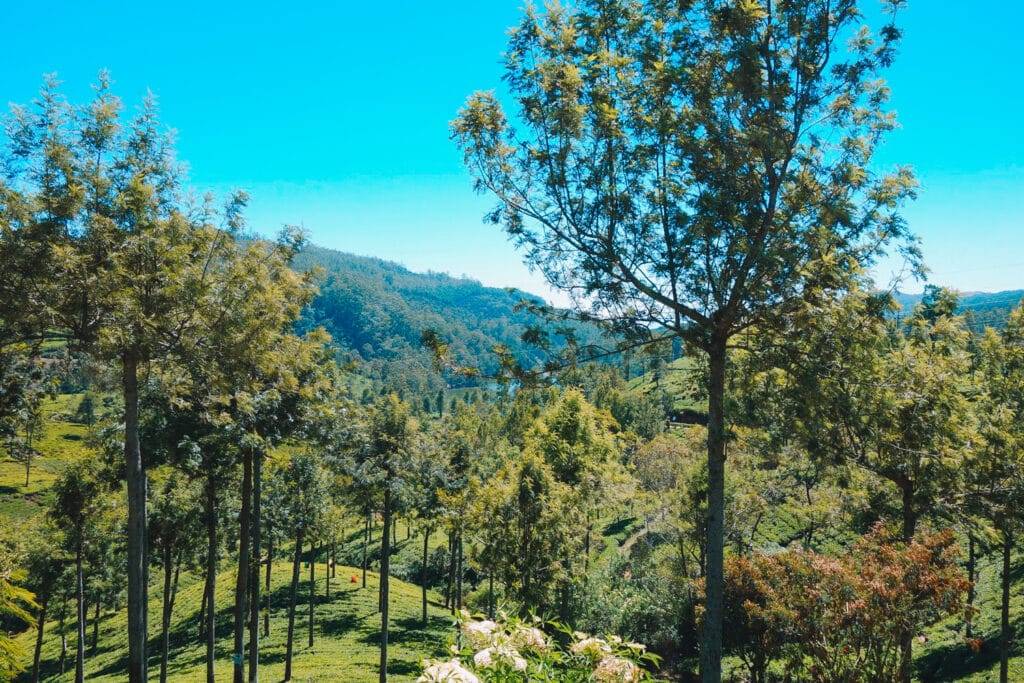
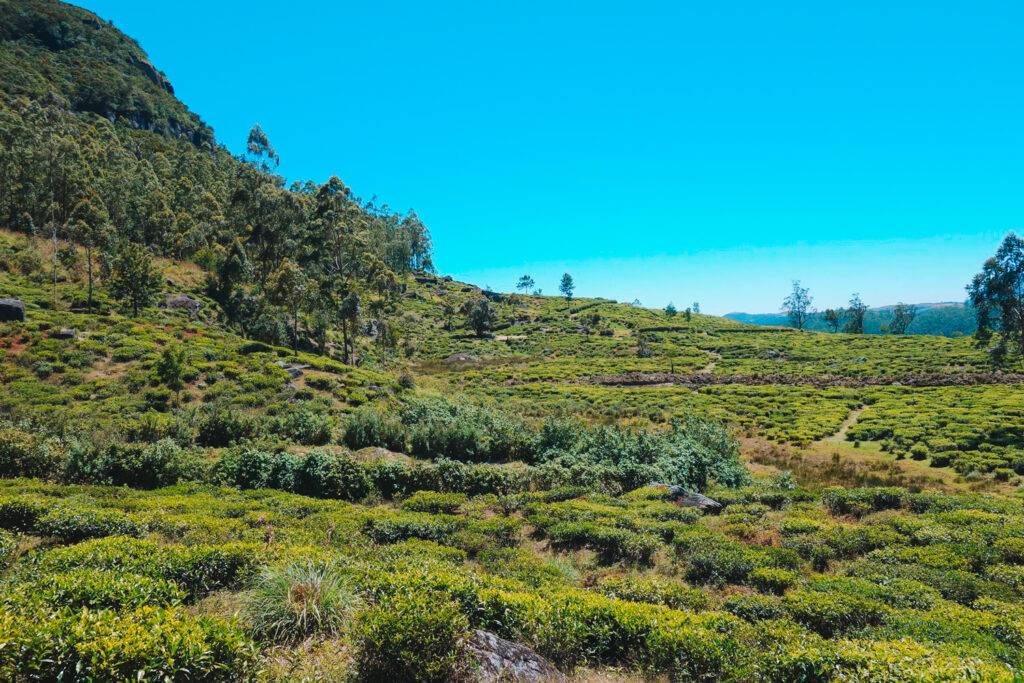
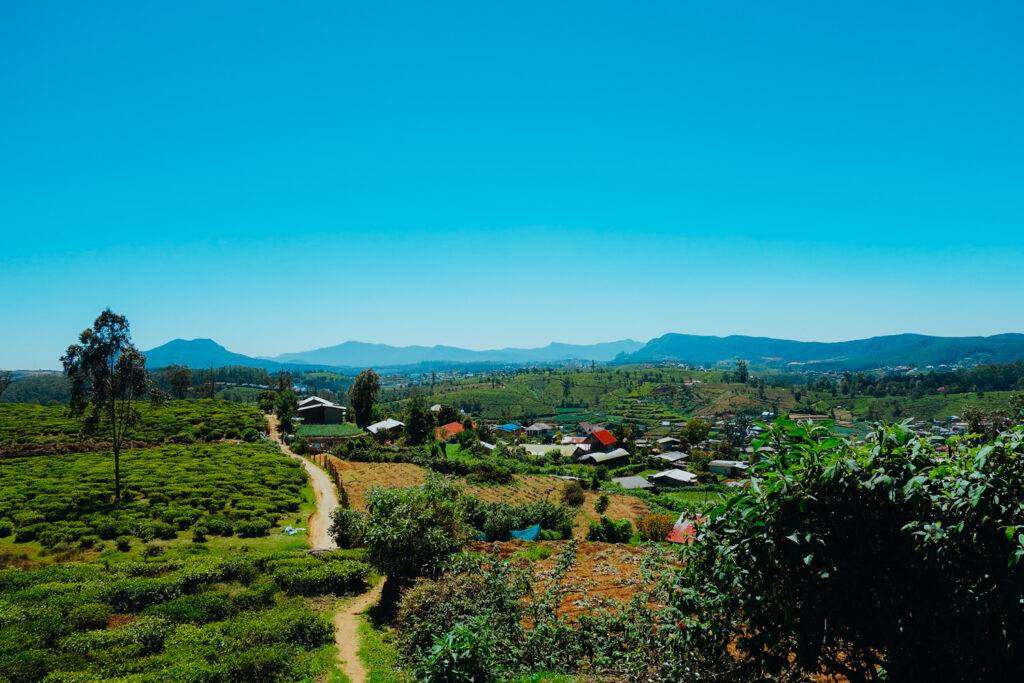
You cannot come to Nuwara Eliya and skip the tea. This is the heartland of Ceylon tea, and the rolling green plantations you’ll see in every direction aren’t just pretty scenery: they’re working estates producing some of the world’s finest leaves.
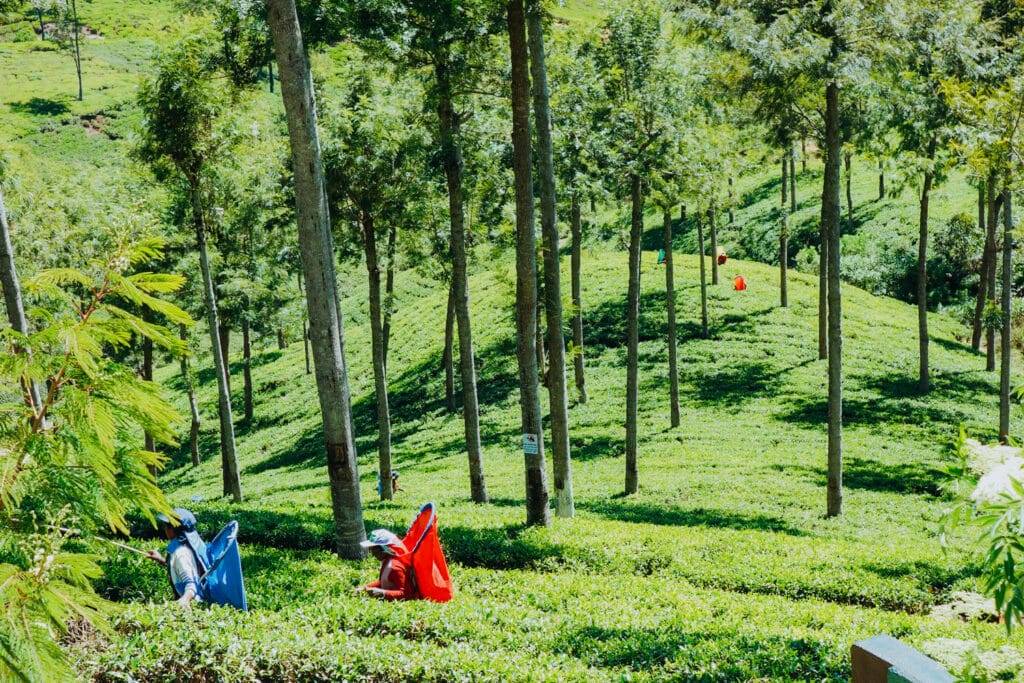
Pedro Tea Estate, built in 1885, is the most popular with tourists and is well set up for visits. You’ll walk through the full production process with a guide: watching pickers bring in freshly plucked leaves (each one collects 20 to 30 kg per day, by hand, in the sun), then seeing the withering, rolling, oxidation, and drying that turns those leaves into the cup you’ll be handed at the end. I was surprised to learn that black, green, and white tea all come from the exact same plant. The difference is entirely in how the leaf is processed.
Bluefield Tea Factory and Labookellie Tea Centre are excellent alternatives if Pedro is crowded or closed for the day. Labookellie, located right on the main road from Kandy, is a particularly easy stop if you’re arriving by car. At all of them, go in the morning for the best chance of seeing the factory in active operation.
A quick tip on photos: some of the women picking tea will pose for you but expect a small tip in return, and they won’t always tell you upfront. Just be respectful and ask first. Pedro’s entrance fee (around 300 LKR) includes the tour and a cup of tea.
3. Hike to Lover’s Leap Waterfall
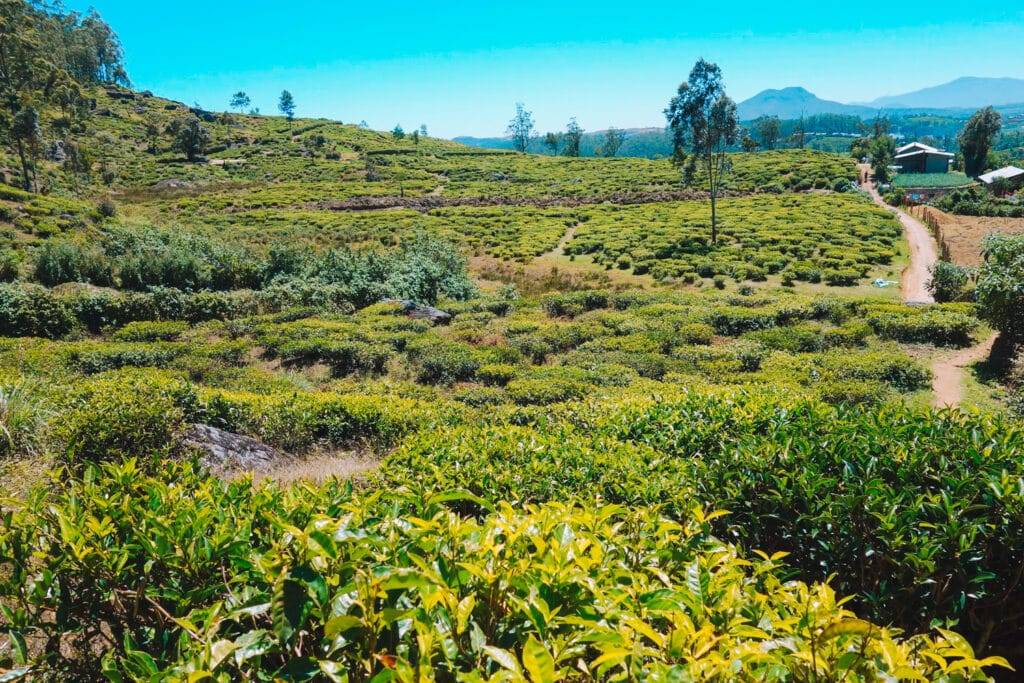
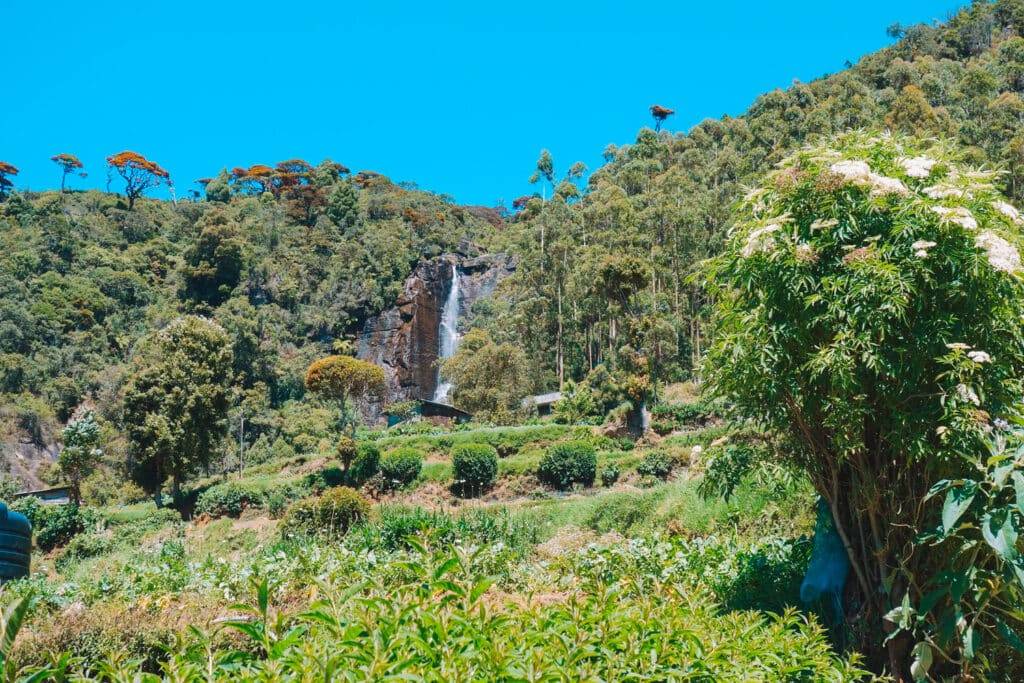
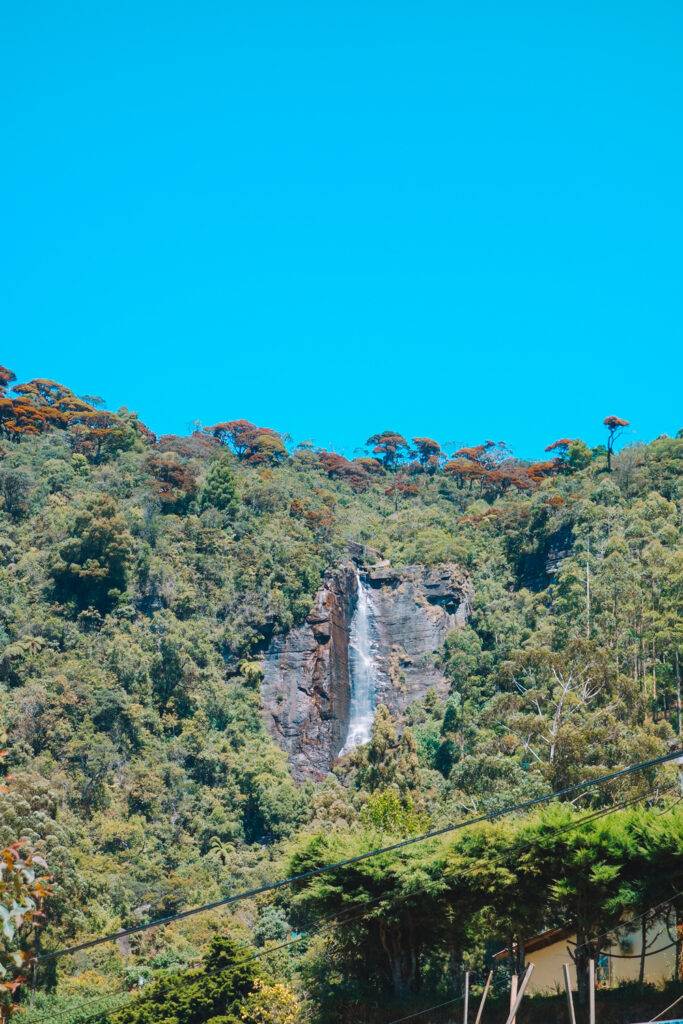
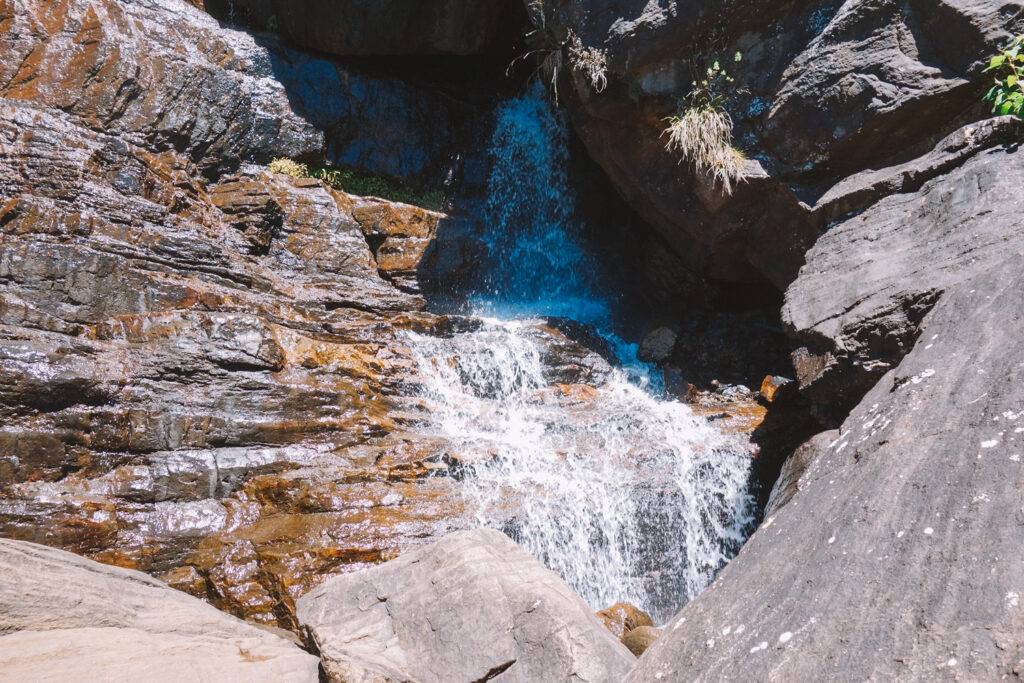
Pair a tea factory visit with a hike to Lover’s Leap Waterfall, which sits nearby and makes for a satisfying half-day combo. The waterfall itself is tall and slender, dropping dramatically through the tea plantation landscape. The name comes from a local legend about two young people from rival clans who fell in love, couldn’t be together, and jumped from the top. Morbid, yes. Scenic, absolutely.
The hike up through the plantations and villages is beautiful, and the more adventurous can scramble to the viewpoint at the top for sweeping views over the region. If you’d rather skip the uphill section, tuk-tuks can get you most of the way there. The paths are steep but the main road is paved.
4. Explore Nuwara Eliya Town
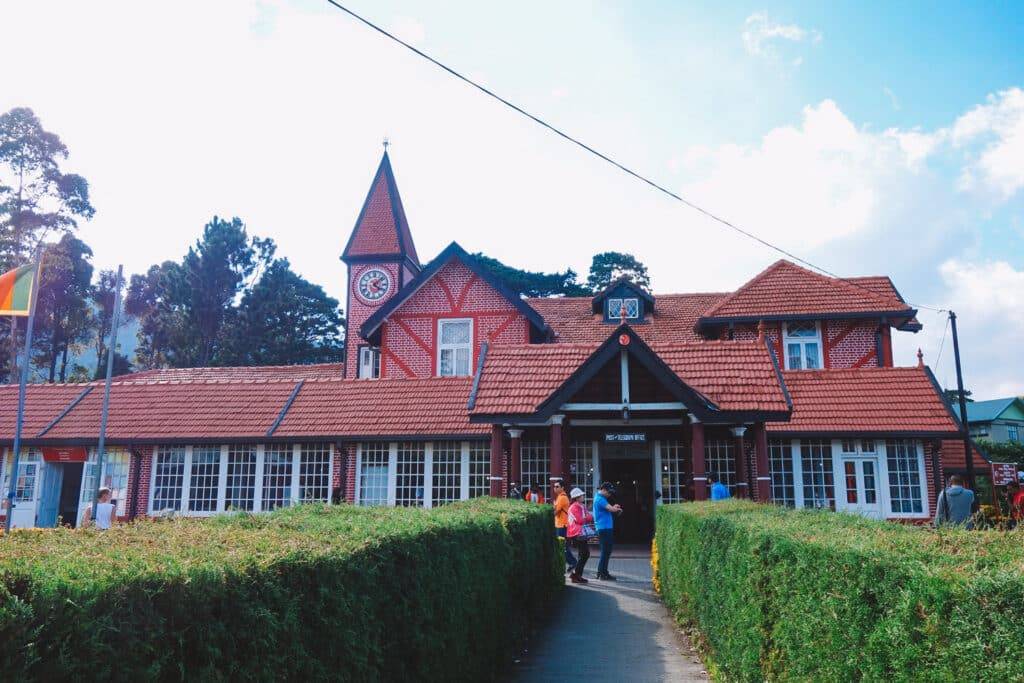
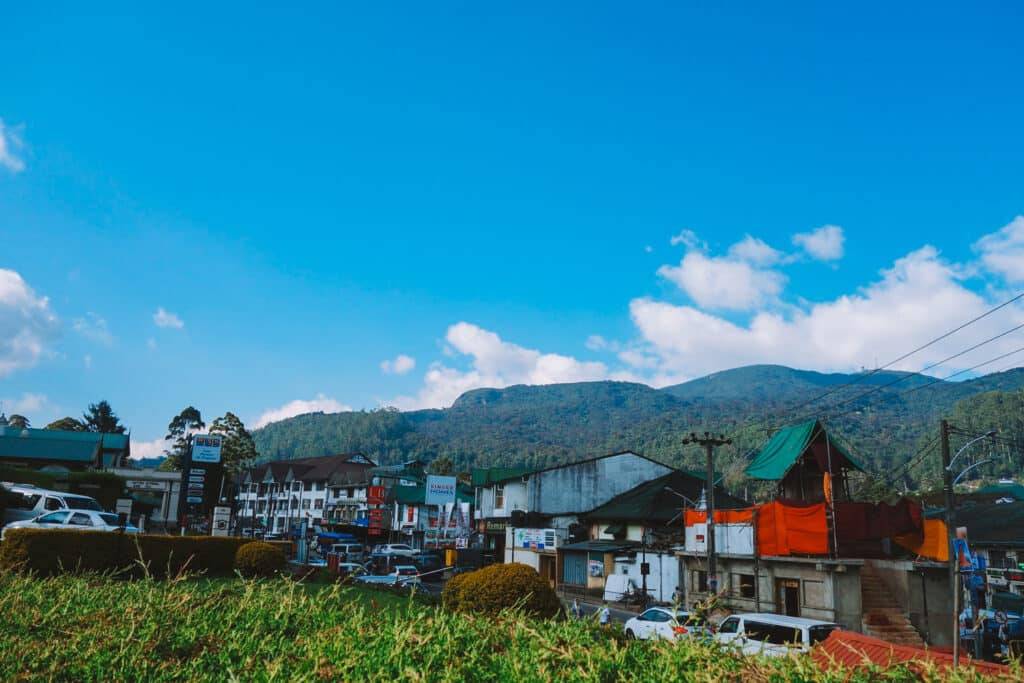
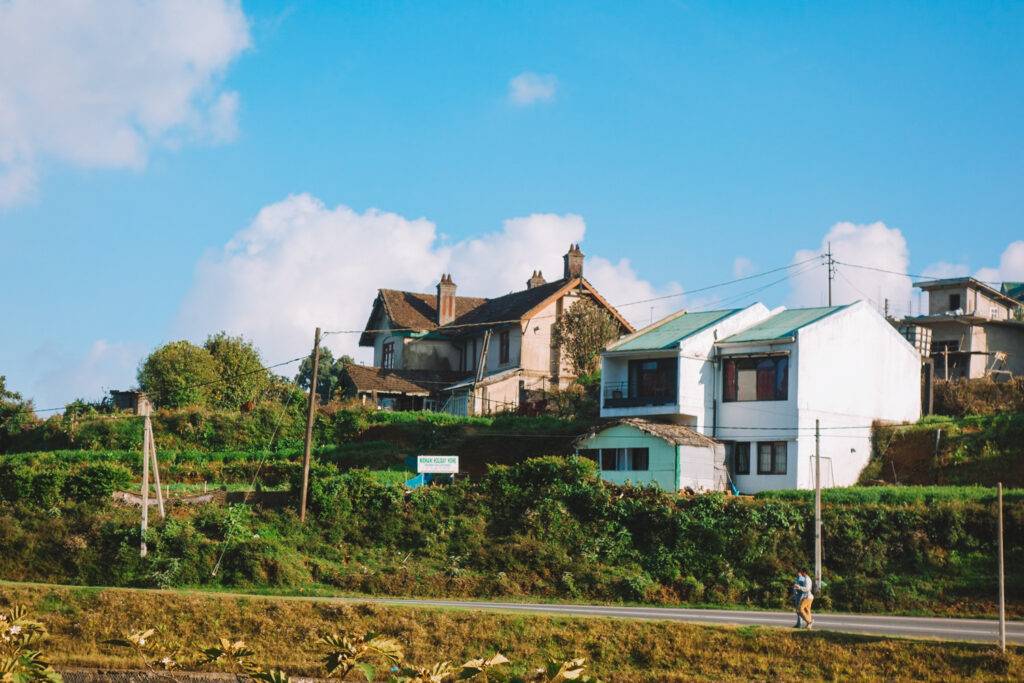
The town center is small enough to cover on foot in a couple of hours, and it rewards a slow wander. The colonial architecture is the main draw: Tudor-style buildings, the racecourse, the golf club, and the most photographed post office in Sri Lanka.
The Nuwara Eliya Post Office, built in 1894, is still fully operational and is considered one of the oldest in the country. Step inside, buy some stamps, send a postcard home. It’s a red-brick charmer that looks straight out of a British market town.
The Nuwara Eliya Golf Club is one of the highest golf courses in Asia and dates back to the colonial era. You don’t need to be a serious golfer to appreciate it: even a stroll around the grounds is pleasant, and the setting against the surrounding hills is genuinely lovely.
You’ll also notice horses around town, some wandering surprisingly freely near the racecourse and lake. Short pony rides are available near Lake Gregory for a small fee if you want to lean into the colonial fantasy.
5. Stroll Victoria Park and Gregory Lake
Victoria Park, named for Queen Victoria, is a well-maintained botanical garden near the town center. It’s particularly good for bird watchers: early morning and late afternoon bring endemic species including the Indian Blue Robin and the Kashmir Flycatcher. There’s a small entrance fee for foreign visitors (around 600 LKR). If you have limited time, it’s skippable, but if you’re already in the area it’s a nice place to slow down.
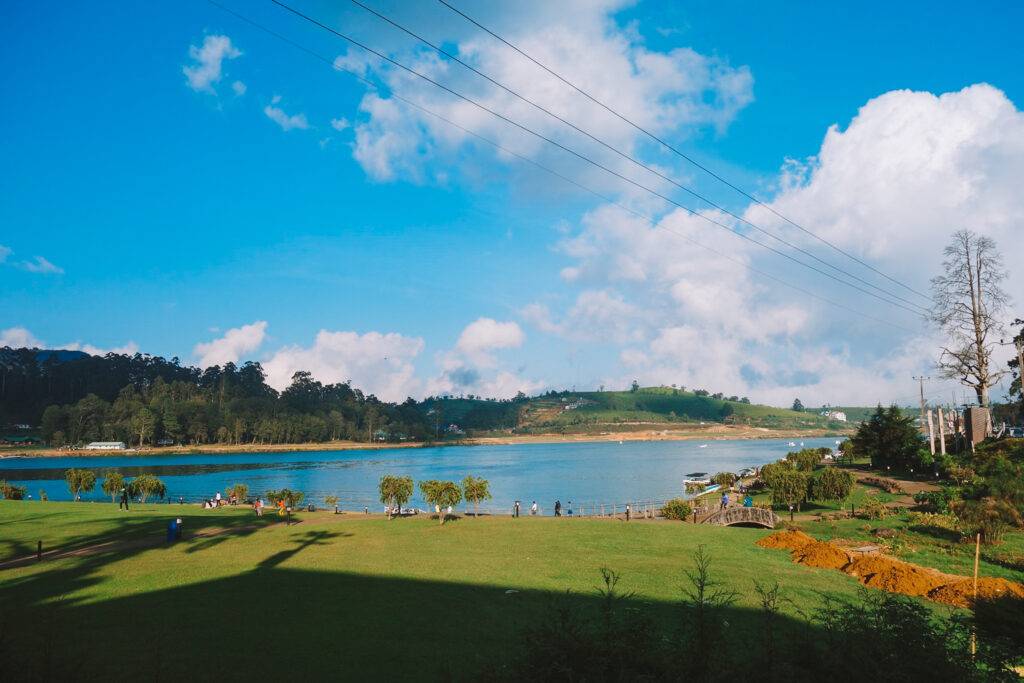
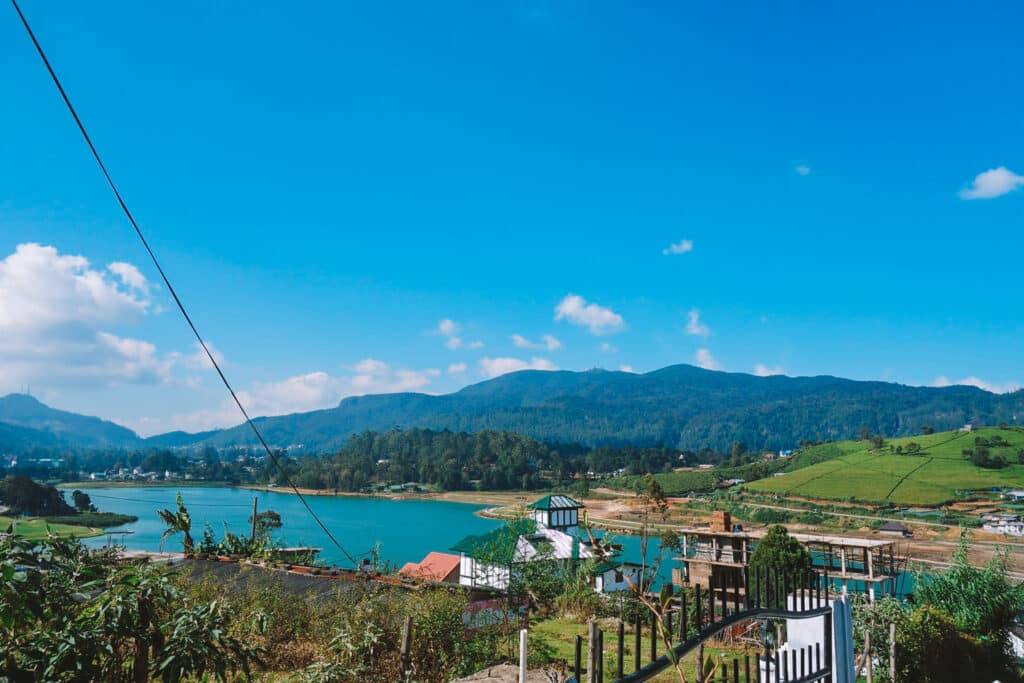
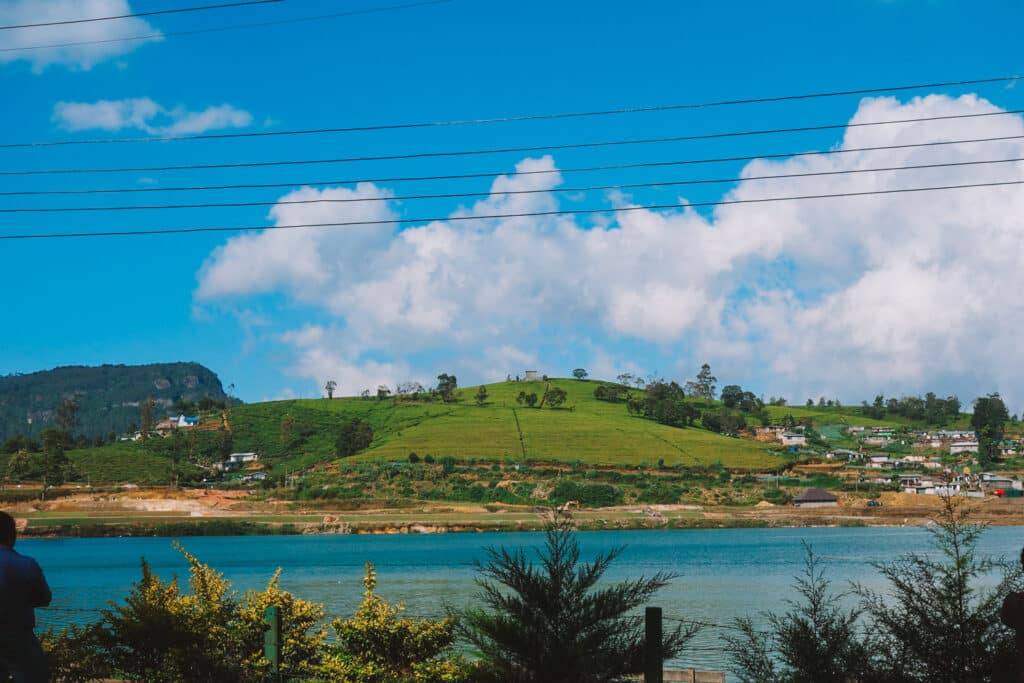
Lake Gregory is a short walk from the park and was originally built as a reservoir during the British era. You can rent pedal boats or rowboats, take a lakeside walk, or simply sit and watch the herons. On clear days, the hills reflected in the water are worth the five minutes it takes to get there. Entrance to the lakefront costs around 600 LKR.
6. Seetha Amman Temple
Located a few kilometers outside of town near Hakgala Botanical Garden, Seetha Amman Temple is one of the most visually striking Hindu temples in Sri Lanka. Brightly colored with elaborate figurines, it’s connected to the Ramayana: this is said to be the spot where Sita was held captive by Ravana, king of Lanka. Whether or not you’re familiar with the story, the temple is worth the visit for the architecture alone. Dress modestly and remove shoes at the entrance.
7. Hakgala Botanical Garden
Sri Lanka’s second-largest botanical garden sits at the foot of Hakgala Rock, just a few minutes by tuk-tuk from Seetha Amman Temple. The cool, misty climate here is ideal for orchids and roses, and something is in bloom year-round. It’s also mentioned in the Ramayana as a garden built by Ravana for Sita during her captivity, which adds an interesting layer to the visit. If you’re making the trip to the temple, there’s no good reason not to tag on the garden.
8. Moon Plains (Sandatenna)
Moon Plains is a relatively new attraction, opened to visitors in 2014, and it’s become increasingly popular for good reason. Located about 6 kilometers from town, the vast open valley offers panoramic views of the surrounding mountains and has its own “Mini World’s End” viewpoint. The landscape is home to elk, wild buffalo, and a variety of birds.
The park is explored by hired safari jeep, so there isn’t a lot of walking involved, but the views from the viewpoint are genuinely stunning on a clear day. Go early in the morning before the mist settles in. This is a good option if Horton Plains is too far or too pricey for your itinerary.
9. Ramboda Falls
At just over 100 meters, Ramboda Falls is the 11th tallest waterfall in Sri Lanka, and it sits conveniently right along the main road from Kandy to Nuwara Eliya. If you’re arriving by car or tuk-tuk, stop here on the way in: it’s that accessible.
You can snap a decent photo from the roadside, but I’d recommend paying the small entrance fee (around 300 LKR) and hiking up the stairs to the viewpoint at the top. It takes about 15 to 20 minutes and the view from above is far more impressive. The path is steep and can be slippery, so wear shoes with grip.
10. Bomburu Ella Waterfall
Bomburu Ella is Sri Lanka’s widest waterfall and consists of several cascades flowing together across a broad rock face. The hike to reach it is more demanding than Ramboda, taking around 40 minutes each way on a path that can get muddy and rocky, so proper footwear is essential.
There’s a small café on the way up if you need a rest and a cup of tea. The effort is worth it: this is one of the most impressive waterfalls I’ve seen in Sri Lanka.
11. Afternoon Tea at The Grand Hotel
The Grand Hotel is arguably Nuwara Eliya’s most famous landmark, a colonial mansion that began as a holiday residence for Sir Edward Barnes, the fifth Governor of Ceylon, back in 1828. Today it operates as a full hotel with 154 rooms, and its afternoon tea is the kind of experience you come to Nuwara Eliya specifically to have.
Tea is served daily from 3:30 PM to 6 PM. Reserve a table in advance, especially during peak season, and request a spot on the lawn if the weather cooperates. There’s something wonderfully absurd about sitting under the Sri Lankan sky drinking Ceylon tea from fine china, and I mean that as a compliment. Even if afternoon tea isn’t your thing, the hotel is worth a stop just to walk through the interiors and admire the gardens.
12. Take the Scenic Train to Ella
The train from Nanu Oya (Nuwara Eliya’s station) to Ella is consistently listed among the most beautiful rail journeys in the world, and that reputation is entirely deserved. The route winds through cloud forest, past tea estates, over bridges, and through hairpin bends as the altitude drops and the temperature climbs. By the time you pull into Ella it’s warm and sunny and it feels like a completely different country.
Book first-class tickets 30 days in advance through the Sri Lanka Railways website, as they sell out fast. Second and third-class tickets don’t guarantee a seat but allow you to stand near the open doors for unobstructed views. Just hold on, watch for tunnels, and don’t attempt anything risky for a photo.
13. Galway’s Land Bird Sanctuary
A couple of kilometers from Victoria Park, Galway’s Land is a small but rewarding bird sanctuary where you can spot endemic species in a more natural, less manicured setting than the park. Wild boars and barking deer also pass through. It’s not a must-do, but birdwatchers will appreciate it and it’s easy to combine with a visit to the park.
What to Eat and Drink in Nuwara Eliya
Try Kiri Kahata
This is the one food experience in Nuwara Eliya you won’t find on any menu, and it’s also one of the best things I drank in Sri Lanka. Kiri kahata is essentially reverse milk tea: a full cup of fresh hot milk with just a tiny splash of strong black tea added. You find it at small roadside stalls along the routes in and out of Nuwara Eliya. Ask your tuk-tuk driver to stop at one. Drink it with a view of the hills. You’ll thank me.
Hela Bojun Hala
This government-supported food court project empowers rural women by training them in food preparation and financial management. The stalls serve fresh, affordable traditional Sri Lankan foods cooked right in front of you: roti, string hoppers, pittu, ulundu wade, and festive specialties like konde kewum. If you spot the jackfruit cutlets, get as many as you can carry. Find it right next to the central market in town.
Strawberries
Nuwara Eliya’s cool climate makes it one of the only places in Sri Lanka where strawberries grow well, and you’ll see them everywhere: sold by the roadside, at markets, at dedicated strawberry cafés. Jagro, one of the main producers, runs a café in the Ambawela area with an extensive strawberry-focused menu. The berries are smaller and lighter in color than you might expect, but trying strawberry ice cream or jam in the middle of Sri Lanka is a genuinely fun moment.
Themparadu Restaurant
For dinner with a bit of personality, Themparadu is one of the more creative restaurants in town. The menu spans local Sri Lankan dishes and more eclectic options, and the cocktail list includes the tree tomato (tamarillo), a local fruit with a sweet-tart flavor that works beautifully in a drink. It’s a few minutes’ walk from the town center and has a roaring fireplace inside. In Nuwara Eliya, that fireplace will feel completely justified.
Where to Stay in Nuwara Eliya
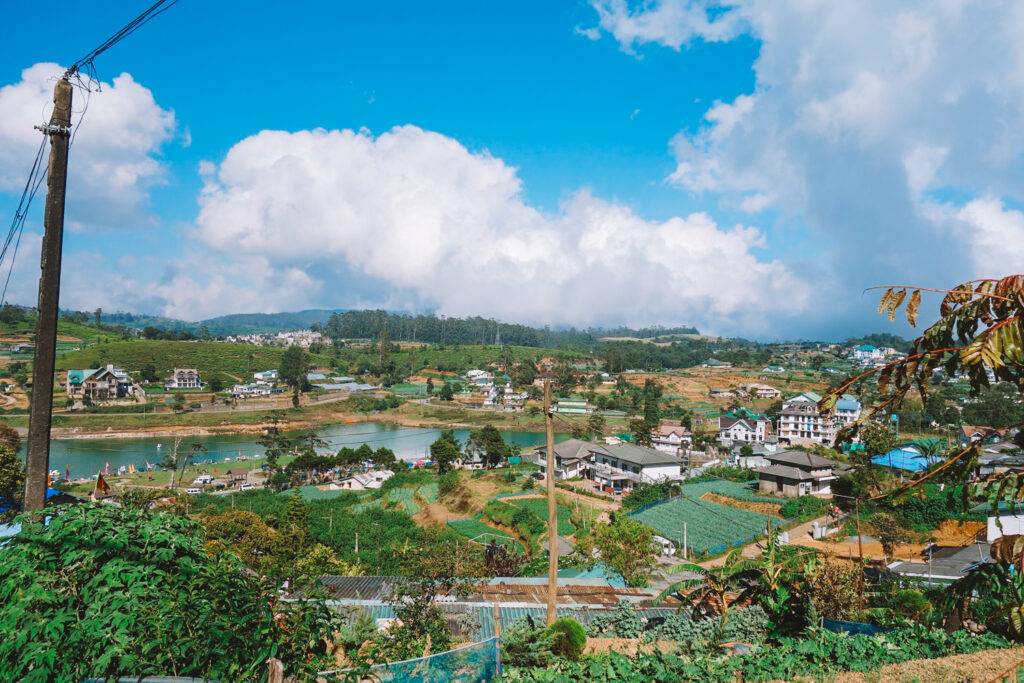
Nuwara Eliya has accommodation ranging from budget guesthouses to colonial-era grand hotels. Here are my picks across different budgets:
- Siril Guesthouse (Budget): Modern, clean, with a good social atmosphere, garden, and restaurant. Dorms and private rooms available. Great for solo travelers.
- Cottage San Francesco (Mid-range): Stylish rooms, excellent views, king-size beds, and a good breakfast. Strong value for the price.
- The Grand Hotel (Splurge): THE classic Nuwara Eliya experience. Colonial architecture, beautiful gardens, afternoon tea, and 154 rooms ranging from standard to suite. If the budget allows, this is the one.
- Heritance Tea Factory (Luxury): Set inside an actual converted tea factory surrounded by working tea gardens, with dramatic architecture and immersive tea experiences. Located outside of town and on the higher end price-wise, but a bucket-list stay if you love design hotels.
Practical Tips for Visiting Nuwara Eliya
Money
Cash is king in Nuwara Eliya. Many guesthouses, local restaurants, and smaller attractions don’t accept cards. ATMs are available in town, but carry smaller denominations (1,000, 500, and 100 LKR notes) as local shops often can’t break a 5,000 LKR note. At the time of writing, the exchange rate is approximately 300 LKR to 1 USD, though this fluctuates.
Getting Around Town
The town center is compact and very walkable, especially by Sri Lankan standards. For attractions outside town (Horton Plains, Hakgala, Moon Plains, the waterfalls), hire a tuk-tuk or negotiate a half-day or full-day driver. Your guesthouse can usually help arrange this.
What to Pack
A warm layer or fleece, a waterproof jacket, and sturdy walking shoes are non-negotiable. Even in the warmer months, evenings in Nuwara Eliya are cool. If you’re visiting in December through February, bring proper cold-weather layers. For temple visits, carry a scarf or shawl and wear clothes that cover shoulders and knees.
Time Zone
Sri Lanka Standard Time is UTC+5:30. There is no daylight saving time.
Pronunciation
Nuwara Eliya is pronounced nuhr-elly-ah. Locals will appreciate the effort even if you don’t quite nail it.
Final Thoughts on Nuwara Eliya
Nuwara Eliya surprised me more than almost anywhere else I visited in Sri Lanka. I expected a pretty tea town. What I found was a place with genuine personality: colonial quirks, mist rolling in off the hills, the smell of woodsmoke from guesthouse fireplaces, and some of the most dramatic landscape on the island just a short drive away. It’s cooler, quieter, and slower than the rest of Sri Lanka, which after a few weeks on the road felt like exactly what I needed.
Give it at least two nights. You’ll be glad you did.
Related posts:
 Dambulla Cave Temple – Entrance fee, opening hours, dress code…
  Kaudulla National Park Safari Guide: Everything You Need to Know
  The Best Things to Do in Galle, Sri Lanka (Complete Travel Guide)
  Things to Do in Ella, Sri Lanka: The Complete Travel Guide
  How to Visit Sigiriya Rock Fortress, Sri Lanka: The Complete Guide
  Things to Do in Kandy, Sri Lanka: The Complete Travel Guide
  Best places to visit in Sri Lanka
  Top 10 temples in Sri Lanka for your bucket list
  Best things to do in Jaffna – Complete travel guide
