
How to Visit Sigiriya Rock Fortress, Sri Lanka: The Complete Guide
Disclaimer: This post may contain affiliate links, which means that if you click on any of those links and make a purchase, I’ll get a small commission, at no cost to you, to help support this website.
Last Updated on June 27, 2026
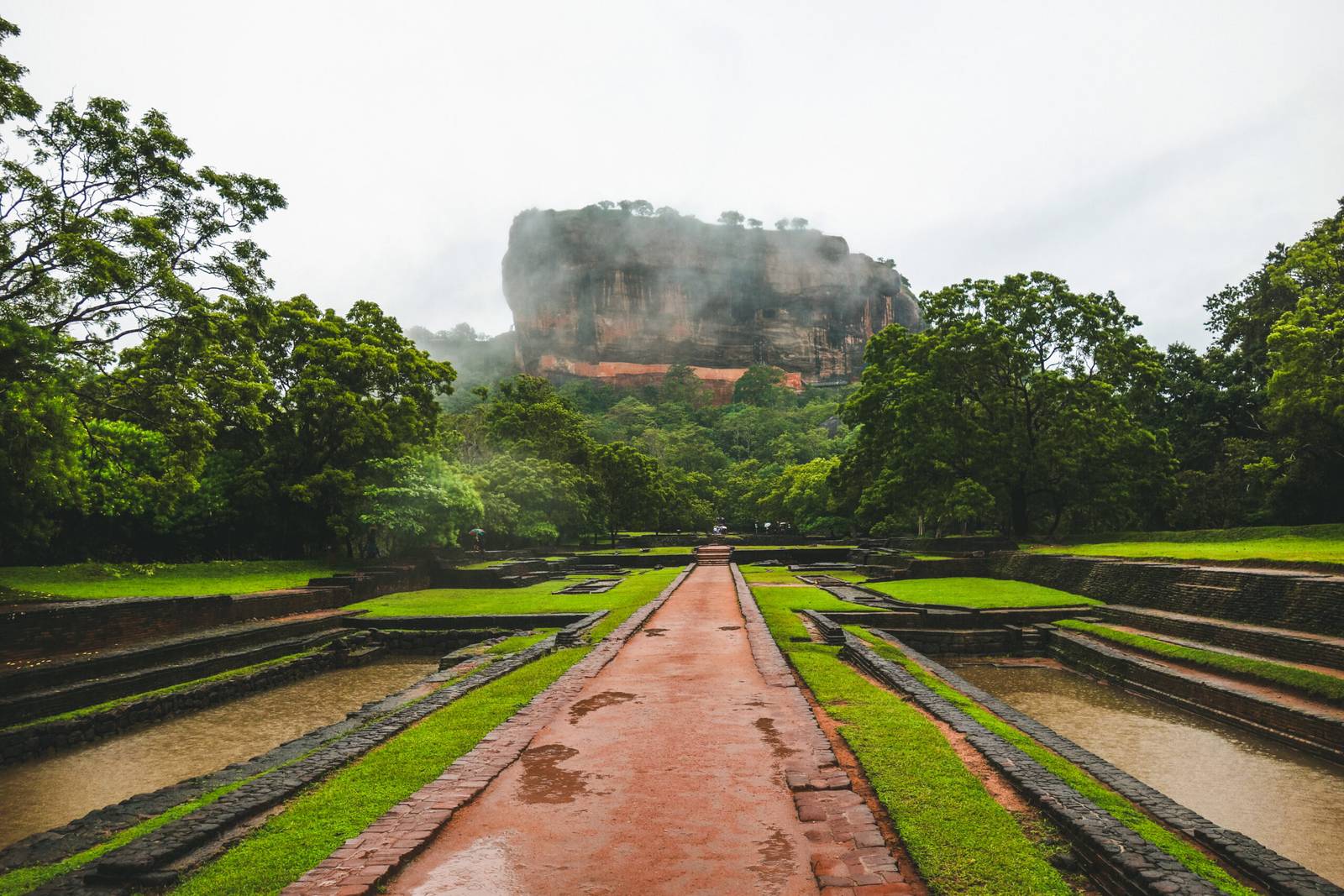
Of all the places I wanted to visit in Sri Lanka, the Sigiriya Lion Rock Fortress was the one. The only one I’d actually heard of before planning the trip, the rock that shows up on every Sri Lanka mood board, every “must-see” list, every conversation about the island. I’d built it up considerably in my head. And somehow, standing at the base of it for the first time, it still managed to exceed expectations.
A 200-meter volcanic rock rising out of flat jungle like it was placed there by someone showing off. A 5th-century palace on top, complete with gardens, frescoes, a hydraulic system that still partially functions, and a staircase designed to pass through a lion’s mouth. One of the most important archaeological sites in Asia, and genuinely one of the most remarkable things I’ve ever seen. Here’s everything you need to know before you go.
Sigiriya at a Glance
| Best for | History lovers, hikers, photography, UNESCO tick |
| When to go | December to April (dry season); visit at sunset to beat heat and crowds |
| Entrance fee | ~USD $35 for foreigners (includes Sigiriya Museum); locals pay LKR 120; SAARC passport holders ~USD $20 |
| Opening hours | 5:00 AM – 5 PM (ticket office); site accessible until ~6:30 PM |
| Getting there | Bus from Dambulla (~30 min, LKR 100) or tuk-tuk (~LKR 2,000) |
| Don’t miss | The frescoes, the lion paws, the summit views, the mirror wall |
| Skip | The summit ruins themselves — foundations only; the views are the real payoff |
A Brief History of Sigiriya
The rock itself predates everything, a volcanic plug that pushed up through the earth billions of years ago. Buddhist monks had already been living in its caves since the 3rd century BC, and some inscriptions found here date back to then. Long before anyone thought to build a palace up there, this was already a sacred place.
Then came King Kashyapa, and things got messy. In 477 AD, he murdered his father, King Dhatusena, some accounts say he had him buried alive, and seized the throne. His half-brother Moggallana, the legitimate heir, fled to India to raise an army. Kashyapa knew retaliation was coming, so he moved the capital from Anuradhapura to the top of this rock, where he’d be almost impossible to reach from the flat plains below.
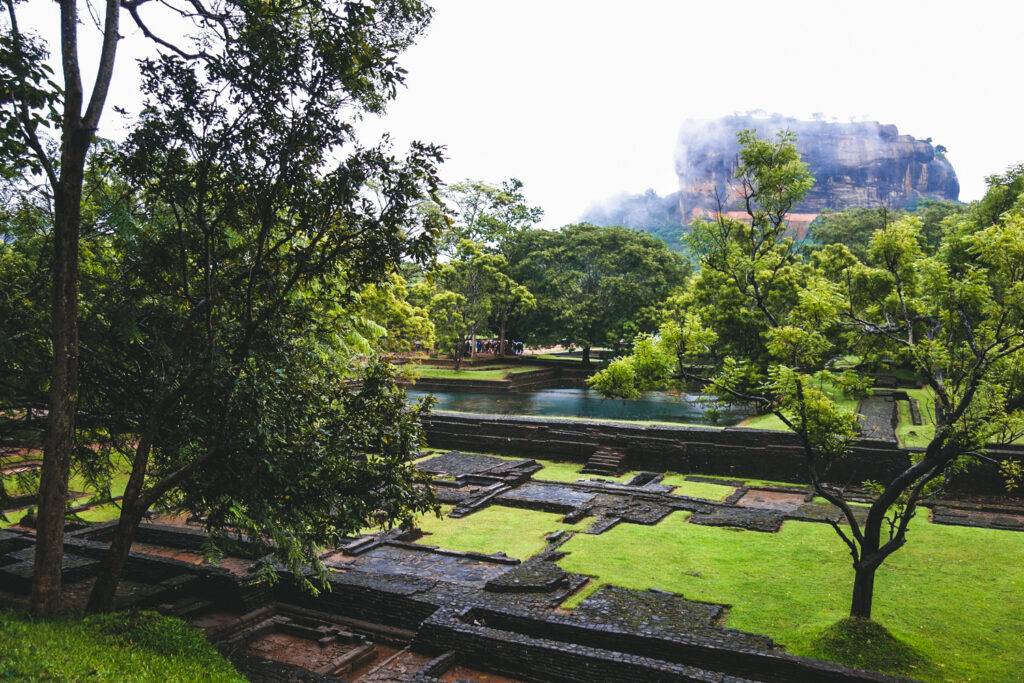
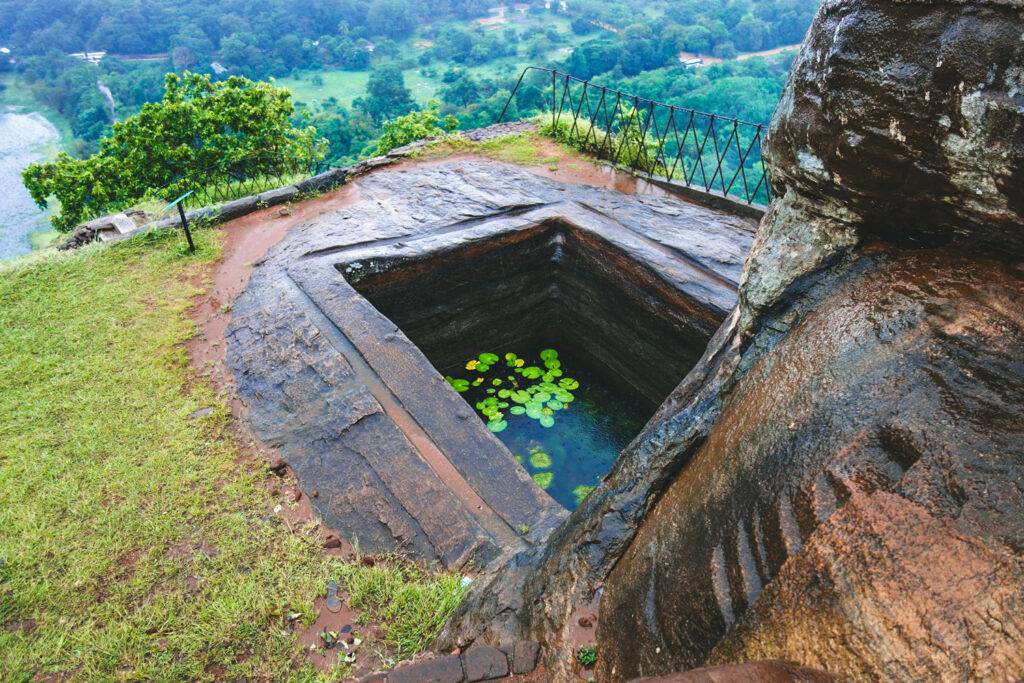
What he built was extraordinary: a full palace complex with pools, audience halls, and an advanced hydraulic system that used wind power and gravity to pump water all the way up to the summit. He had the western rock face painted with hundreds of frescoes. He had a corridor wall polished to such a shine that he could see his own reflection in it. And he had the entrance designed as a giant crouching lion, so that visitors climbed straight through its mouth to reach the palace above.
It lasted 18 years. Moggallana returned with his army, Kashyapa’s troops abandoned him mid-battle, and the king died, by suicide or in combat, historians still disagree. The fortress passed back to monks, was eventually abandoned, swallowed by jungle, and only rediscovered by British explorer Jonathan Forbes in the 19th century. Excavations only began seriously in the 1980s. UNESCO listed the site in 1982.
It always amazes me to think about what people were capable of building 1,500 years ago, and Sigiriya is one of those places that really drives that home.
What to See at Sigiriya Rock
The Sigiriya Museum
Entry is included in your ticket, and it’s worth a quick stop before starting the climb. You’ll find a 3D model of the complex, information on ancient trading routes, and archival photos from the early British excavations.
Photography isn’t allowed inside. It’s small, but it gives you useful context for everything you’re about to see, and most visitors skip it entirely, which means it’s also one of the quieter spots on site.
The Water Gardens and Boulder Gardens
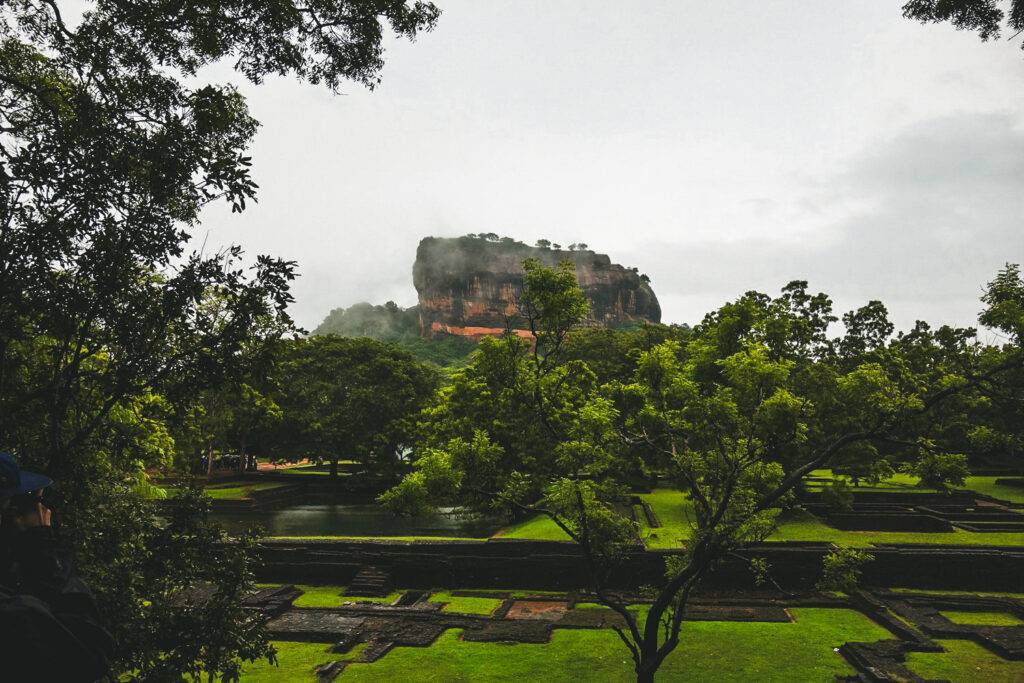
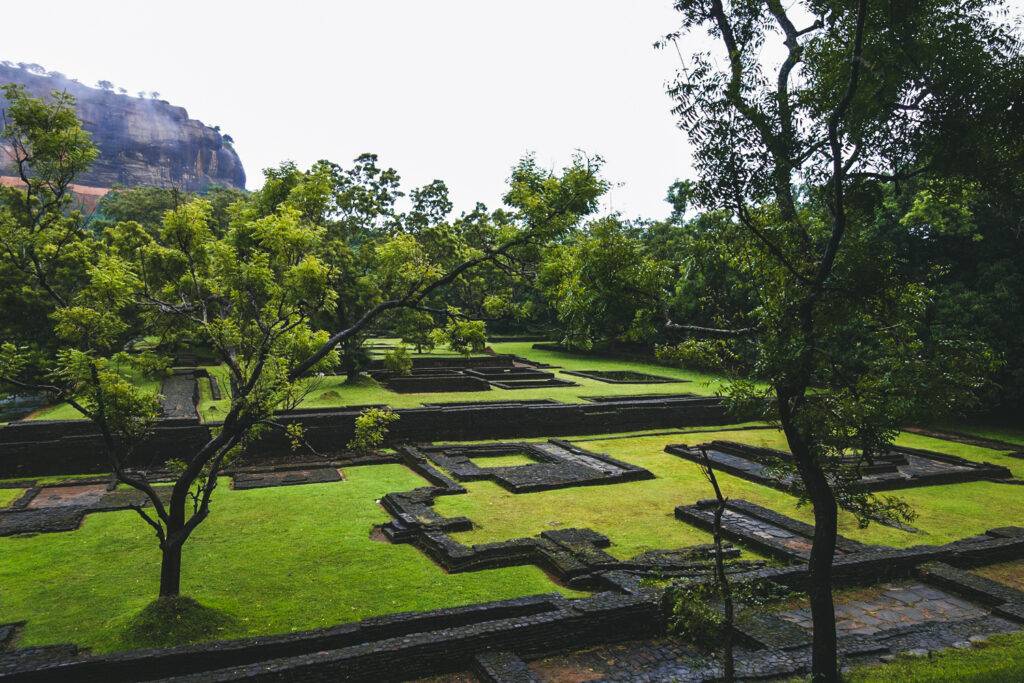
Walking from the entrance toward the rock, you pass through the former royal gardens, and they’re well worth slowing down for. The Water Gardens are a symmetrical arrangement of pools, fountains, and island pavilions fed by an underground network of ducts and hydraulics that reportedly still function during the monsoon season, when water pressure from higher tanks pushes up through hidden pipes and erupts from fountain holes. During the dry season the fountains won’t be running, but the pools are still beautiful to walk past.
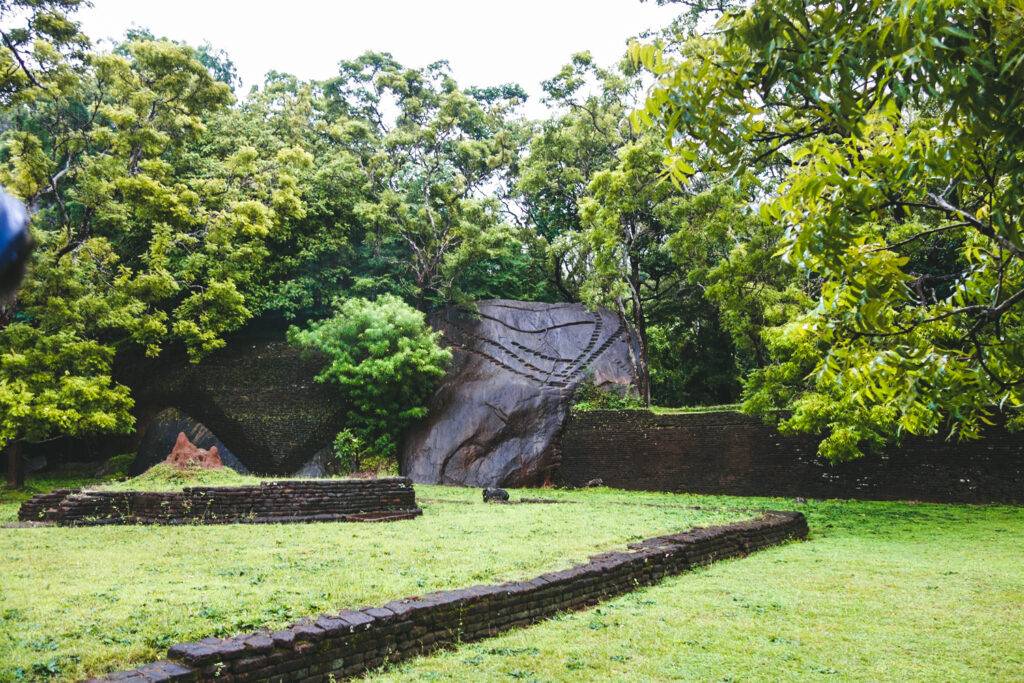
Beyond those, the Boulder Gardens feel entirely different — narrow paths threading between massive natural boulders that once formed the foundations of the monks’ monastery. Look at the rock surfaces and you can still spot carved ledges and niches where monks stored belongings. The Cobra Cave is tucked in here too, worth a small detour.
The Frescoes
About halfway up, a spiral metal staircase branches off the main path and leads to a sheltered pocket in the rock face where the famous frescoes are painted. You’ll see curvaceous, bare-chested women offering flowers and fruit, rendered in vivid pigment directly on the rock. Around 21 figures are visible today. Ancient graffiti on the Mirror Wall refers to as many as 500 figures once covering the rock face; archaeologists believe the entire western and northern face may have been painted.
Who the women are remains a genuine mystery. Theories include celestial nymphs (apsaras), the king’s courtesans, or depictions of Tara from Tantric Buddhism. No consensus. I find that ambiguity makes them more fascinating, not less.
Photography is strictly banned here to protect the paintings. Flash is highly damaging, and past visitors who ignored the signs caused real harm. Wardens take this seriously and have been known to confiscate cameras without return. Don’t risk it. Just stand there and look properly, which is what you should be doing anyway.
The Mirror Wall
Right after the frescoes, a long plastered brick wall stretches along the path. This was once polished so finely that the king could see his reflection walking past it. The mirror effect is long gone, but what’s left is arguably more interesting: 1,500 years’ worth of visitor graffiti. Between the 7th and 11th centuries, literate visitors scratched poems, observations, and tributes to the frescoes into the plaster. Some of it is genuinely beautiful writing. Think of it as the world’s oldest TripAdvisor, except with better poetry and no star ratings.
Adding your own marks is prohibited. The inscriptions have been studied by scholars as a record of the evolution of the Sinhalese script, so they’re historically significant documents, not a guestbook.
The Lion Paws
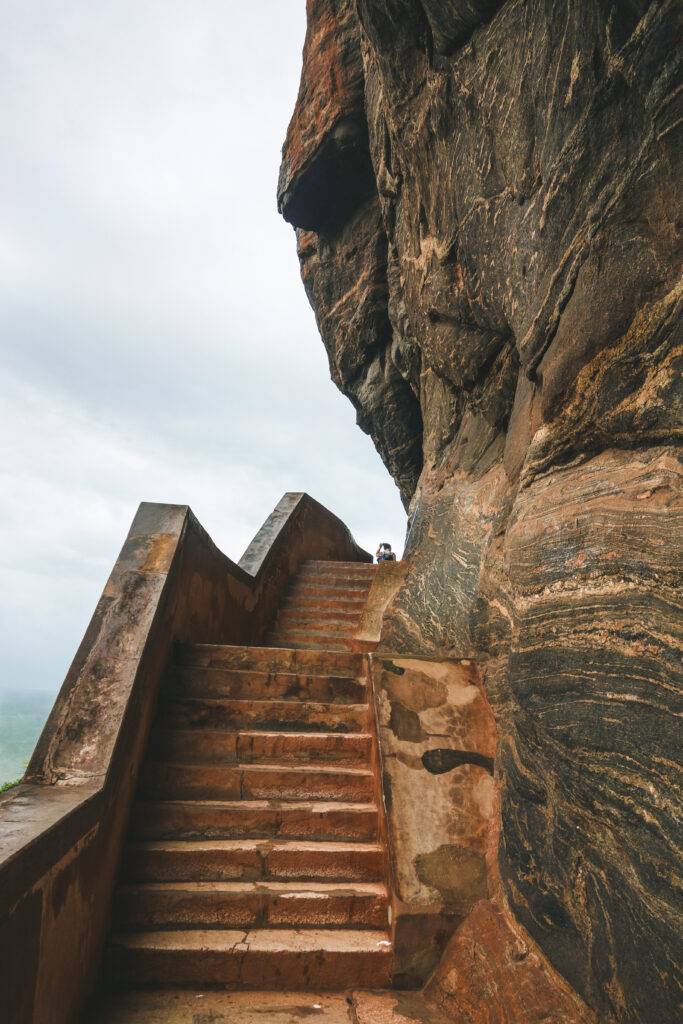
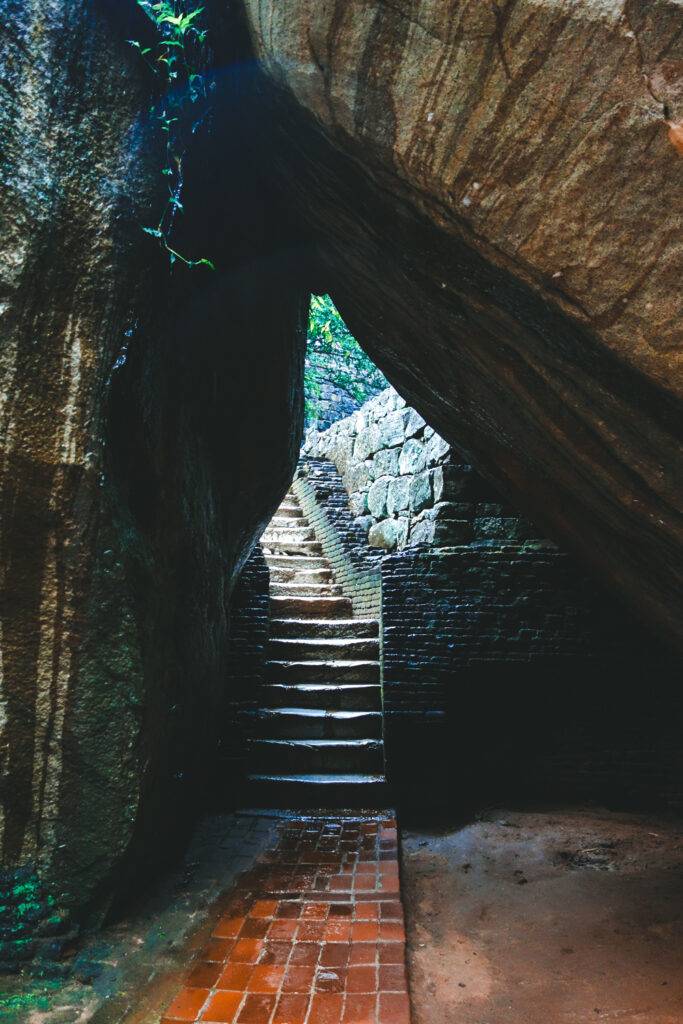
Honestly? The stairs impressed me more than almost anything else at Sigiriya. And I don’t mean the metal staircases they’ve added for modern visitors, I mean the original steps: squared notches cut directly into the near-vertical rock face, with nothing below but air. Looking at those and thinking about the people who climbed them daily, 200 meters up, to reach the king’s palace above, that’s when it really hits you.
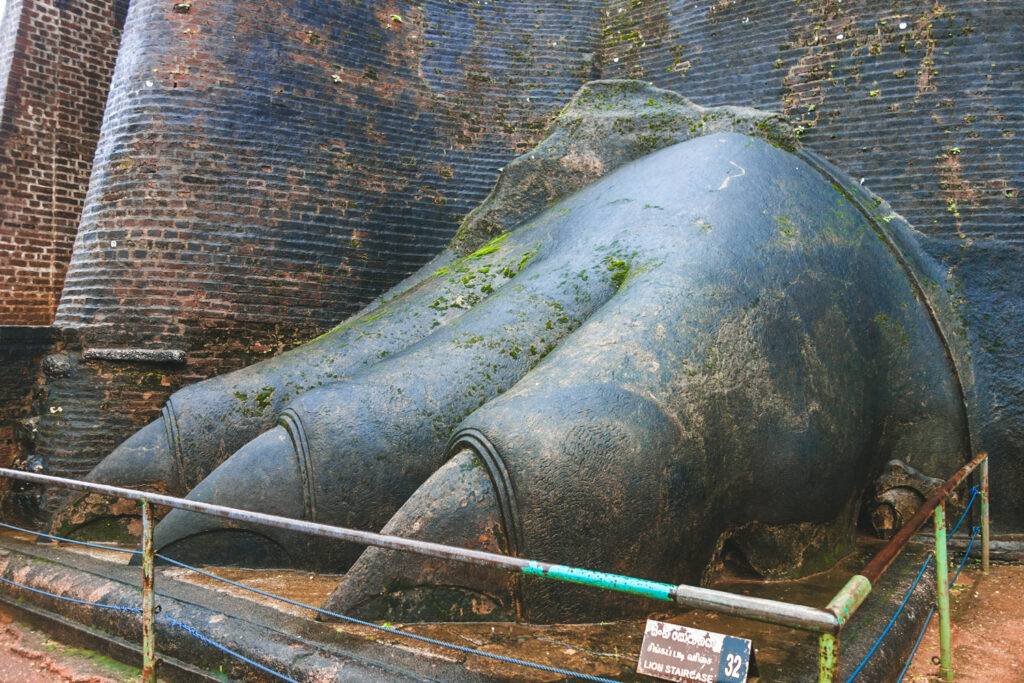
The two enormous carved stone lion paws that flank the base of the final staircase are what gave this fortress its name. Three-toed, remarkably well-preserved, they once formed the base of a full lion structure, visitors would have passed through its gaping mouth to ascend to the palace. The head and torso eroded away centuries ago. Just the paws remain, which is somehow more striking for the imagination it requires.
The Summit
The final push is a steep metal staircase bolted to the rock face: narrow, exposed, and a bit hair-raising if heights aren’t your thing. It’s perfectly safe, but I’ll be honest with you: don’t look down if you’d rather not. Once you step out onto the flat plateau at the top, though, all of that evaporates.
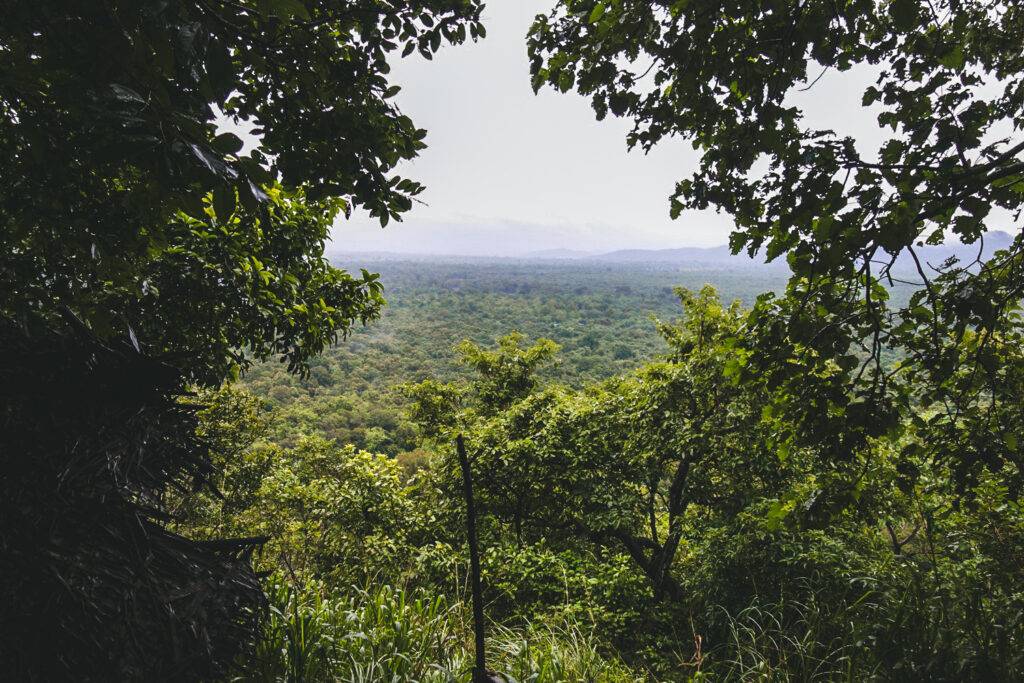
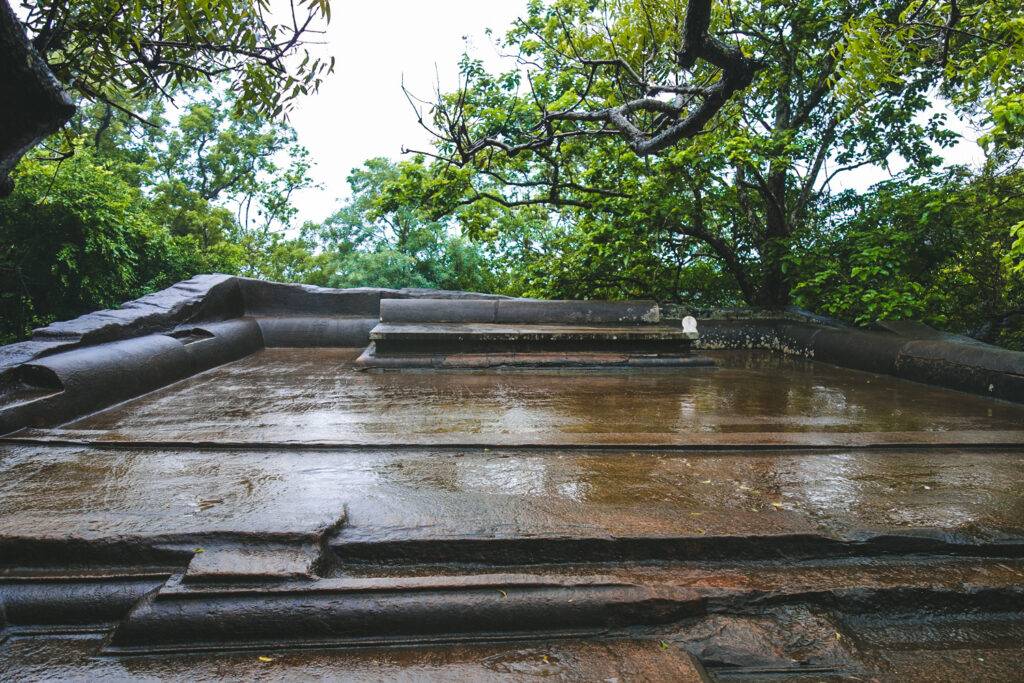
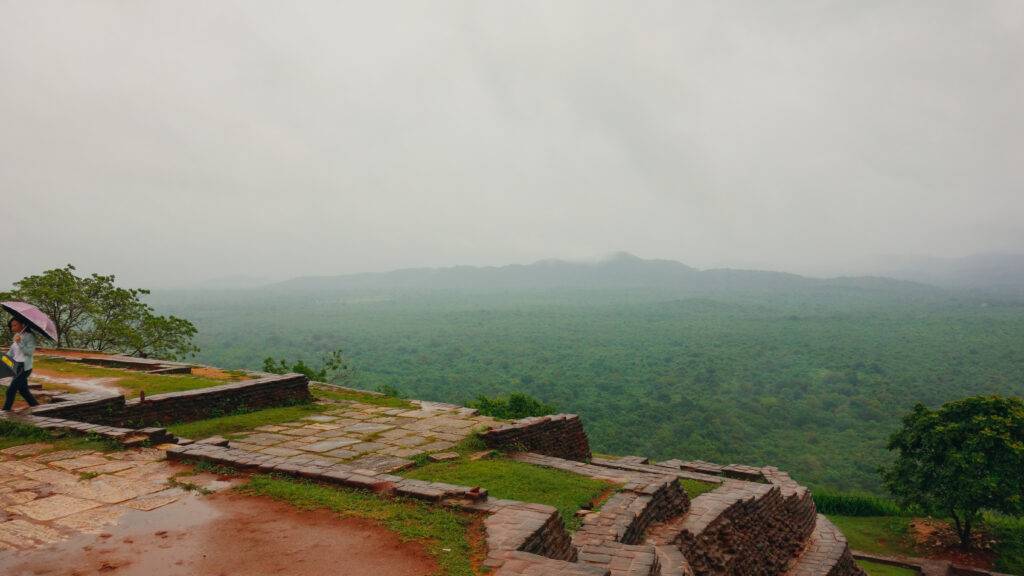
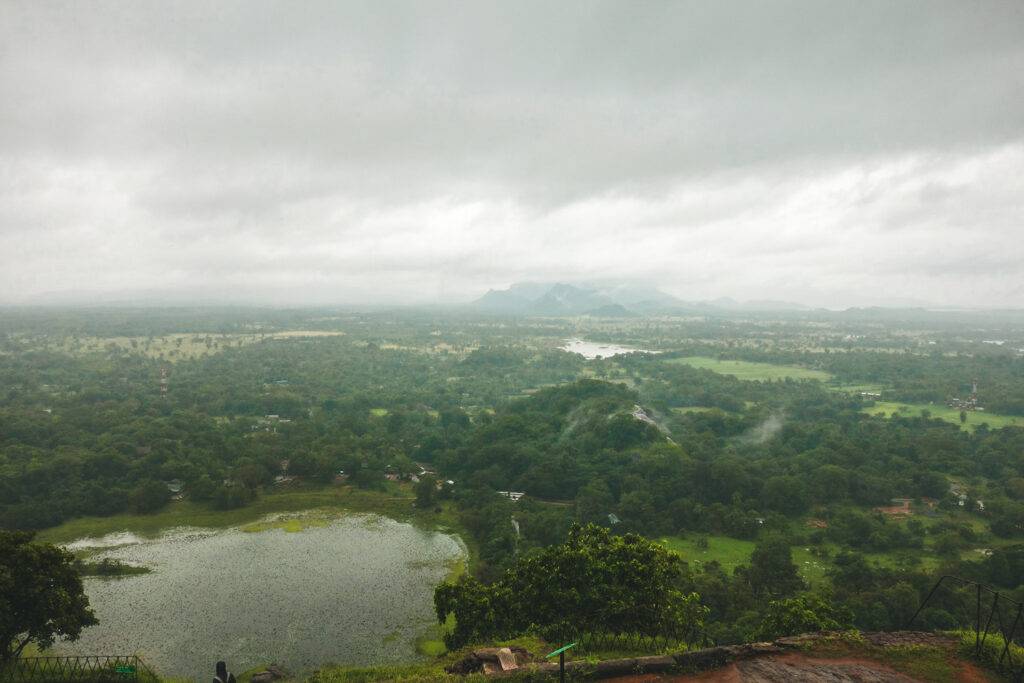
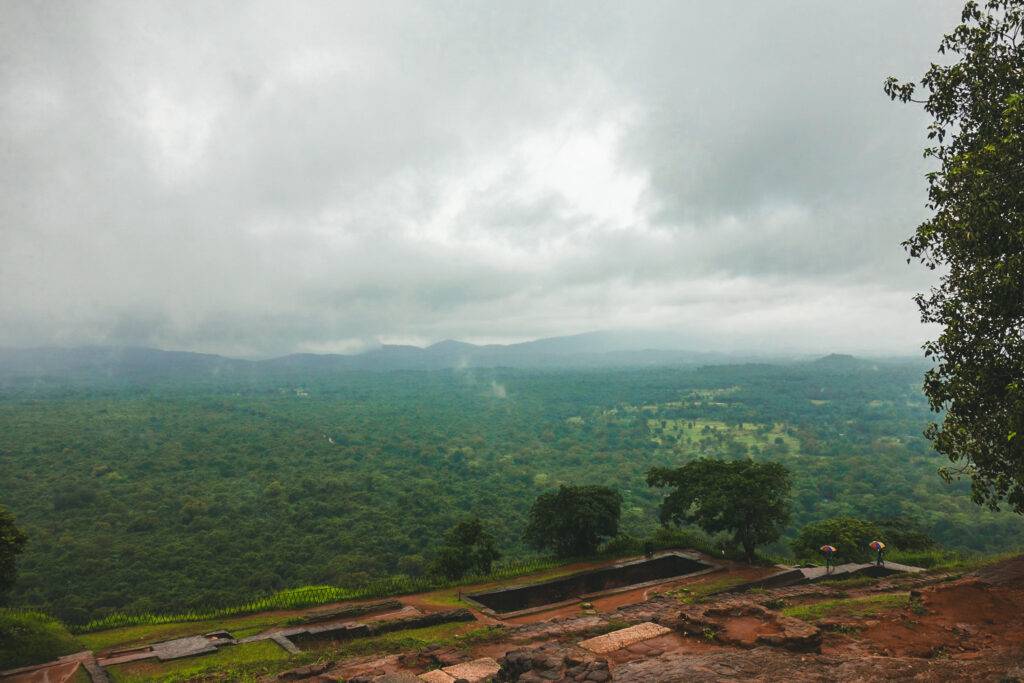
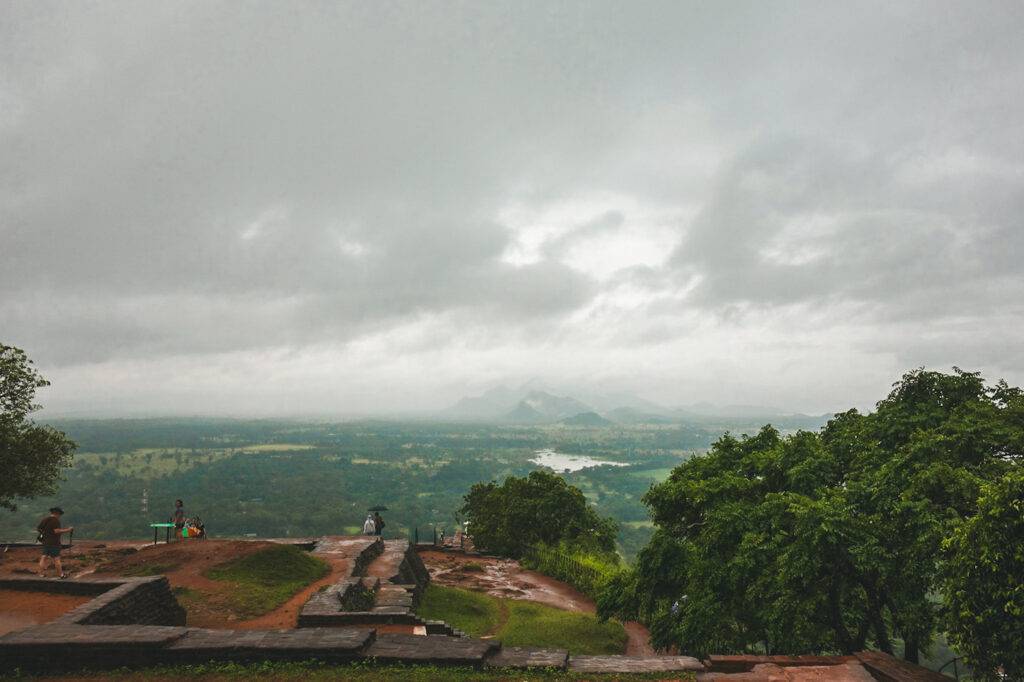
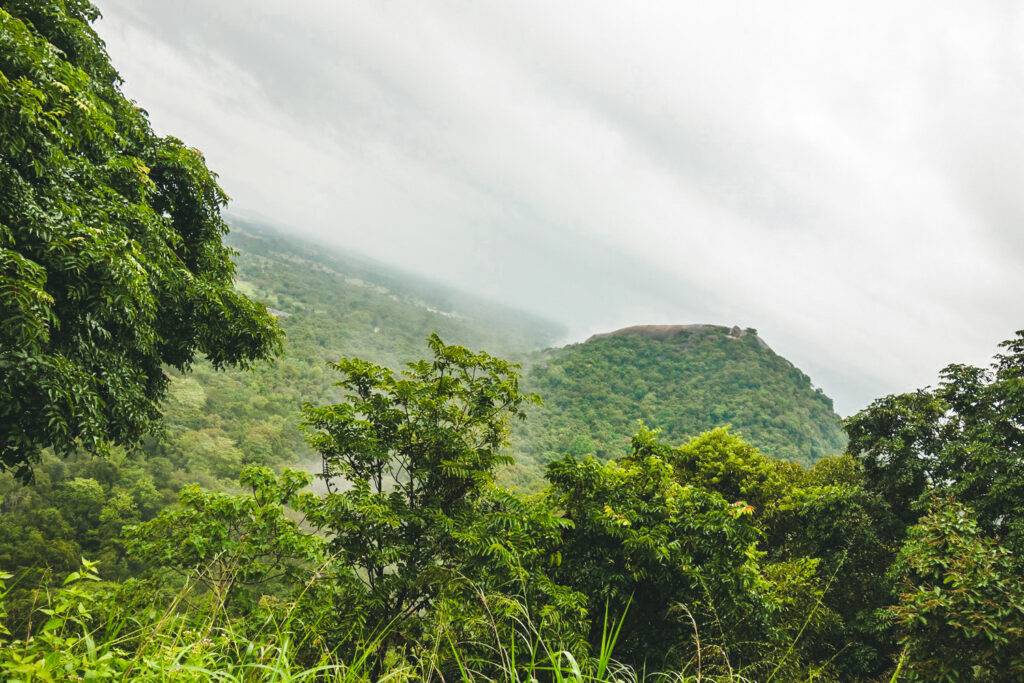
The palace ruins themselves are mostly foundations: pools, terrace walls, outlines of rooms. Not much standing. But the views in every direction are extraordinary: Pidurangala Rock across the way, an endless carpet of jungle below, the shimmer of lakes, the flat grasslands of Minneriya and Kaudulla National Parks stretching to the horizon. It’s the kind of view that makes you stand still for a while.
My experience
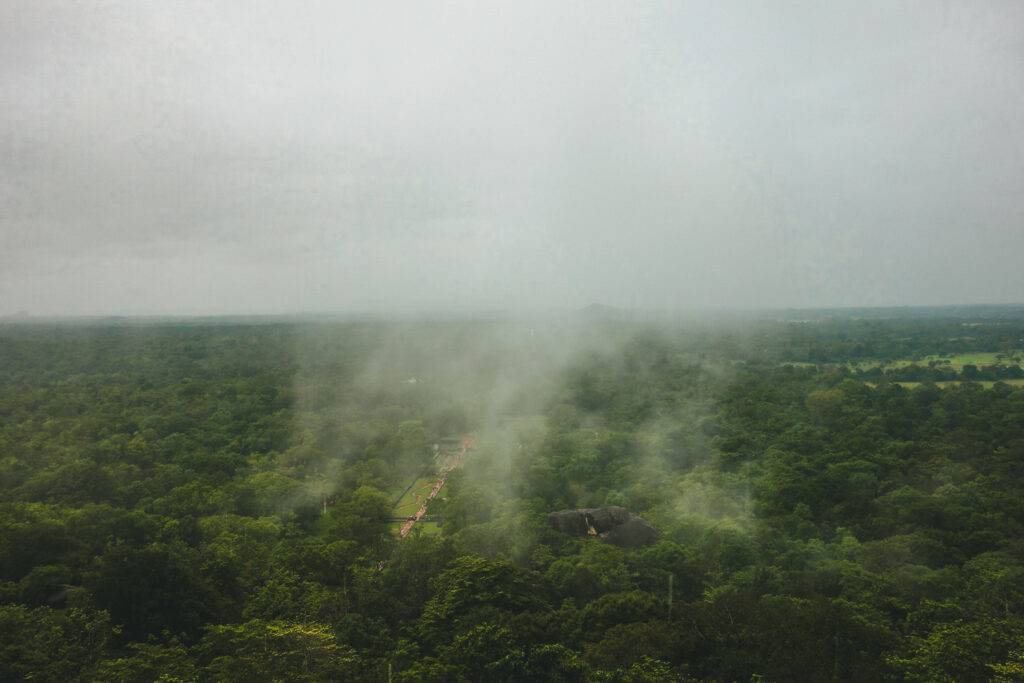
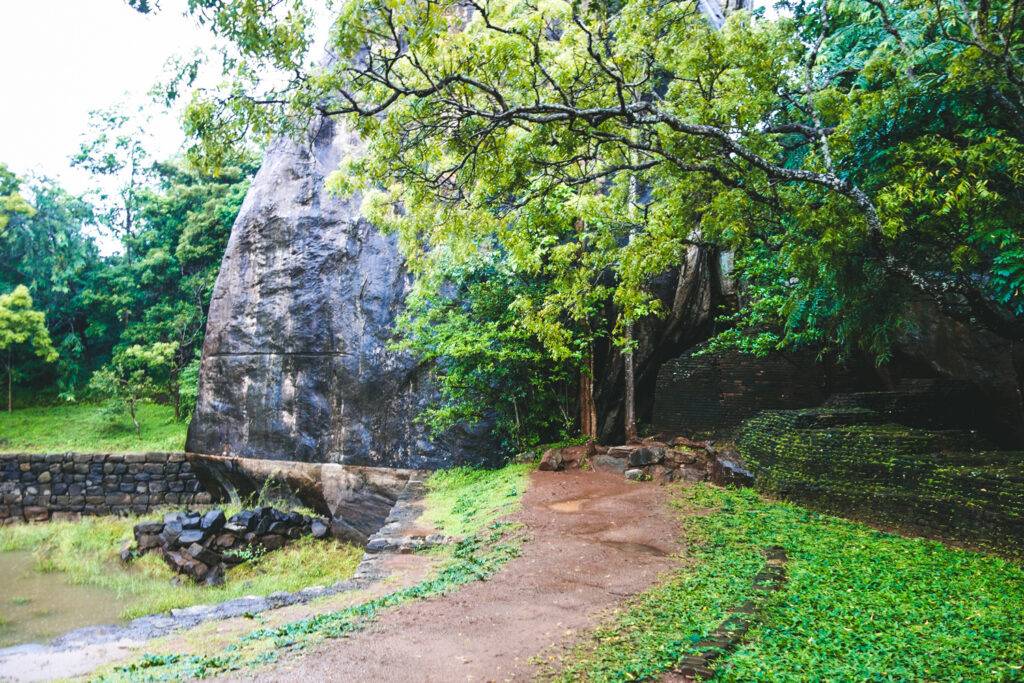
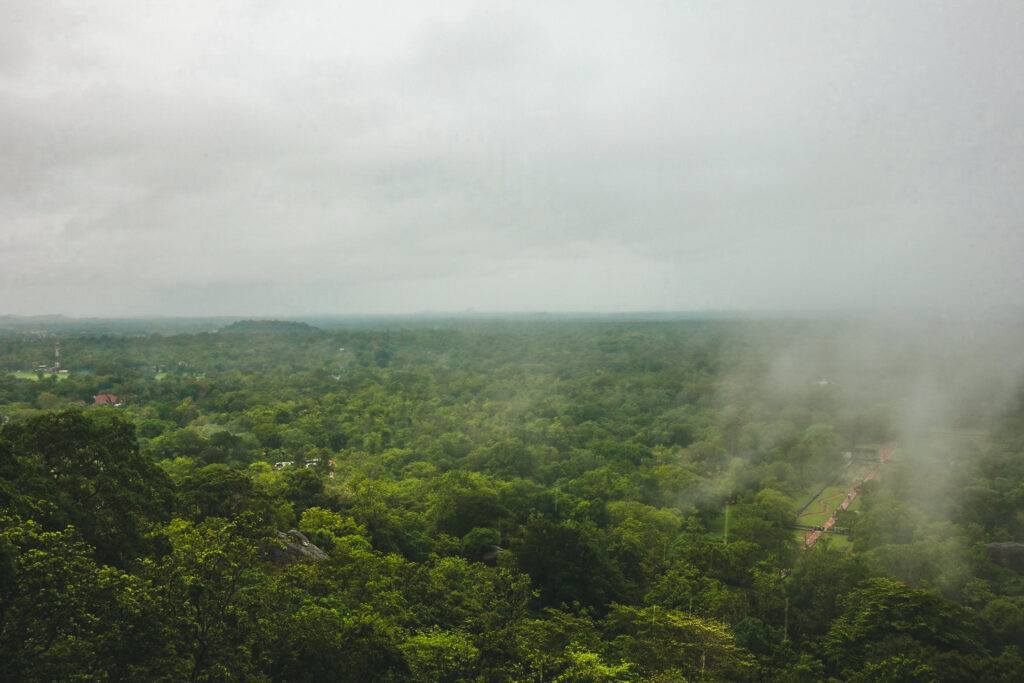
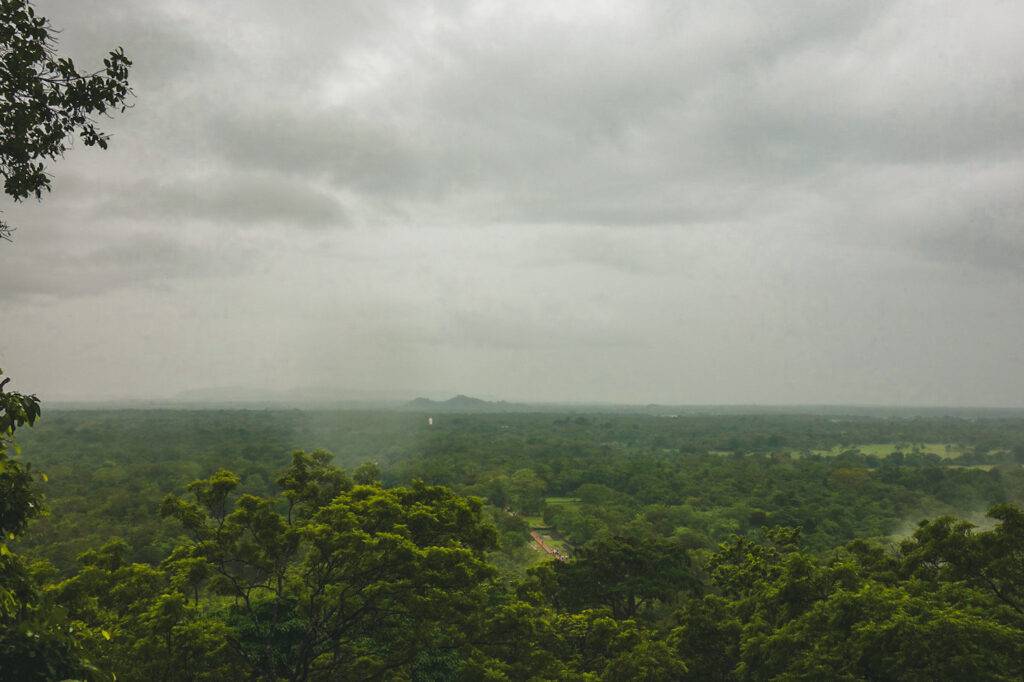
As you can probably tell by the pictures, I visited on a very rainy day. I’d been waiting 10 days for it to clear and finally gave up. The next day, the sun came out. Of course it did. The silver lining to the rain was that the place was far less crowded than it normally is, and the mist around the rock had its own atmosphere. Despite the weather, I really enjoyed my day at Sigiriya. It’s a wonderful experience, even in the rain, perhaps especially in the rain, when the crowds thin out and you actually get a moment to take it all in.
Practical Information
Entrance Fee and Tickets
Entry costs around USD $35 for foreign visitors, which includes the Sigiriya Museum. SAARC passport holders (India, Nepal, Bangladesh, and others) pay a reduced rate of around USD $20 on presentation of their original passport, worth knowing if you’re traveling with South Asian friends. Locals pay LKR 120.
The ticket office is easy to miss. It’s set inside a building near the museum, separate from the main entrance. Head there first before crossing the moat bridge into the complex. Payment is generally accepted in both cash and card, but don’t rely solely on the on-site ATM, it’s not always working. If you’re planning a sunset visit, you must buy your ticket before 5 PM.
Opening Hours
The site opens at 5:00 AM. The ticket office closes at 5 PM. You can stay inside after that, but the main entrance gate closes, follow the signs for the after-hours exit on your way down. The site is generally accessible until around 6:30 PM.
When to Visit
The dry season runs from December to April, with March generally offering the best visibility. This is also peak season, so expect crowds, particularly mid-morning, when day-trippers arrive from Kandy and Colombo. The wet season (May to November) brings more humidity and afternoon storms, but also fewer tourists and, occasionally, functioning fountains in the Water Gardens.
My strong recommendation: visit Sigiriya at sunset rather than sunrise. The ticket office closes at 5 PM, so you need to be through the gate before then, but by the time you’ve climbed the 1,200 steps, sunrise is long over anyway. A late afternoon visit means cooler temperatures, golden light over the jungle canopy, and significantly fewer tour groups. Save your early alarm for Pidurangala Rock, where sunrise over Sigiriya is genuinely spectacular.
The Climb
Around 1,200 steps from bottom to top, taking roughly 45 minutes to an hour at a moderate pace. Add 40 minutes at the summit, 30 minutes to descend, plus time for the gardens below. Budget at least 3 hours in total.
There’s no dress code (it’s not a temple), but wear proper shoes with grip. Bring more water than you think you’ll need. The sun on the exposed upper sections is intense.
For those with a fear of heights: the final staircase and some of the metal ladders involve steep drops on both sides. It’s manageable, but worth knowing in advance. For those with significant mobility limitations: the climb unfortunately isn’t accessible by any alternative route, but the gardens at ground level are still worth visiting on their own.
Watch Out for the Wasps
This isn’t a joke. Sigiriya has several active wasp colonies, particularly around the spiral staircase near the frescoes. There are warning signs posted throughout the route. Walk quietly, don’t make sudden movements, and don’t gesture near the hives. There are protective mesh shelters on the route for use during an attack. There’s a locally held belief that the wasps are King Kashyapa’s reincarnated army, still guarding the fortress. Whether or not you find that convincing, take the signs seriously.
Sigiriya vs. Pidurangala: Do Both
A lot of budget travelers skip Sigiriya and hike Pidurangala Rock instead — it’s LKR 1,000 (roughly USD $3-4) vs. USD $35, and the view of Lion Rock from Pidurangala is genuinely one of the best photographs you’ll take in Sri Lanka. I understand the logic entirely.
But my personal take: do both if at all possible. Pidurangala gives you the better aerial view of Sigiriya, but it can’t give you the frescoes, the mirror wall, the lion paws, or the experience of actually walking through an ancient palace. Those things are unique and irreplaceable. If budget forces a choice, Pidurangala is the smart one. If you have the $35, Sigiriya is worth every cent.
The ideal strategy: Pidurangala at sunrise (the rock glows golden in morning light, viewed from above the jungle), then Sigiriya in the late afternoon. To access Pidurangala, you enter through the Pidurangala Sigiri Rajamaha Viharaya temple at the base — knees and shoulders must be covered to pass through. The hike takes about 30 minutes, with some boulder scrambling near the top. Halfway up, look for the 12-meter reclining Buddha sheltered under a rock overhang. Pidurangala is open from 5 AM to 6 PM.
How to Get to Sigiriya
From Dambulla (easiest)
Dambulla is the main transport hub for Sigiriya. Buses run every 30 minutes from the Dambulla bus station, around LKR 100 per person, journey time about 30 minutes. The final stop is a 10-minute walk from the Sigiriya entrance. A tuk-tuk from Dambulla costs around LKR 2,000 one-way and takes about 30 minutes.
I visited as a day trip from Dambulla, catching the first bus out at 7 AM. It’s an easy, comfortable combination. If you haven’t already been to the Dambulla Cave Temple, do that on the same day.
From Kandy
Take a direct bus from Kandy Central Bus Station to Dambulla (around 2.5 hours, approximately LKR 500, buses every 30 minutes). At Dambulla, transfer to a Sigiriya bus or tuk-tuk as above.
From Colombo
From Colombo Fort bus station, take a bus toward Anuradhapura, Trincomalee, or Dambulla — routes #15, #48, or #49 are commonly used. The journey to Dambulla takes around 4-5 hours. Transfer from there as above. Given the distance, it’s worth spending a night in Dambulla or Sigiriya rather than attempting this as a day trip.
No Train to Sigiriya
There’s no train service to Sigiriya. The closest station is Habarana, from which you’d need a tuk-tuk. Habarana is worth considering as a base if you’re combining Sigiriya with a safari at Kaudulla or Minneriya, it sits centrally between all of them and has good guesthouse options.
Day Trips from Sigiriya
Sigiriya sits at the heart of Sri Lanka’s Cultural Triangle — a cluster of UNESCO heritage sites within easy reach of each other. If you’re basing yourself here for a couple of nights, these are the natural extensions.
Dambulla Cave Temple
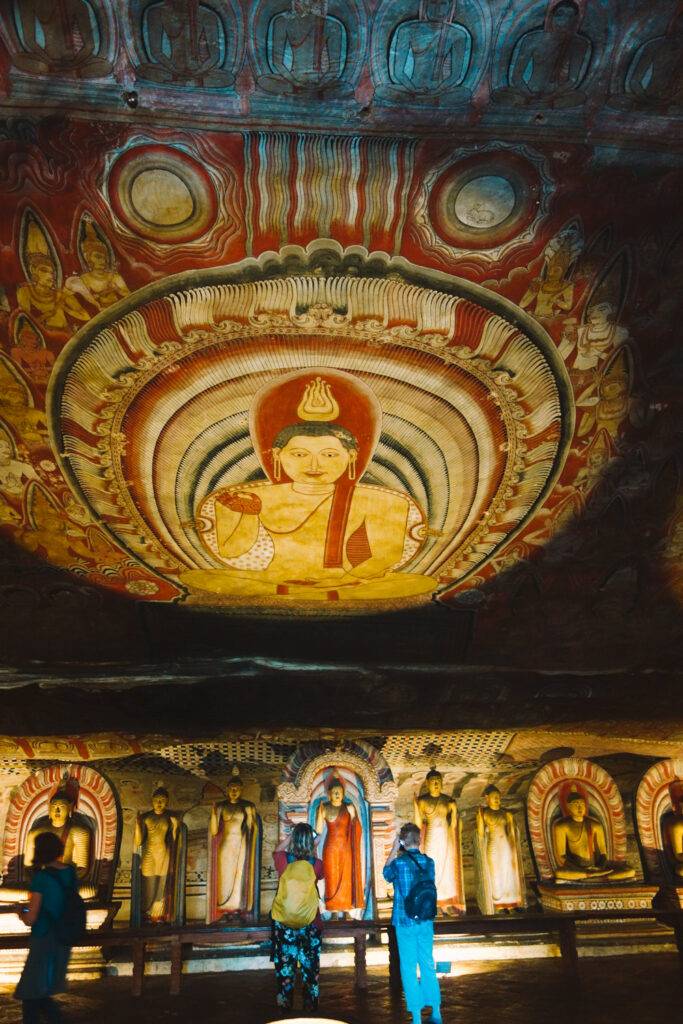
30-45 minutes from Sigiriya by bus or tuk-tuk. Five cave temples with over 150 Buddhist statues and more than 2,000 square meters of painted murals, some dating back over 2,000 years. Dress code applies (covered knees and shoulders). Entrance is around LKR 3,000 . Easily combined with a Sigiriya visit on the same day.
Polonnaruwa
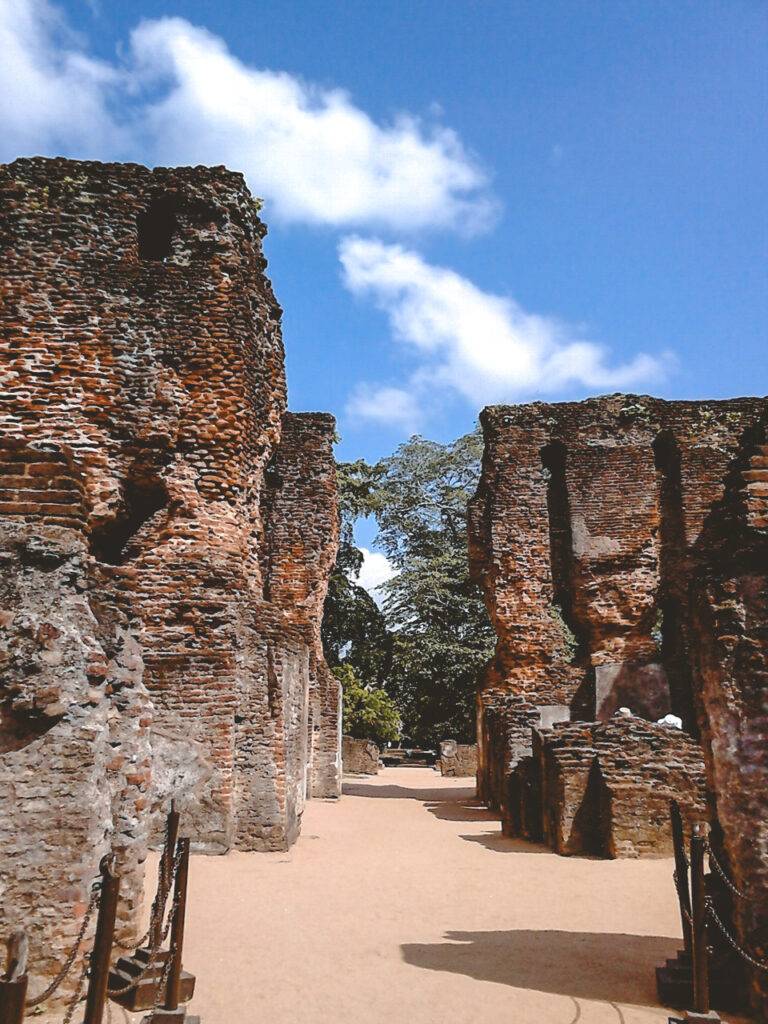
About an hour from Sigiriya by tuk-tuk. Sri Lanka’s second ancient capital, with some of the best-preserved ruins on the island: royal palace foundations, the enormous Rankot Vihara stupa, and the carved Buddha figures of Gal Vihara. The site is large, rent a bicycle or hire a tuk-tuk to get around it. Entrance is around USD $30
Kaudulla National Park (Elephant Safari)
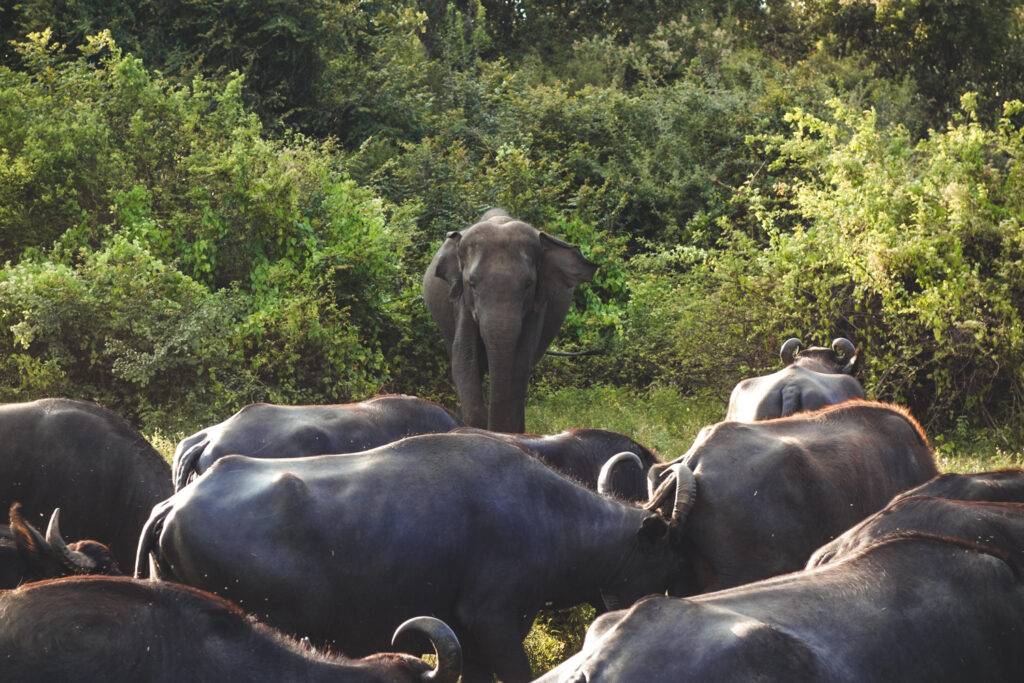
About an hour north of Sigiriya. More than 200 elephants live in the park, along with crocodiles, monkeys, and the occasional leopard. Unlike some of Sri Lanka’s other wildlife parks, Kaudulla is open year-round, making it one of the most reliable spots on the island for elephant encounters. Safaris are typically half-day and can be booked with pick-up from Sigiriya.
Where to Stay in Sigiriya
Staying in Sigiriya village puts you within easy reach of both rocks, which matters if you want to catch sunrise at Pidurangala without a tuk-tuk at 4 AM. Competition keeps prices reasonable across all budget levels.
- AnotherWorld Kingdom Sigiriya: Basic backpacker option right next to the Sigiriya entrance and within walking distance of Pidurangala. Camping or dorm beds, friendly owner, outdoor area and restaurant. From around USD $4/night.
- Sigiri Thilanka Rest: Solid budget homestay with clean rooms, private bathrooms, AC available, breakfast included. Around USD $12-18/night.
- The Cattleya Guest House: Nicely decorated rooms, garden, breakfast included. Around USD $25/night.
- Water Garden Sigiriya: Luxury resort set in paddy fields with views of Lion Rock. Villas, some with private pools, plus spa, restaurant and bar. From USD $300/night.
What to Pack
Comfortable shoes with proper grip (sandals won’t cut it on the upper sections). More water than you think you’ll need. Sunscreen, sunglasses, and a hat, the summit plateau is completely exposed and merciless in the heat. If you’re visiting at sunset, bring a headlamp or be ready to use your phone torch for the descent. If you’re doing Pidurangala at sunrise, good grip is non-negotiable for the final boulder scramble. Longer clothing is worth considering given the wasp situation, it won’t fully protect you but it’s better than bare arms near the hives.
Related posts:
 Dambulla Cave Temple – Entrance fee, opening hours, dress code…
  Kaudulla National Park Safari Guide: Everything You Need to Know
  The Best Things to Do in Galle, Sri Lanka (Complete Travel Guide)
  Best Things to Do in Nuwara Eliya: Sri Lanka’s Little England Travel Guide
  Things to Do in Ella, Sri Lanka: The Complete Travel Guide
  Things to Do in Kandy, Sri Lanka: The Complete Travel Guide
  Best places to visit in Sri Lanka
  Top 10 temples in Sri Lanka for your bucket list
  Best things to do in Jaffna – Complete travel guide