
Visiting the Dambulla Cave Temple: Complete Travel Guide
Disclaimer: This post may contain affiliate links, which means that if you click on any of those links and make a purchase, I’ll get a small commission, at no cost to you, to help support this website.
Last Updated on July 18, 2026
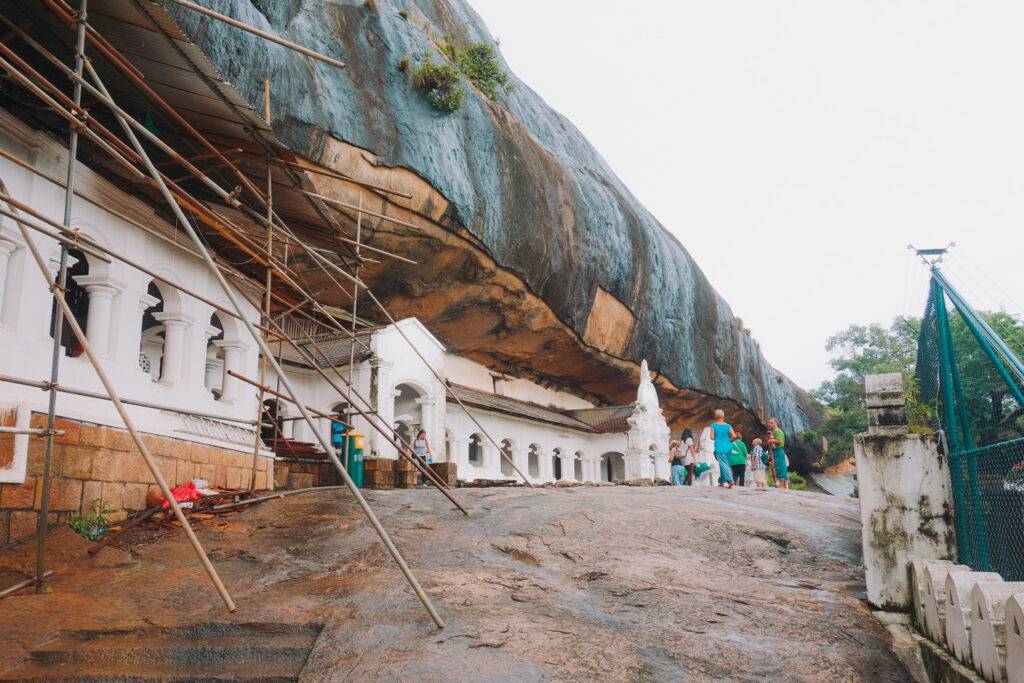
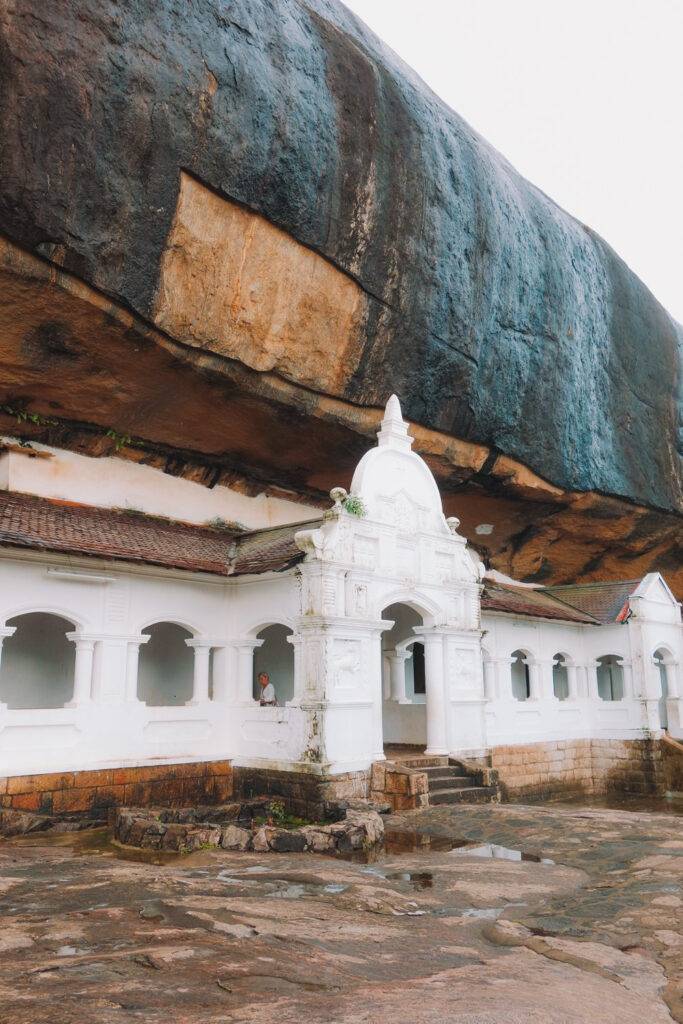
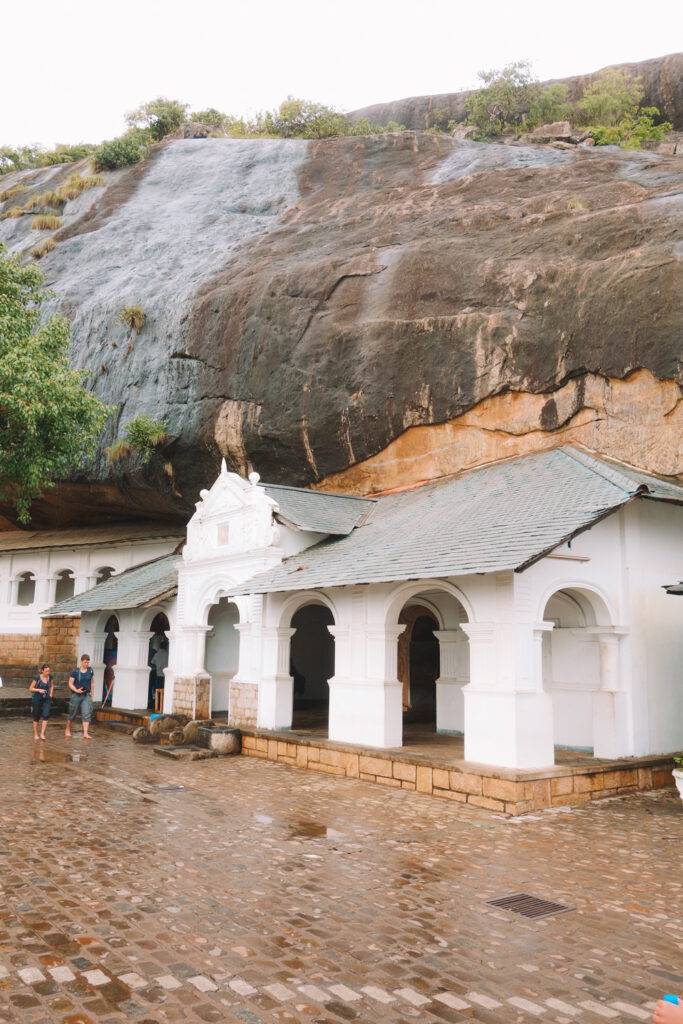
Somewhere between Kandy and Sigiriya, perched on top of a massive granite rock that lords over the town of Dambulla, sits one of the most spectacular religious sites in Sri Lanka.
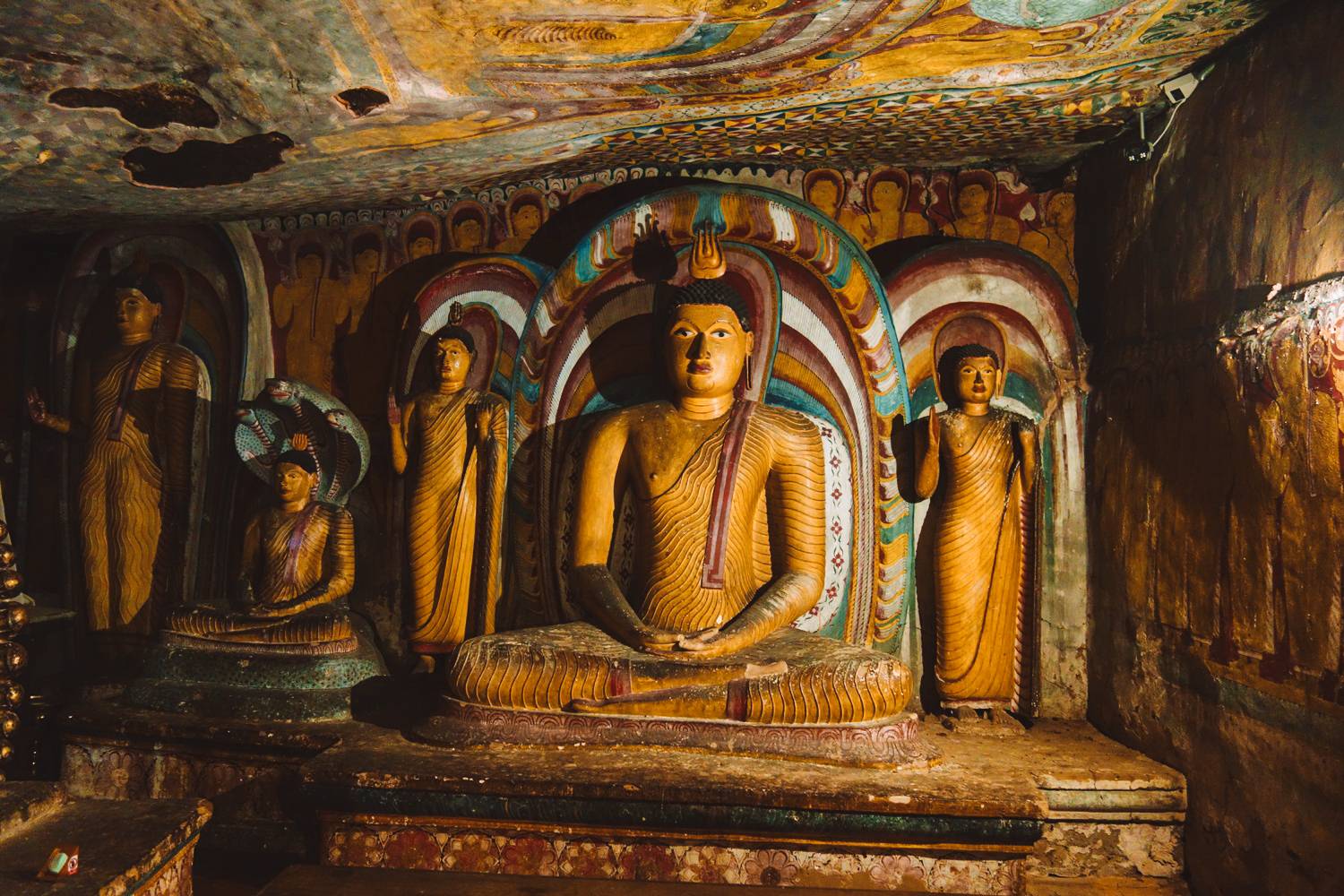
The Dambulla Cave Temple, officially the Rangiri Dambulla Cave Temple, a UNESCO World Heritage Site since 1991, is a complex of five ancient cave sanctuaries crammed with over 150 Buddha statues and 2,100 square meters of murals, all carved into and painted across solid rock. It dates back to the first century BC and is still very much an active place of worship today.
I visited Dambulla during my trip to Sri Lanka and it genuinely caught me off guard. I’d seen photos, of course, but nothing quite prepares you for the scale of the murals or the feeling of standing inside a cave that has been painted, repainted, and prayed in continuously for over two thousand years.
It’s one of those sites that earns its UNESCO status without argument, and one that deserves more than a rushed half-hour stop on the way to Sigiriya. Here’s everything you need to know to plan your visit.
Dambulla Cave Temple: Quick Facts
| Best for | History lovers, Buddhist art, anyone doing the Cultural Triangle circuit |
| When to go | Year-round; go early morning to beat the heat and the crowds |
| Entrance fee | 2,000 LKR for foreigners + ~100 LKR shoe storage |
| Opening hours | Daily 7:00 AM – 7:00 PM (ticket counter closes at 5:00 PM) |
| Getting there | Buses from Kandy, Colombo, Sigiriya; tuk-tuk or taxi from Sigiriya (~30 min) |
| Don’t miss | Cave 2 (the biggest and most spectacular), the natural spring, the view of Sigiriya from the top |
| Skip | Entering via the Golden Temple at the base — it’s a different building and won’t get you into the caves |
A Brief History of the Dambulla Cave Temple
The story of the Dambulla Cave Temple begins with a king on the run. In the first century BC, King Valagamba (also known as Raja Vattagamani Abhaya) was forced to flee his capital of Anuradhapura after an invasion by South Indian forces. He took refuge in the caves of Dambulla for fourteen years, sheltering alongside Buddhist monks. When he eventually reclaimed his throne, he returned to those caves and transformed them into a temple complex out of gratitude. And that is the site you visit today.
Over the following centuries, successive Sri Lankan kings added to the complex, commissioning new murals, statues, and even entire cave sanctuaries. The result is a layered accumulation of two millennia of Buddhist devotion, all preserved remarkably well thanks to the natural overhang of the granite cliff above, which has sheltered the paintings from rain and the elements for over 2,000 years.
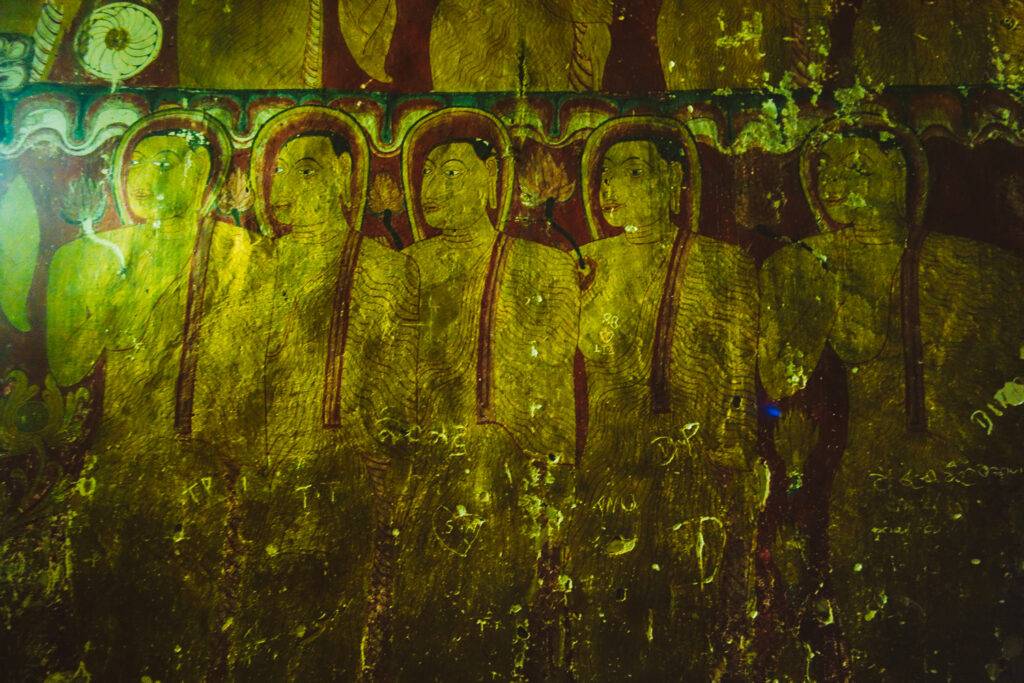
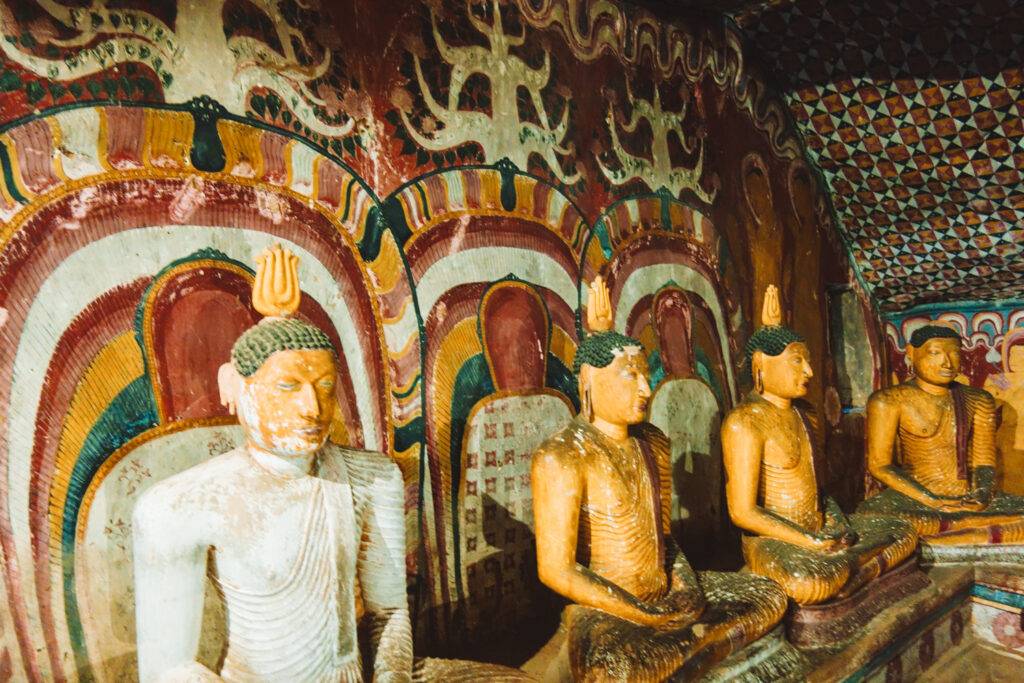
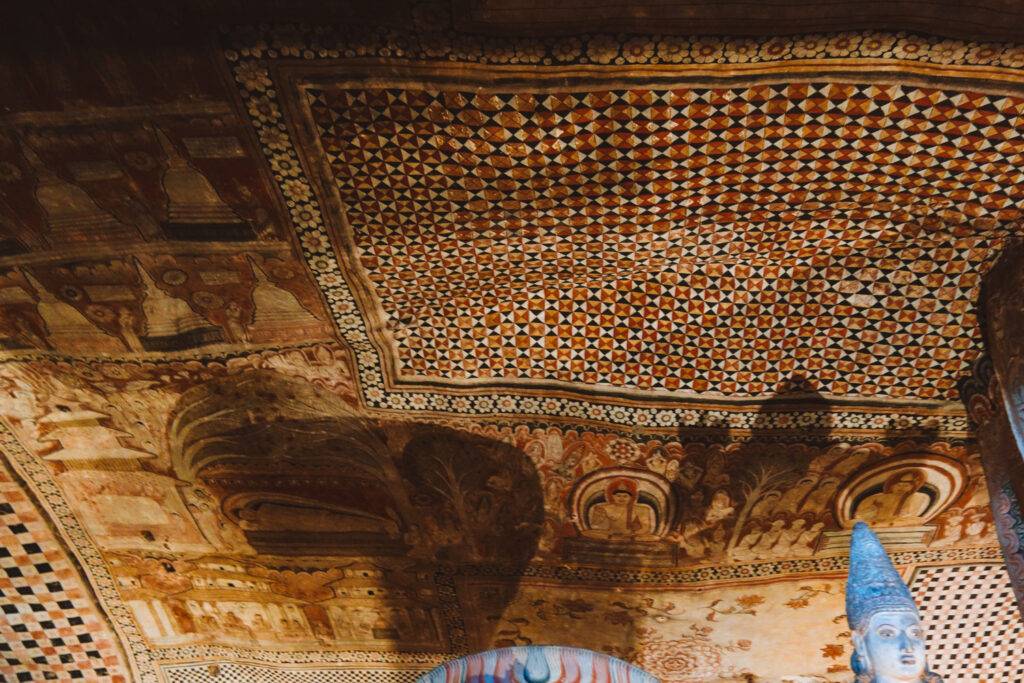
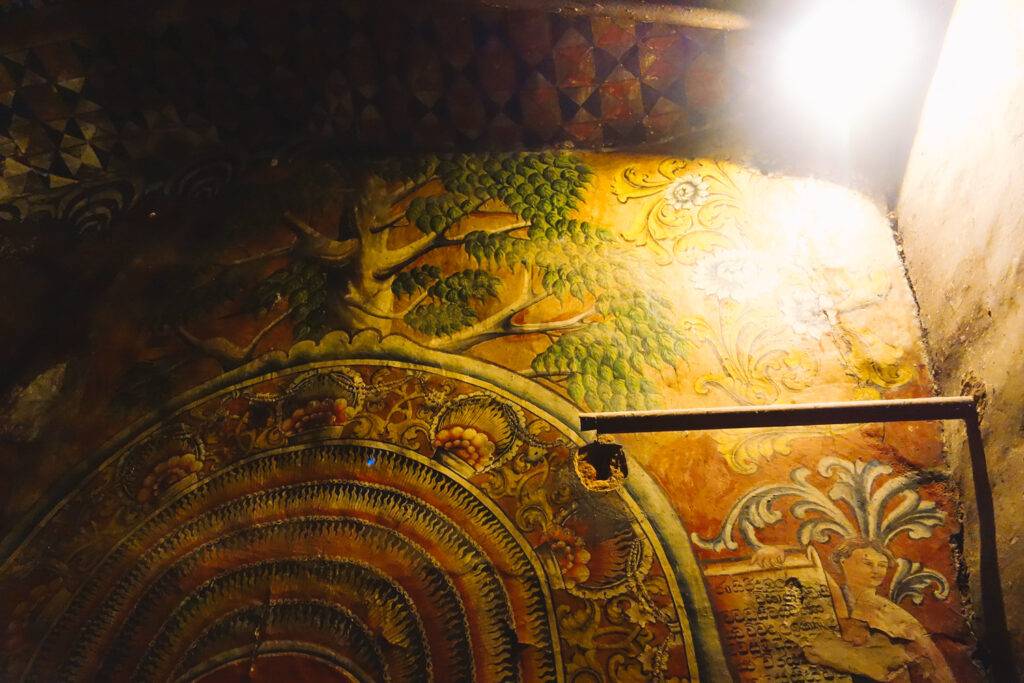
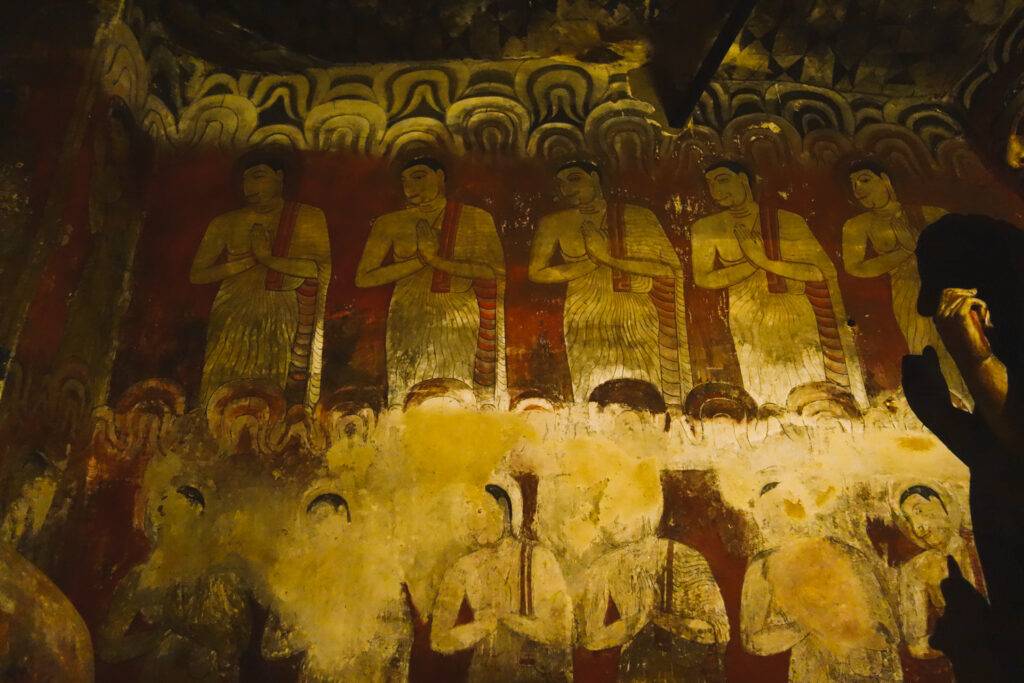
The complex contains 80 caves in total, of which five are open to visitors as part of the main temple grounds. The murals alone cover 2,100 square meters and include scenes from the Buddha’s life, the temptation by the demon Mara, and intricate geometric and floral patterns. All of it is still incredibly vivid. The site also contains 153 Buddha statues, a handful of Hindu deity statues (a nod to the syncretic religious culture of ancient Sri Lanka), and royal figures including King Valagamba himself.
Practical Information for Visiting Dambulla Cave Temple
Entrance Fee
The entrance fee for foreign visitors is 2,000 LKR. You can buy your ticket directly at the booth at the base of the rock. There is also a small shoe storage fee of around 100 LKR, you’ll pay this when you collect your shoes on the way out.
Opening Hours
The site is open daily from 7:00 AM to 7:00 PM. Note that the ticket counter closes at 5:00 PM. In my experience, early morning is the best time to visit. It’s cooler, the light inside the caves is lovelier, and the site is quieter before tour groups arrive. That said, arriving in the late afternoon to catch the sunset from the top is also a great option if you can time it right.
Dress Code
As with any Buddhist temple in Sri Lanka, the rules are the same: shoulders and knees must be covered, and you’ll need to remove your hat and shoes before entering the temple. Attendants at the entrance will check before letting you through.
I always travel with a lightweight sarong for exactly this kind of situation. It takes up zero space in your bag and solves the problem instantly. I ended up using it at pretty much every temple I visited in Sri Lanka.
Must-read: dos and don’ts of visiting a Buddhist temple
The Socks Tip Nobody Tells You
Here is a practical detail that most guides skim over: bring socks. You remove your shoes before entering the temple, and while the stone path up the rock isn’t too bad, the green carpet at the entrance to the caves gets absolutely scorching in the midday heat. Bare feet on that carpet is a nasty surprise. Socks take up no room in your bag and make the whole experience a lot more comfortable.
No Flash Photography
Flash photography is not permitted inside the caves. This protects the ancient murals from light damage, the paintings have survived two millennia without your camera flash and would like to continue doing so. Regular photography without flash is fine.
How Long Does It Take?
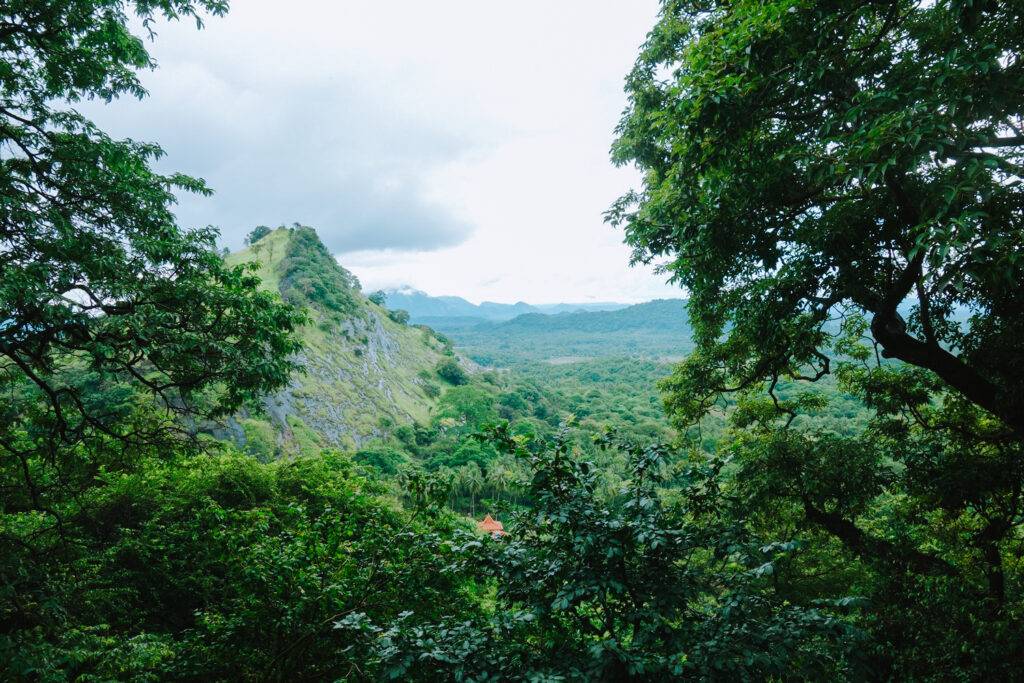
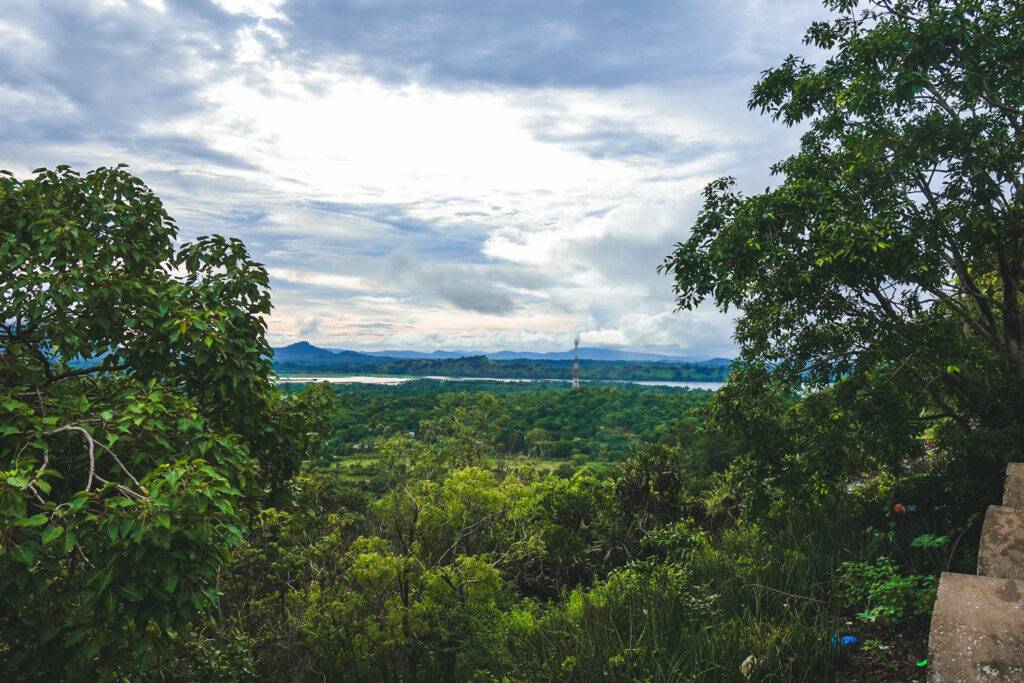
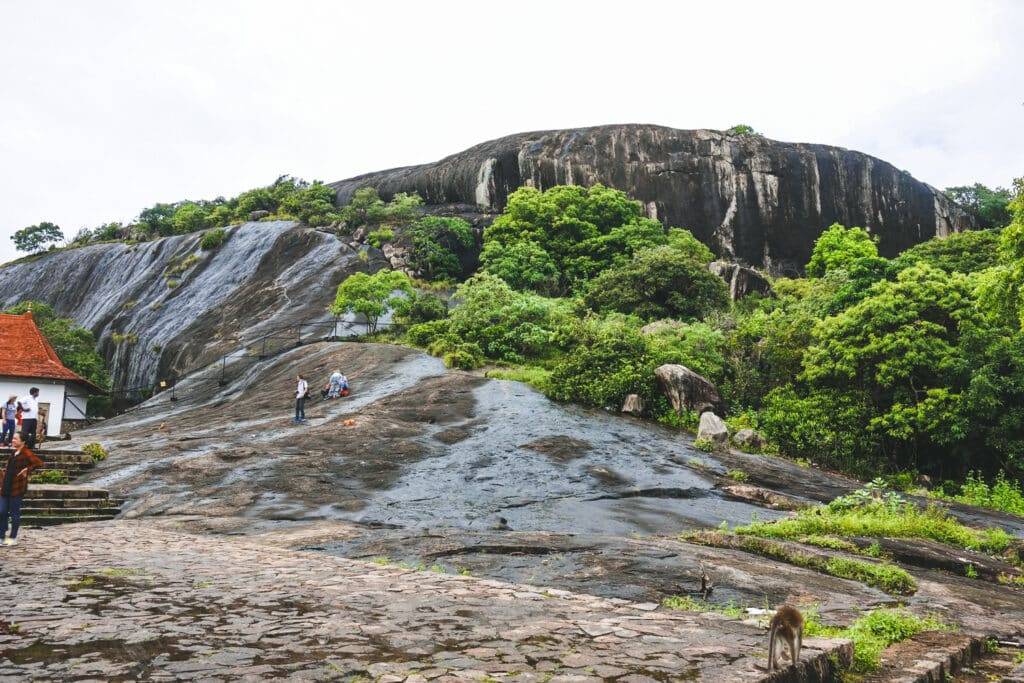
Plan for around 2 hours in total. Roughly 20 minutes for the climb up, 90 minutes exploring the five caves, and a bit of time at the top to take in the views. The climb is steep but not brutal; there are spots to stop and catch your breath, and the view over the surrounding plains (including a very satisfying glimpse of Sigiriya in the distance) makes every step worth it.
Getting to Dambulla Cave Temple
Dambulla is a natural crossroads in central Sri Lanka, making it easy to reach from most points on the Cultural Triangle circuit.
From Kandy, buses run regularly and the journey takes around two to two-and-a-half hours. From Sigiriya, it’s a quick 20-30 minute tuk-tuk or taxi ride — the two sites are often combined in a single day trip, which works very well. From Colombo, direct buses serve Dambulla and take around three hours.
The ticket booth and the start of the staircase are set back slightly from the main road, so look for the signs.
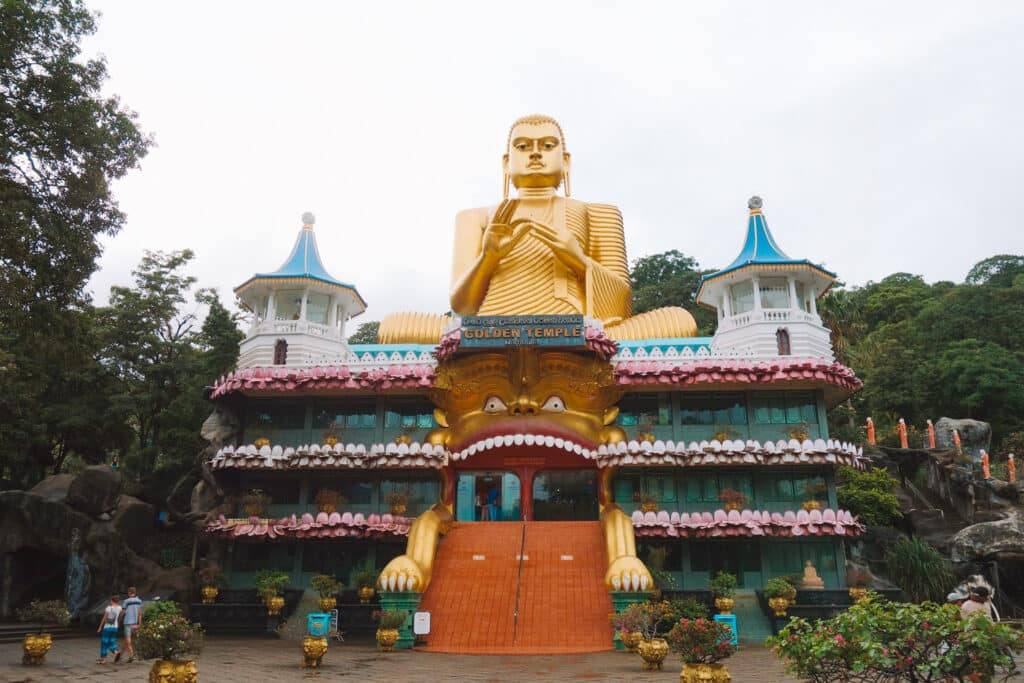
Note: do not enter via the Golden Buddha building at the base of the hill, that is a separate modern temple complex and will not get you into the caves. The entrance to the actual cave temple is up the staircase, past the ticket booth at the side of the rock.
To make things easier if you’re short on time, you can book a combined Sigiriya and Dambulla day tour.
Inside the Caves: What to Expect
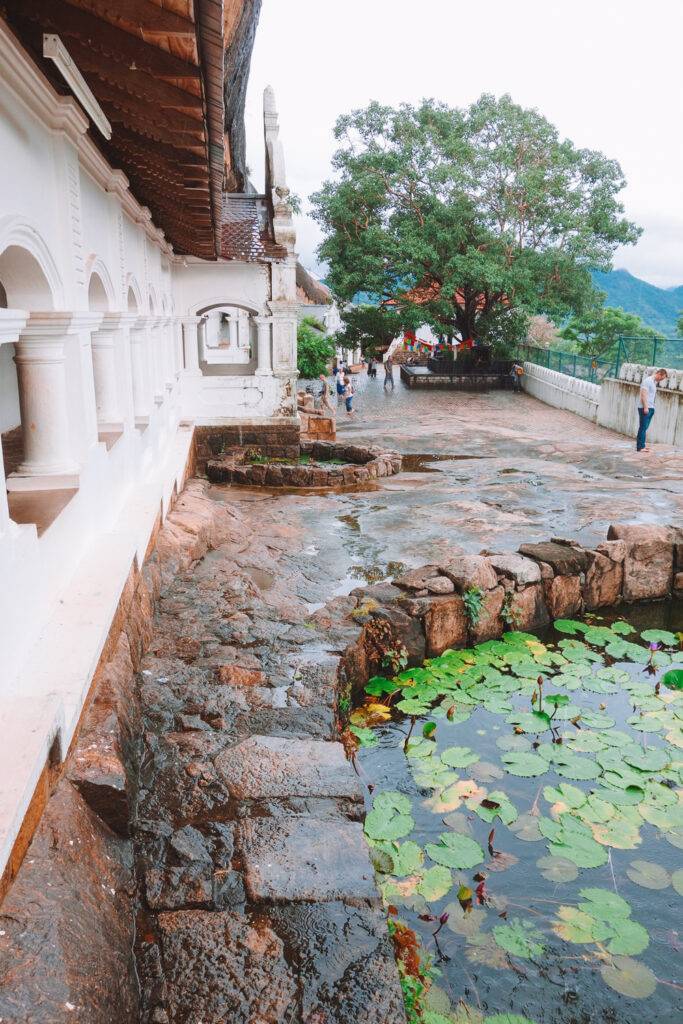
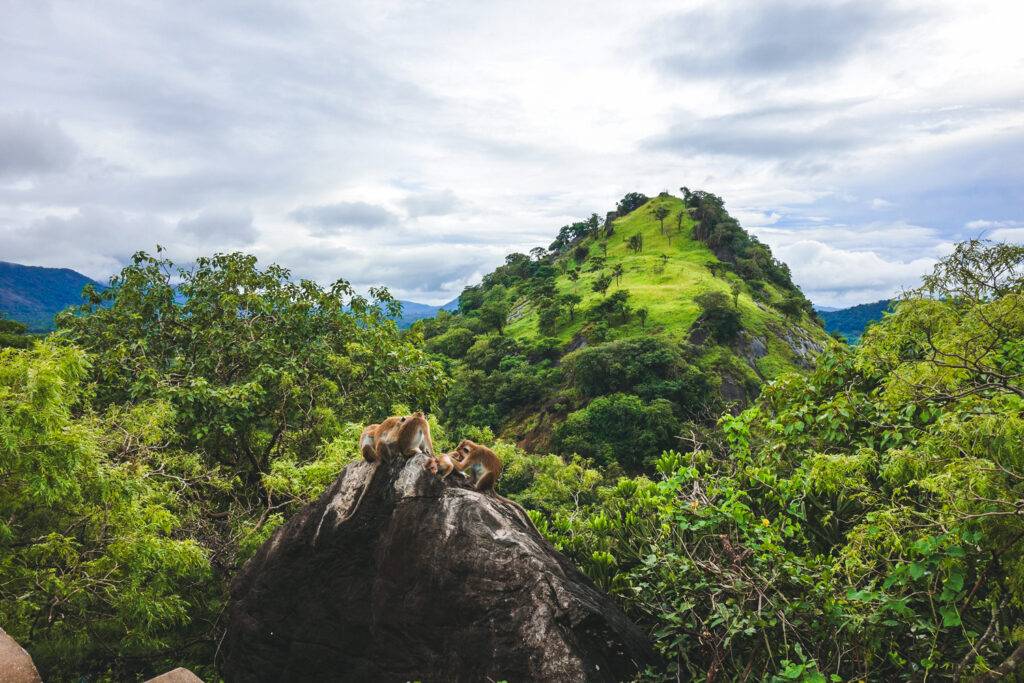
Before you even reach the caves themselves, the climb up rewards you with sweeping views over the flat plains of central Sri Lanka. Look to the right and you’ll spot Sigiriya’s distinctive rock column in the distance, a nice preview if you haven’t been yet (or a satisfying callback if you have).
The staircase is lined with vendors selling flowers for offerings, and the macaque monkeys that patrol the hillside are entertaining to watch. They’re also bold enough to go straight for your snacks if given the opportunity, so keep your bag closed and don’t try to feed or pet them, however tempting that baby monkey looks.
At the top, before you enter the first cave, pause to look for the Kirti Nissankamalla stone inscription in the courtyard, a beautifully carved slab dating to the 12th century, covered in ancient Sinhalese script that records the services of King Nissankamalla to Buddhism.
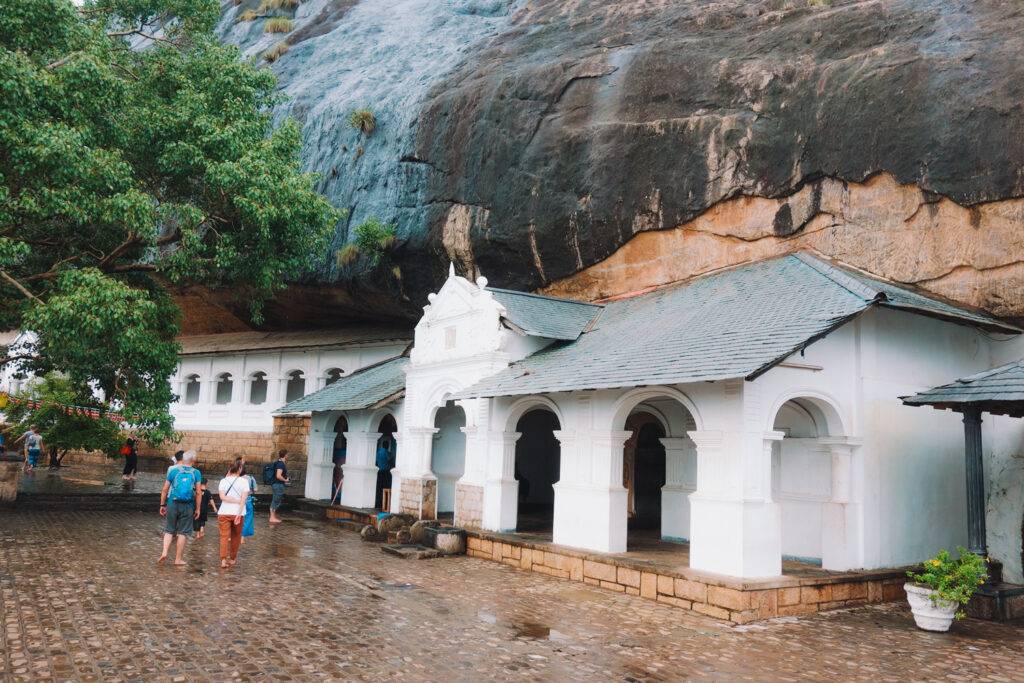
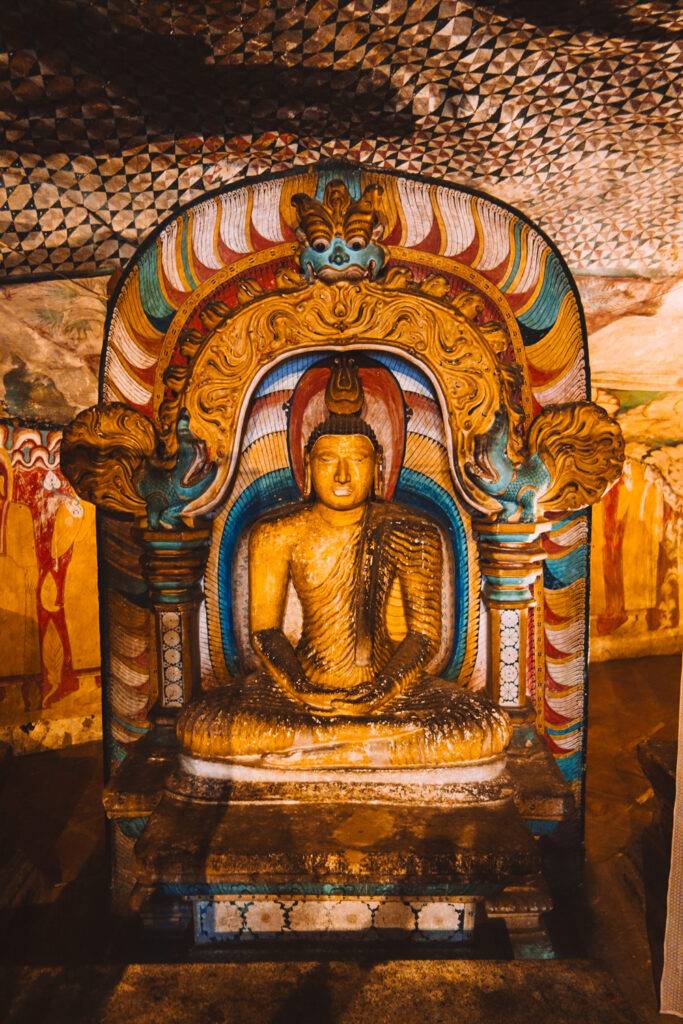
The five caves are laid out in sequence along the rock face, each one entered through a covered colonnade. Here’s what you’ll find in each:
Cave 1: Devaraja Viharaya (Temple of the Lord of the Gods)
Named after the Hindu god Vishnu, who is said to have created the complex, this is the oldest cave and serves as a dramatic first impression.
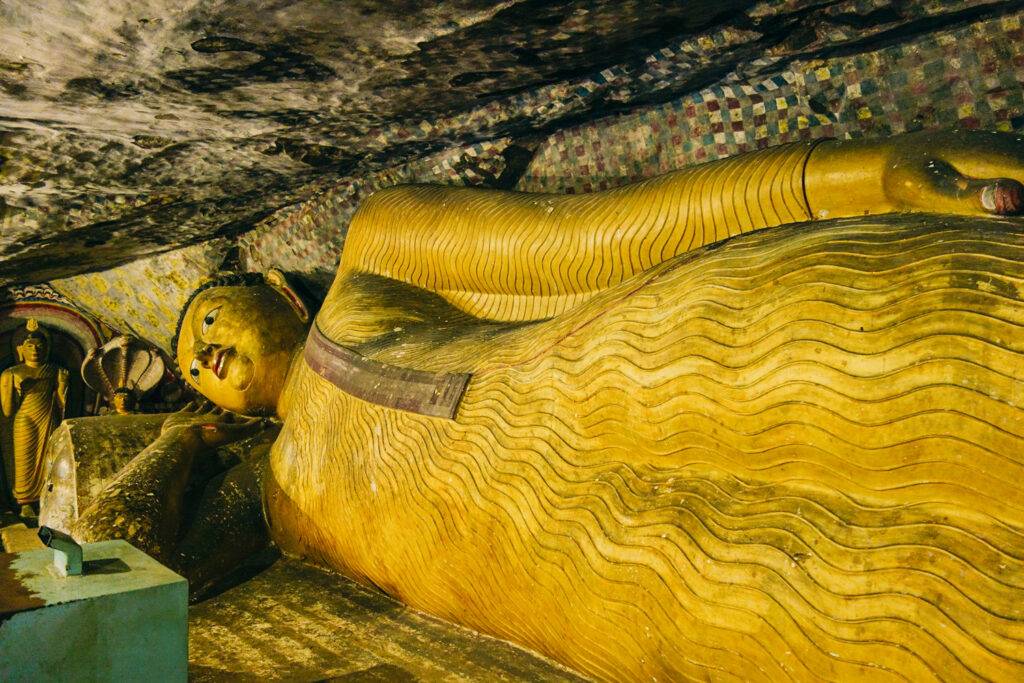
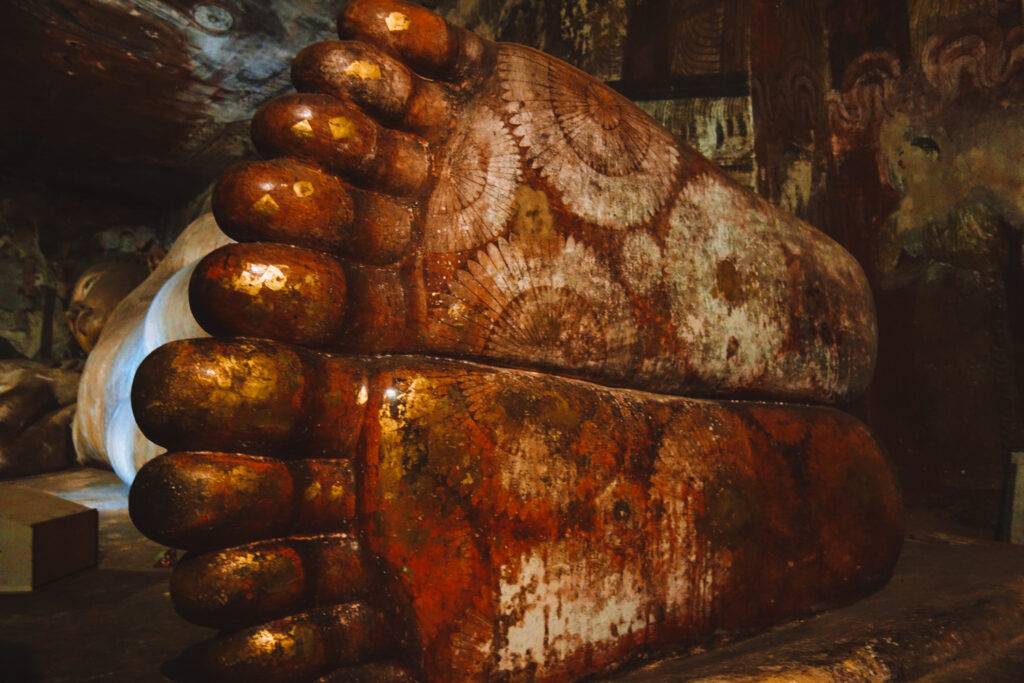
The centrepiece is a 14-meter reclining Buddha carved directly from the solid granite bedrock.The cushion his head rests on is also carved from the same rock, which is the kind of detail that stops you in your tracks. His shoulders are gilded in gold. At his feet rests a statue of Ananda, one of his closest disciples.
The murals here are slightly faded compared to the others. They’re believed to be the oldest, though centuries of repainting makes dating them tricky. A small blue chapel dedicated to Kataragama sits just outside the entrance on the right.
Cave 2: Maharaja Vihara (Temple of the Great Kings)
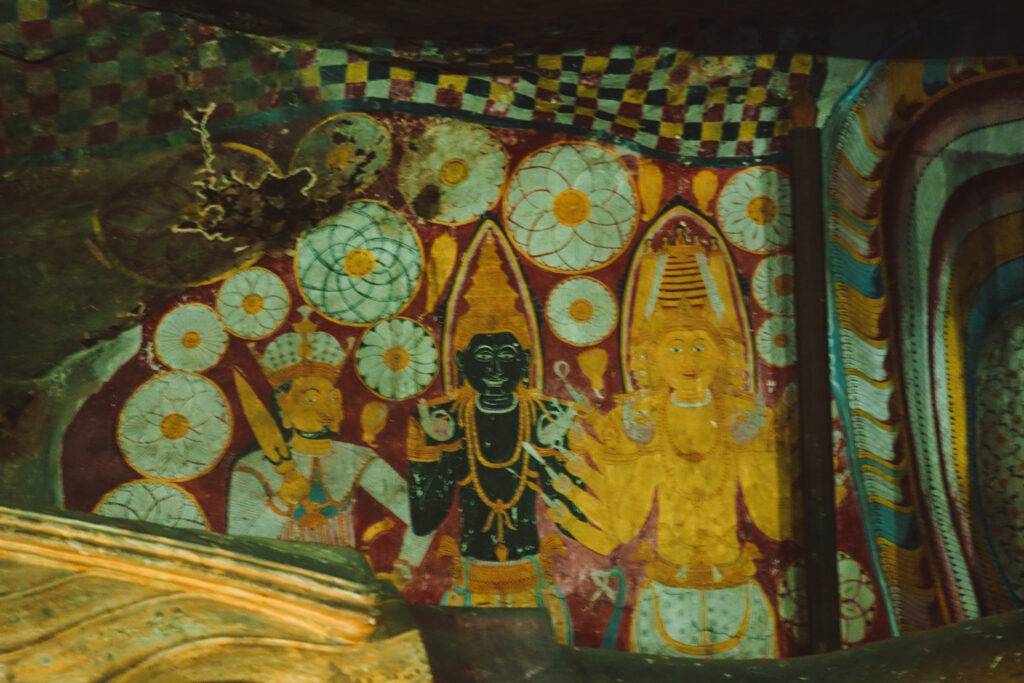
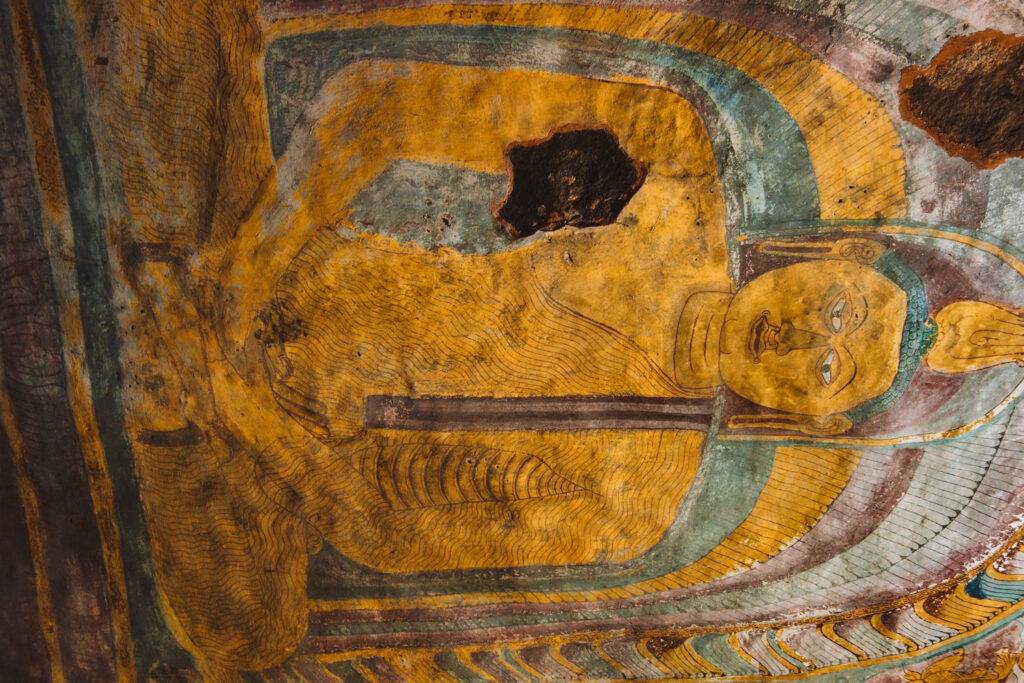
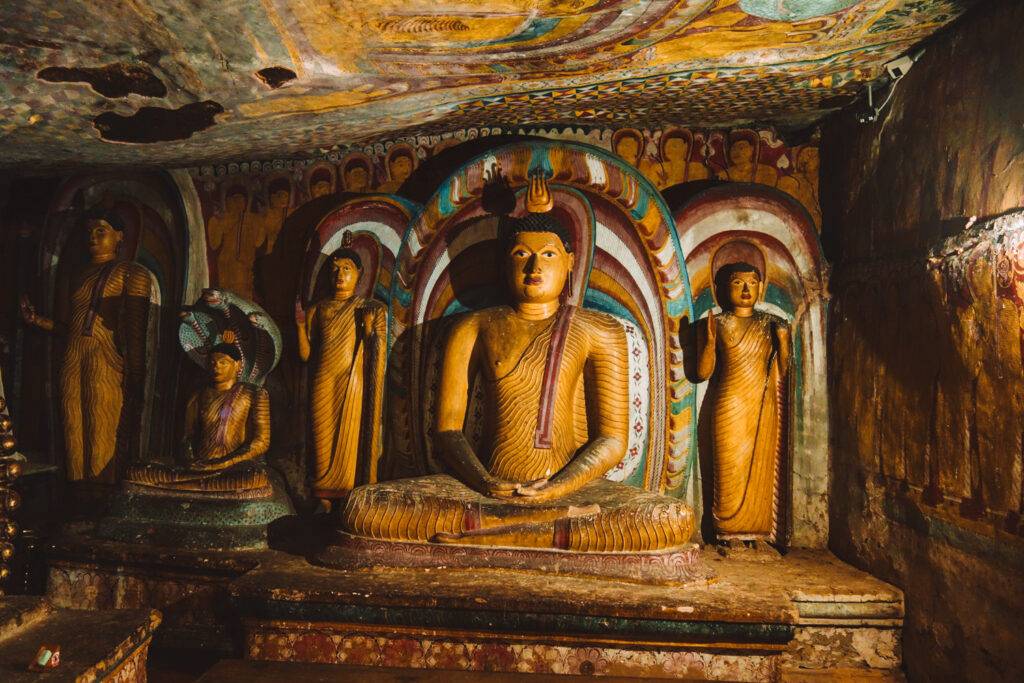
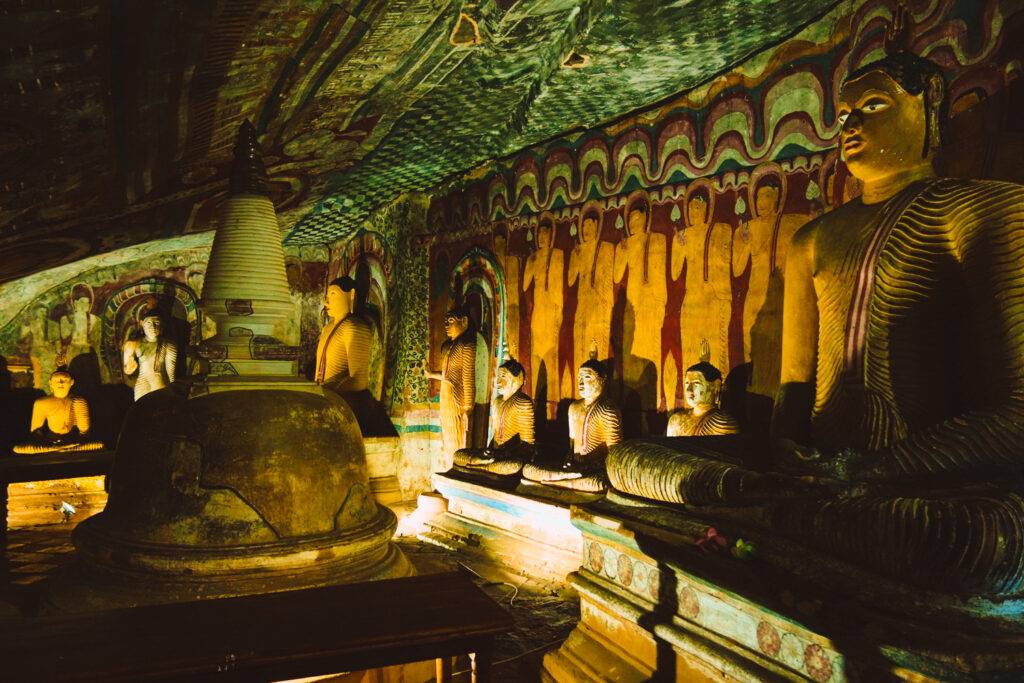
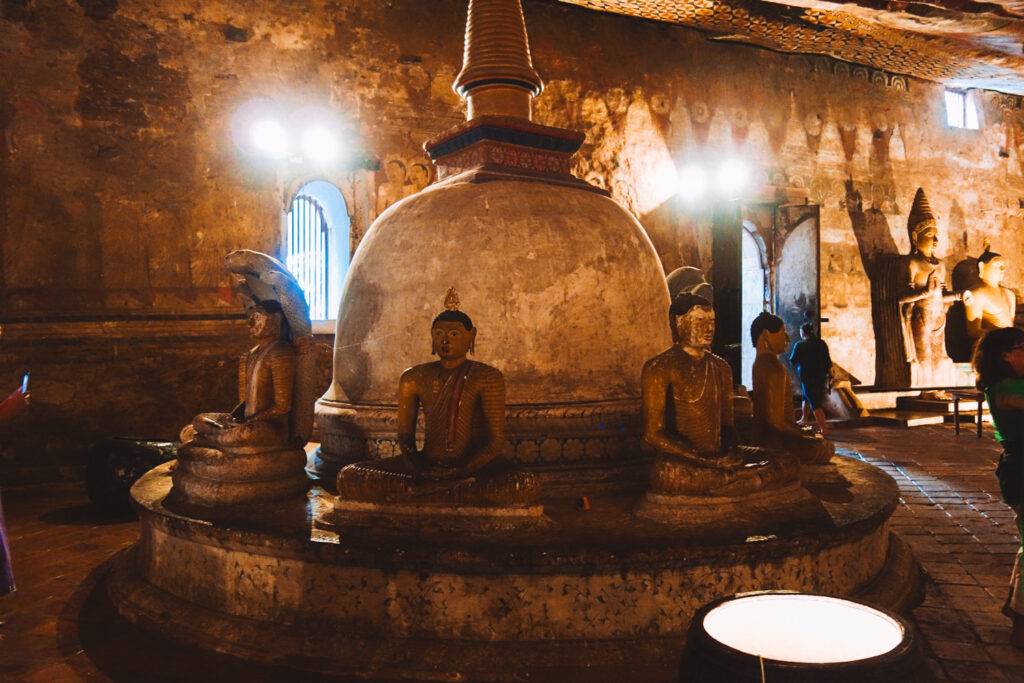
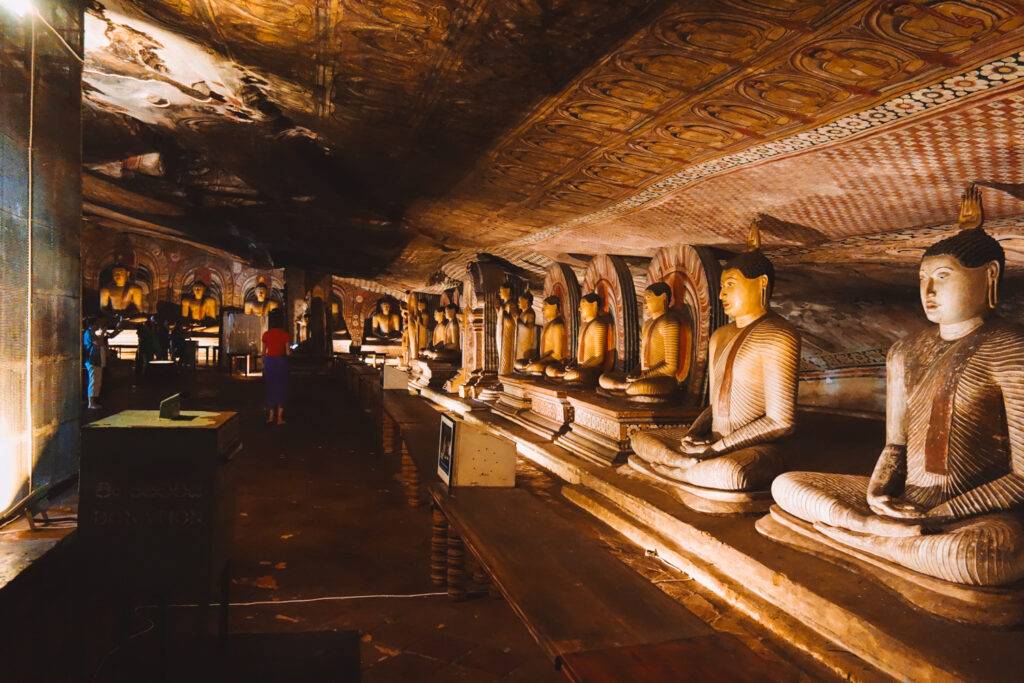
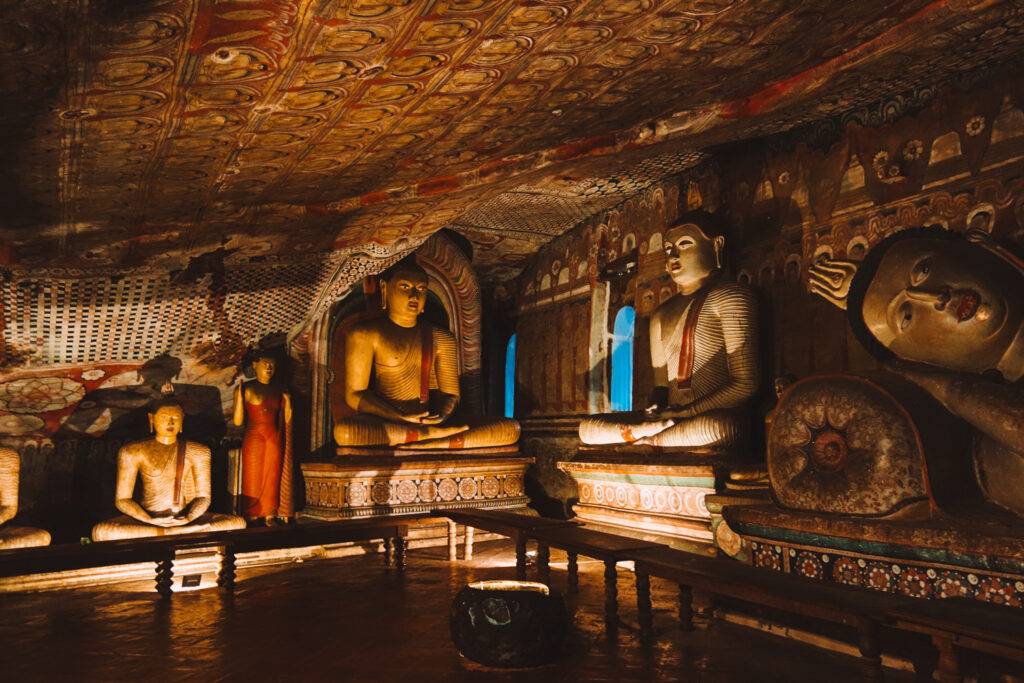
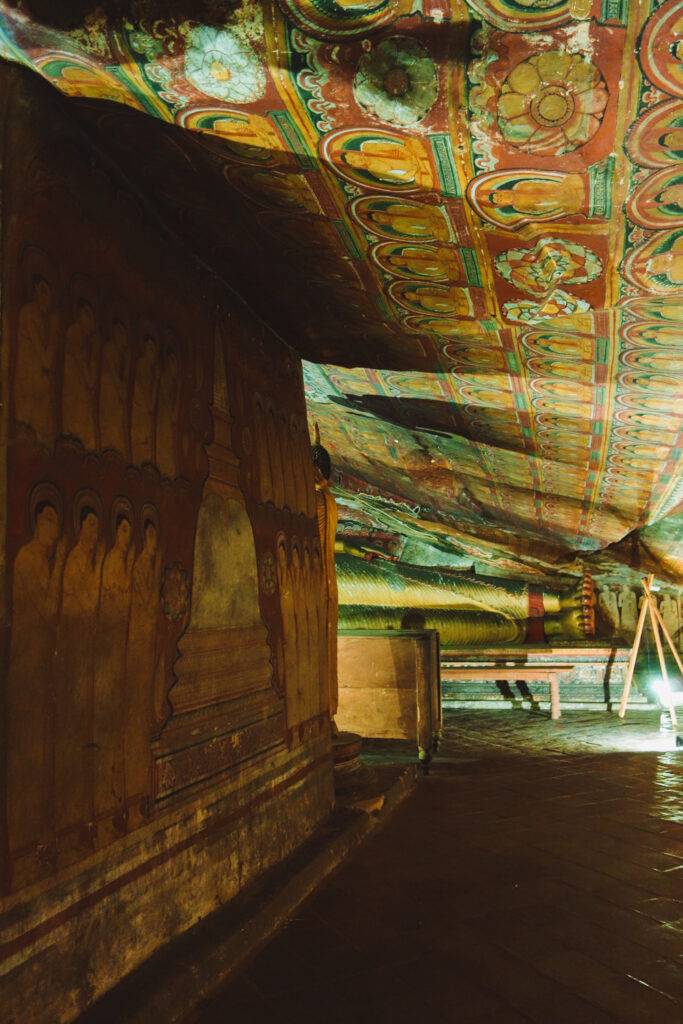
This is the biggest cave (around 50 meters deep) and the one that will make your jaw drop. It was originally built under King Valagamba and expanded by his successors, and it houses the most impressive collection of art in the entire complex. The ceiling and walls are covered entirely in Kandyan-style murals depicting scenes from the life of the Buddha: thousands of figures painted in rich ochre, red, and gold tones, all swooping across the organic curves of the rock ceiling above you.
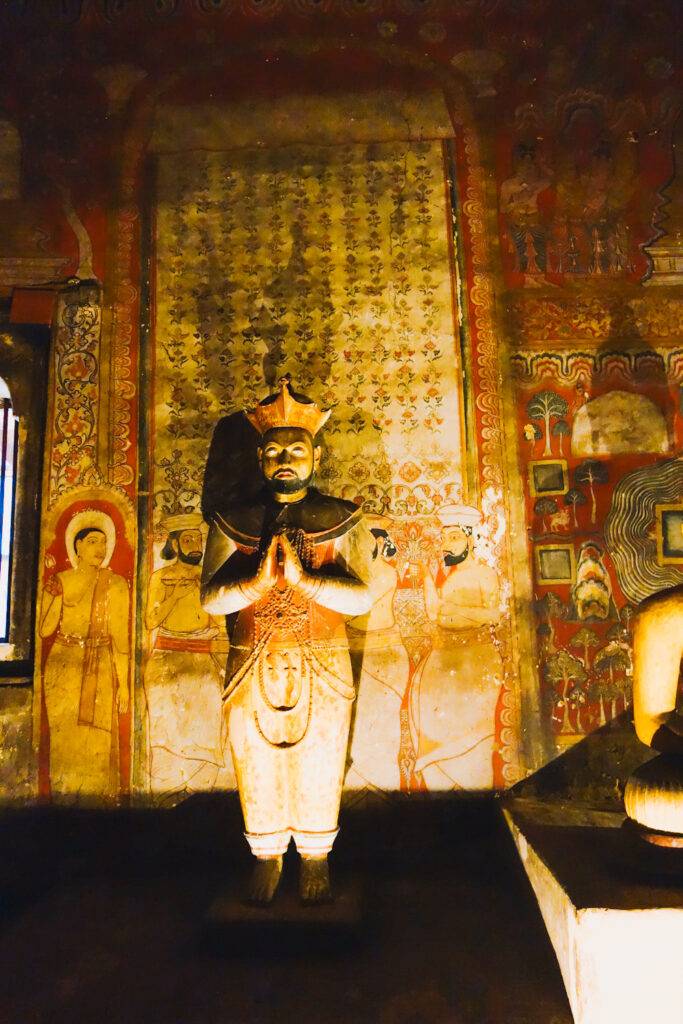
There are 56 Buddha statues here, including wooden statues of Hindu deities. In the centre of the cave sits a large stupa (dagoba), and to one side you’ll find a large reclining Buddha with the painted wooden image of King Valagamba near the entrance, and King Nissankamalla at the far right.
One of the most remarkable things about Cave 2 is the natural spring in the ceiling. Water seeps through the rock and drips continuously into a collection vessel below, even during droughts. It’s been doing this for over two thousand years, and there’s something quietly astonishing about that.
Cave 3: Maha Alut Viharaya (Great New Temple)
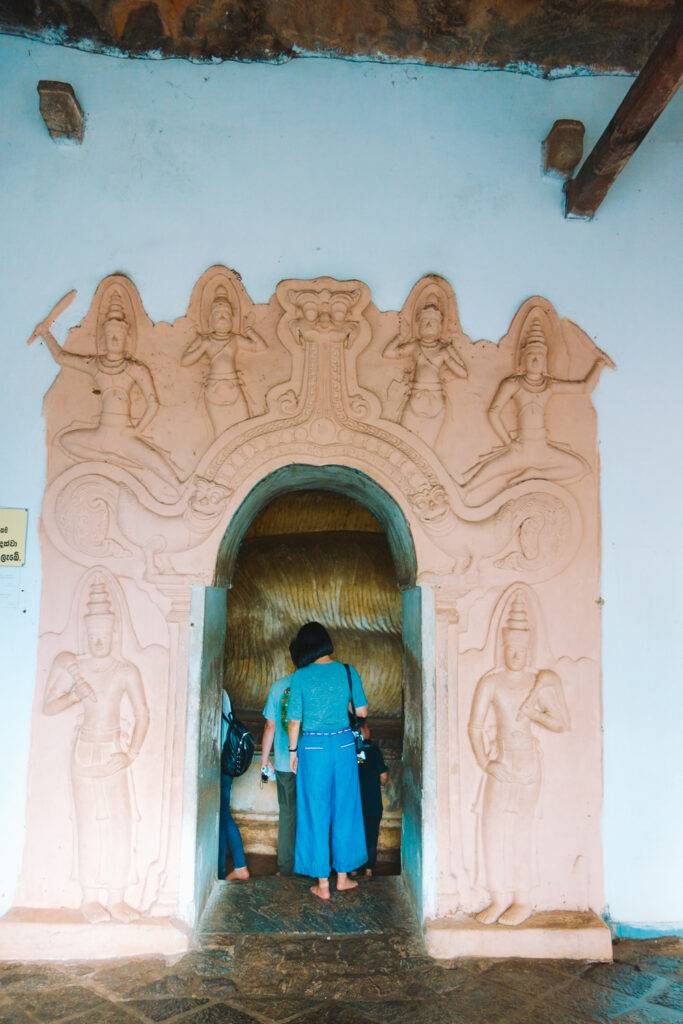
This cave was commissioned by King Kirti Sri Rajasinha in the 18th century. It’s separated from Cave 2 by a masonry wall and is notable for its elaborately carved dragon arches at the entrance: two stone archways covered in dragon motifs that are genuinely beautiful up close.
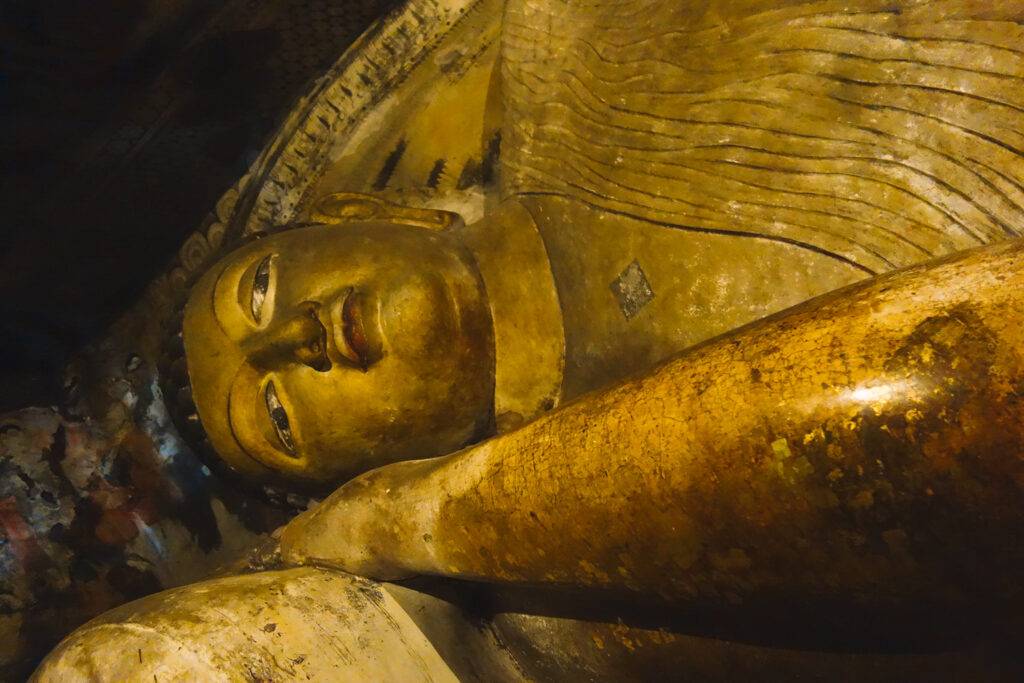
The cave ceiling reaches 10 meters at its highest point, making it the tallest of the five. Inside, another large reclining Buddha is carved from solid bedrock, alongside around 50 more statues and a ceiling covered with about a thousand seated Buddhas.
Near the entrance you’ll find a carved sculpture of Kirti Sri Rajasinha with attendants painted behind him.
Cave 4: Paccima Viharaya (Western Temple)
The smallest of the five caves, Cave 4 has a row of meditating Buddha statues around the walls and floral and geometric patterns painted alongside them. In the centre stands a dagoba, look closely at the damage on its side, which was made by burglars who believed the late queen’s jewels were hidden inside. They were not.
Cave 5: Devana Alut Viharaya (Second New Temple)
The most recent addition to the complex (exact construction date unknown), Cave 5 is the outlier: its sculptures are made of plaster and brick rather than carved from the rock. The main statue is a 10-meter reclining Buddha in plaster, accompanied by painted Hindu deities and a figure of a nobleman believed to have funded the cave’s construction.
The Golden Buddha at the Base
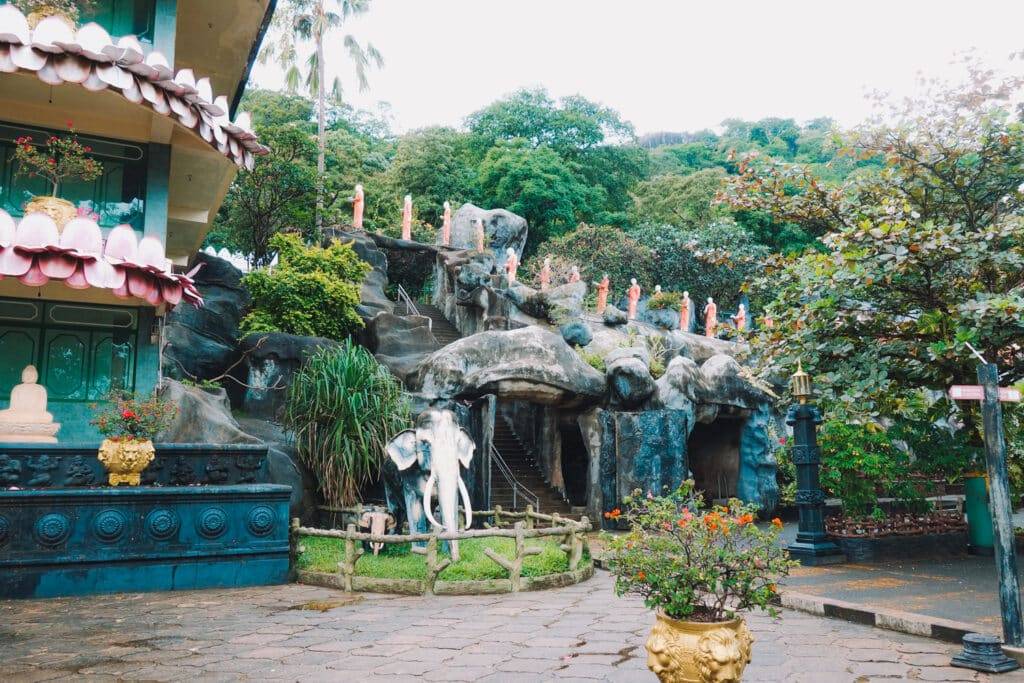
As you descend from the cave temple, you’ll spot the famous giant Golden Buddha statue gleaming at the base of the rock. This sits on top of a modern temple building called the Golden Temple (built in 2000), which serves as a museum and monastery for the resident monks. Admission is free. It’s a striking sight, the building itself is covered in dragons, serpents, and vivid colours that are not quite to everyone’s architectural taste, but it’s worth a look if you have time.
The path down from the caves toward the Golden Buddha takes a different route from the one you climbed; follow it to the left at the junction rather than going straight. It’s steep, so wear good shoes.
Other Things to Do in Dambulla
Dambulla functions primarily as a base and transit hub rather than a destination in its own right, but there are a few worthwhile detours beyond the cave temple.
Kaludiya Pokuna
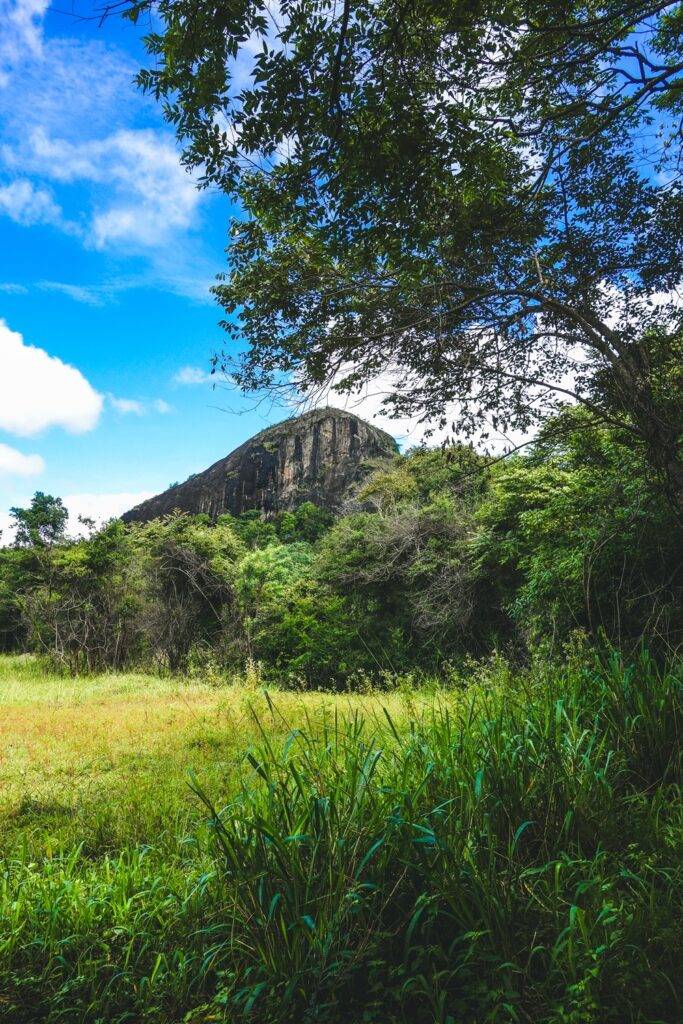
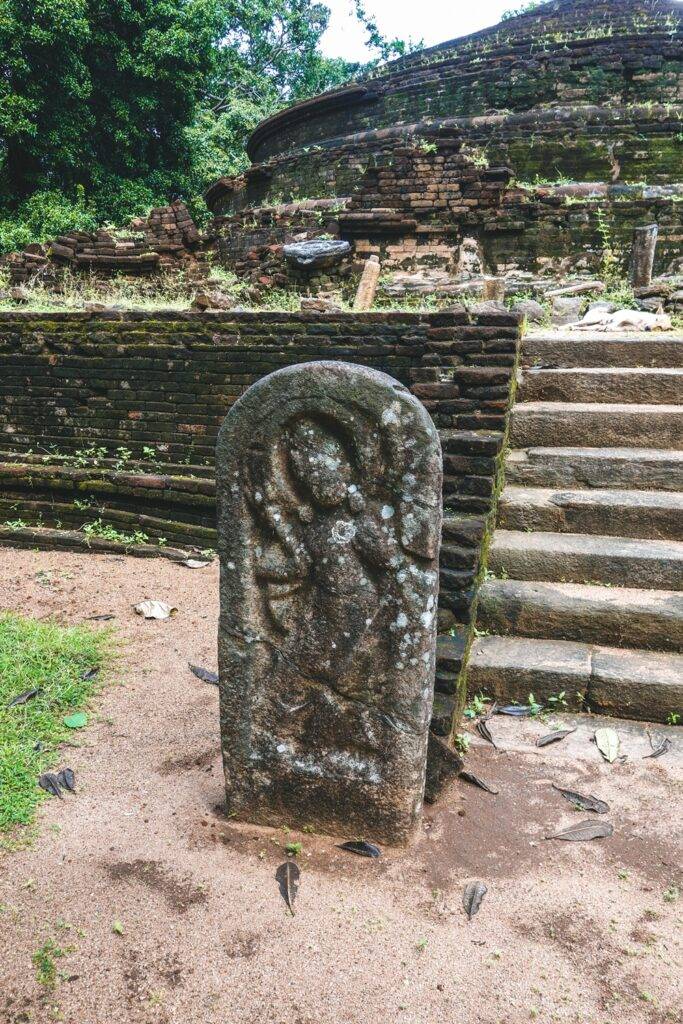
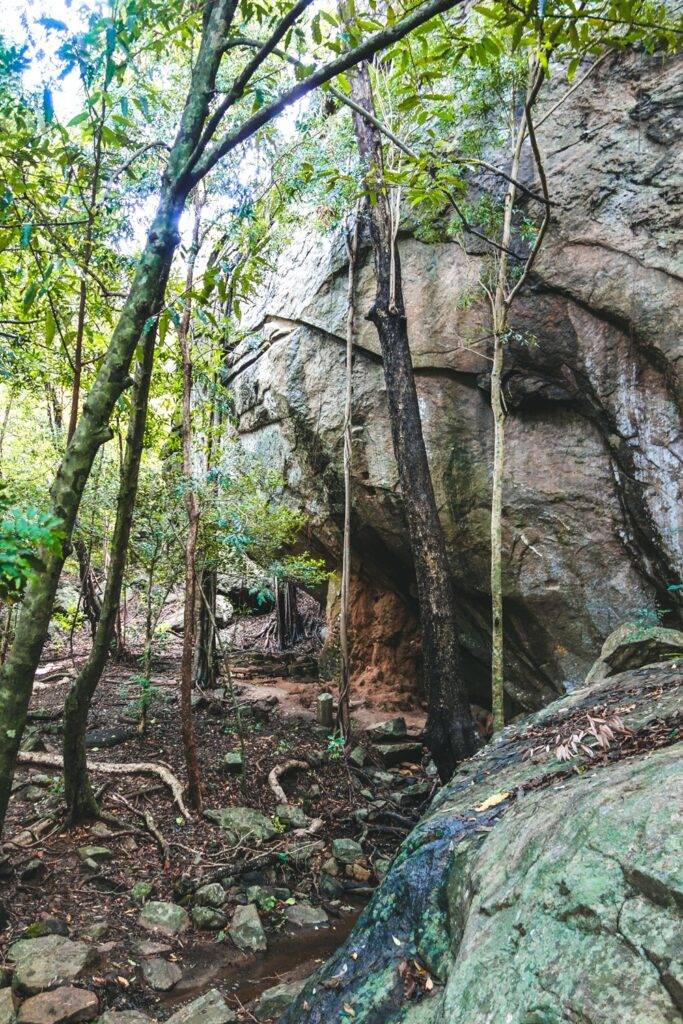
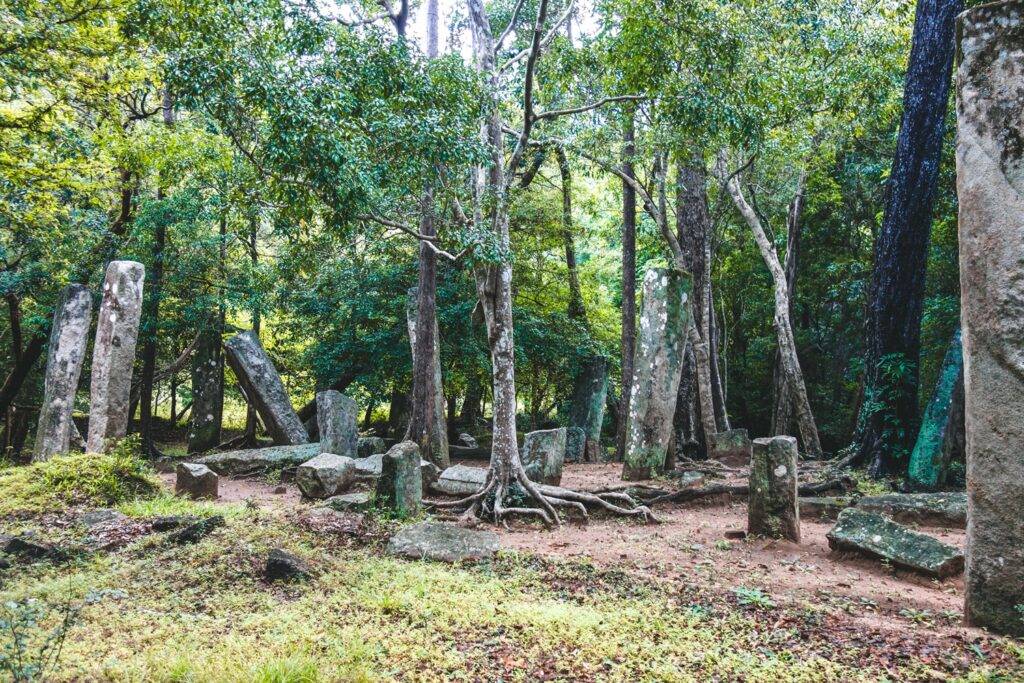
If you have half a day to spare and want a genuinely off-the-beaten-track experience, head to Kaludiya Pokuna, an ancient monastery buried in the jungle not far from Dambulla.
The site used to be called Dakkhinagiri Vihara and was built by King Saddhatissa in the 2nd century BC, with a chapter house added by King Aggabodhi in the 6th century AD. At some point, it was abandoned, and not much else is documented about its history. Compared to the bigger archaeological sites nearby, it barely registers on most visitors’ radars, when I went, I had the entire place to myself.
What remains today is mostly ruins, but the dagoba is remarkably well preserved, and there are Sanskrit inscriptions carved into what used to be a cave but is now open to the sky. The name comes from a pond known for its dark water, found near Mihintale.
Honestly, the trek there is as much the draw as the ruins themselves. The path is wide, well cleared, and impossible to get lost on since there’s only one way to go. The jungle around it is home to plenty of endemic wildlife, and because so few people pass through, it’s a genuinely good spot for spotting animals along the way. There’s pretty much zero sign of human presence beyond the path itself, which makes for a wonderfully quiet walk.
To get there from Dambulla, take a bus from in front of the cave temple at the crossroad. They’ll drop you at the intersection, and from there it’s about an hour and a half on foot. Bring food and water, since there’s nothing along the way except an Ayurvedic retreat around 500 meters in. You can also go by motorbike, but the road isn’t great, so skip it if it’s been raining recently.
A practical note: I went with a guide from the local archaeological office who showed me around, and in hindsight I’d recommend not doing this trek entirely solo. The jungle here is home to leopards, elephants, monkeys, and venomous snakes, and while none of that should stop you from going, it’s safer with company.
Nalanda Gedige
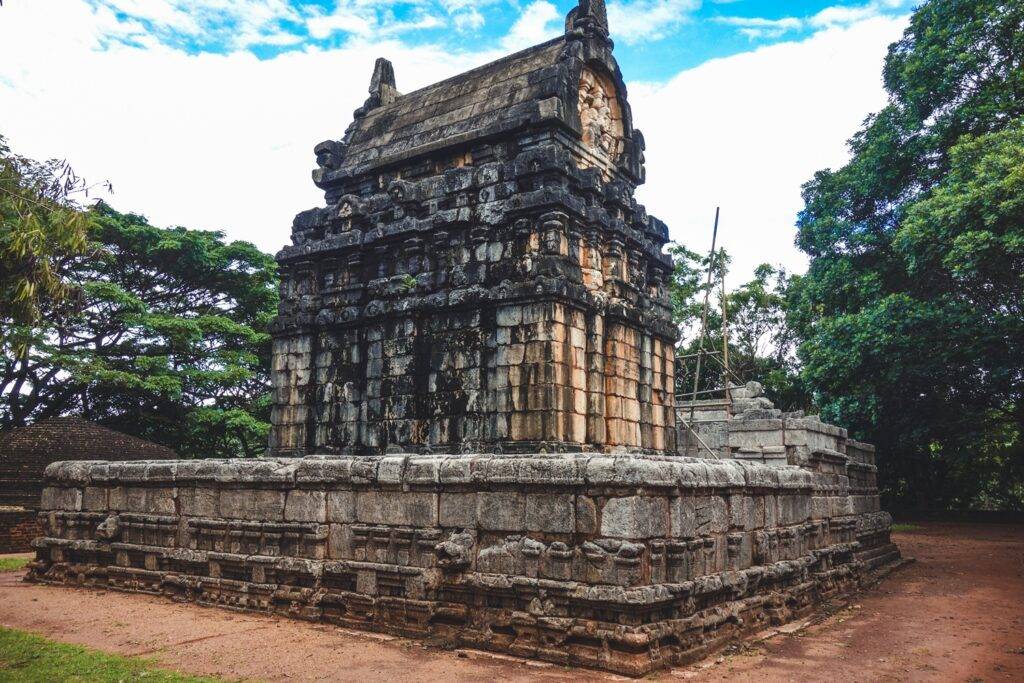
If you’re driving between Dambulla and Kandy, it’s worth pencilling in a short stop at Nalanda Gedige, one of Sri Lanka’s oldest and least visited temples. It sits in the Matale district, right along the Dambulla-Kandy road and closer to the Dambulla side, which makes it an easy detour rather than a dedicated trip.
What makes Nalanda Gedige genuinely odd, in the best way, is that nobody can fully agree on what it is. It’s a Dravidian stone temple that experts estimate was built somewhere between the 8th and 10th century, and its architecture is unmistakably Hindu, closely resembling temples found in India from the same period. Some of the fertility sculptures point clearly to Hinduism too. But nearly everything else carved into the stone is Buddhist. There are two competing theories for this: either Hindu settlers built it and it was later abandoned and repurposed as a Buddhist temple, or it was commissioned by a Buddhist king married to a Hindu princess, designed so both of them could practice their respective faiths under the same roof.
The temple fell into ruin and was eventually rediscovered in 1893 by British archaeologist H.C.P. Bell. Excavation began in 1911, and the site was painstakingly rebuilt, though many original stones were missing by then. In the 1980s, a reservoir was constructed nearby that threatened to flood the temple entirely, so local authorities dismantled it stone by stone and rebuilt it on higher ground.
Today, it functions purely as an archaeological site rather than an active place of worship, though some visitors still leave offerings. The same dress code applies regardless: knees and shoulders covered, no hat. Someone from the site office will likely walk you around and explain the history; they’re paid government guides, but a small tip is appreciated.
It’s a small site, so 30 minutes is plenty. Entrance is free, and it’s open daily from 8 AM to 6 PM. Any bus running along the Dambulla-Kandy road can drop you there.
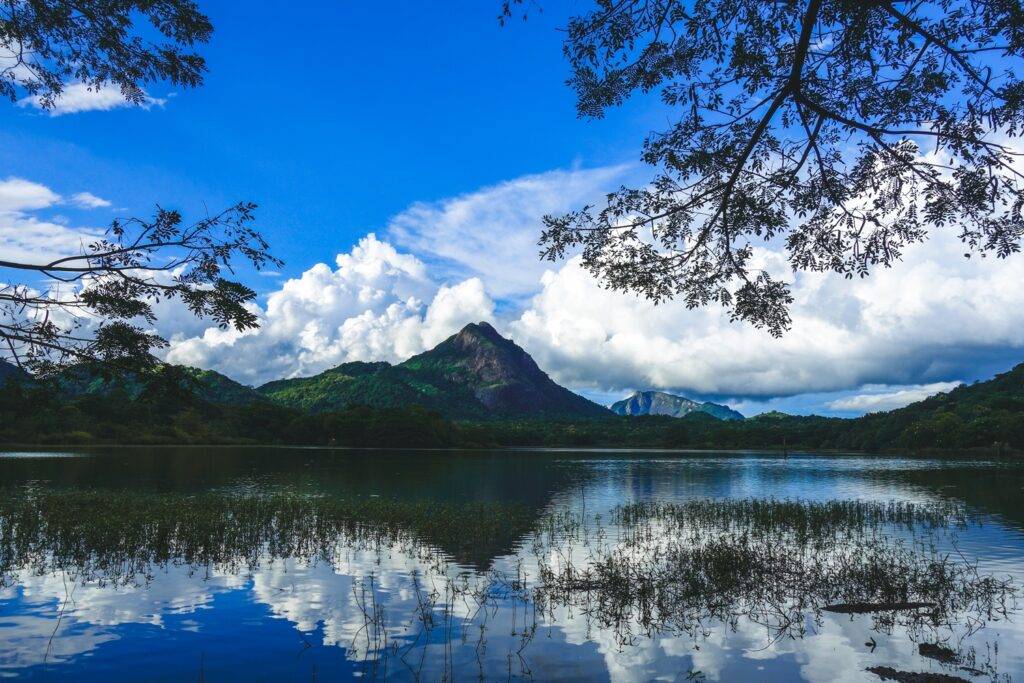
While you’re in the area, the Bowatenne Tank right next to the temple is a peaceful spot for a short stroll, with views over the reservoir and a glimpse of everyday local life along its banks. And if you’re an outdoorsy traveler with a bit of budget to spare, the Knuckles Mountain Range nearby is one of the best trekking and wildlife-spotting areas in Sri Lanka, best arranged through a local agency since it’s tricky to plan independently.
Sigiriya Rock Fortress
Dambulla is also the obvious jumping-off point for a day trip to Sigiriya Rock Fortress, just 20-30 minutes away. The two sites pair extremely well together.
Dambulla wholesale fruit and vegetable market
If you’re passing through town, keep an eye out for the Dambulla wholesale fruit and vegetable market: a vast, bustling complex of covered halls where produce from across the island changes hands. It’s not a tourist attraction per se, but it’s a brilliant slice of everyday Sri Lanka and well worth wandering through if you have an hour to spare.
Where to Stay Near Dambulla Cave Temple
Accommodation in Dambulla itself ranges from budget guesthouses to decent mid-range hotels, and prices are generally very reasonable. A double room can be found for under USD 10, and you get more for your money than you might expect.
For budget travelers, New Dambulla City Hostel is a solid option: clean, social, with a garden, shared kitchen, and both dorm and private rooms. Each bed has a mosquito net, fan, plug, and locker.
For a mid-range homestay experience, Autumn Home Stay offers private rooms with en-suite bathrooms and includes breakfast.
If you want to treat yourself to something genuinely special, the area near Dambulla is home to one of the most architecturally remarkable hotels in Sri Lanka: Heritance Kandalama, designed by legendary Sri Lankan architect Geoffrey Bawa. Set beside the Kandalama Reservoir about 15 minutes from Dambulla, the building is essentially swallowed by the jungle. Vines grow across the facade, monkeys visit the balconies, and the infinity pool looks out over a lake with Sigiriya visible on the horizon. It’s the kind of place worth staying at just for the architecture.
For a more action-packed option in the Sigiriya area, Sigiriya Kingdom Resort offers rooms from around $40 with mountain views, a pool, and easy access to both Sigiriya and Dambulla.
Quick Tips for Visiting Dambulla Cave Temple
- Go early. The staircase gets very hot and has minimal shade. Arriving at opening time (7:00 AM) means cooler temperatures and smaller crowds.
- Bring socks. The green carpet leading into the caves is scorching in the midday heat on bare feet. Trust me on this one.
- Keep your bag zipped. The macaque monkeys on the hillside are opportunistic and fast. Don’t leave food visible and absolutely don’t try to feed them.
- No flash photography inside the caves — it damages the murals.
- Don’t enter via the Golden Temple. The giant Golden Buddha building at the base of the hill is a separate modern complex. The cave temple entrance is up the staircase next to the ticket booth.
- Budget for the shoe storage fee — around 100 LKR when you collect your shoes on the way out.
- Combine with Sigiriya for an excellent full-day Cultural Triangle doubleheader.
Related posts:
 Kaudulla National Park Safari Guide: Everything You Need to Know
  The Best Things to Do in Galle, Sri Lanka (Complete Travel Guide)
  Best Things to Do in Nuwara Eliya: Sri Lanka’s Little England Travel Guide
  Things to Do in Ella, Sri Lanka: The Complete Travel Guide
  How to Visit Sigiriya Rock Fortress, Sri Lanka: The Complete Guide
  Things to Do in Kandy, Sri Lanka: The Complete Travel Guide
  Best places to visit in Sri Lanka
  Top 10 temples in Sri Lanka for your bucket list
  Best things to do in Jaffna – Complete travel guide